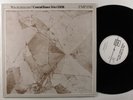
1906 MAHLER'S VIENNA ERIK SCHMEDES G&T Lohengrin Nun sei bedankt Hochste 3-42562
$
45


Favourite Auctions
To save auctions to your favourites, please login
If you don't have an account, please register
Description
A series of great OPERA Records from early G&Ts to World War II recordings on 78 rpm Victrola Records
Click this link for more great Opera and Vocal Records in my other listings!
72. 4236L Lohengrin (Wagner): Höchstes Vertrau'n
74. 4238L Lohengrin (Wagner): Nun sei bedankt (72) 3-42620, ER115
Please see top of the page for condition
Erik Schmedes as Lohengrin, 1902
Erik Anton Julius Schmedes (August 27, 1868, in Gentofte, Denmark – March 23, 1931, in Vienna) was an operatic tenor, particularly known for his roles in operas by Richard Wagner. He was the brother-in-law of Vaslav Nijinsky.Schmedes was born into a family of musicians, the most prominent of which was his brother Hakon, a noted violinist and composer. After studying in Paris, Berlin and Vienna, he made his debut as a baritone in Wiesbaden 1891 as The King's Herald in Lohengrin. He continued to sing as a baritone until 1897. However, after further study with August Iffert in Vienna, his heldentenor voice emerged. He made his debut as a tenor in 1898, singing the title role in Siegfried at the Vienna State Opera. His career remained largely based at that opera house, where he was a Kammersänger and one of the most prominent tenors during the years of Gustav Mahler's direction of the company.
Schmedes sang frequently at Bayreuth from 1899 through 1906. He also appeared at the New York Metropolitan Opera in the 1908/1909 season, singing in Die Walküre and Götterdämmerung, the title roles in both Parsifal and Tristan und Isolde, and Pedro in Eugen d'Albert's Tiefland for the opera's North American premiere. Although he primarily sang roles from the Wagnerian repertoire, Schmedes was also an admired interpreter of Florestan in Beethoven's Fidelio and the title role of Pfitzner's Palestrina.[1] During his career, he sang 1130 performances of forty-two roles and recorded for several companies, including Gramophone and Pathé, from 1902 to 1909.[2]
Schmedes' principal rival for the Wagnerian tenor roles during his time in Vienna was Leo Slezak. Schmedes' young daughter, Dagmar, who later became a soprano herself, is said to have told Slezak: "Uncle Leo, you are just a tenor, my father is an artist!" Slezak is said to have replied: "If your daddy had a high C, he too would choose to be just a tenor!" [3] Considered by some to be a better actor than singer,[4] Schmedes appeared in two films, the most notable of which was Paul Czinner’s 1919 silent film Inferno.
Schmedes' last performance was in 1924 in the title role of Wilhelm Kienzl's Der Evangelimann. When he retired from the stage he became a voice teacher in Vienna. Amongst his pupils were Maria Müller and Anny Konetzni.
price rating