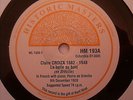
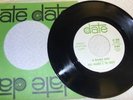
1928 Erich Wolfgang KORNGOLD Das Wunder der Heliane LOTTE LEHMANN Ich ging Odeon
$
40


Favourite Auctions
To save auctions to your favourites, please login
If you don't have an account, please register
Description
A series of great OPERA Records from early G&Ts to World War II recordings on 78 rpm Victrola Records
Click this link for more great RICHARD WAGNER Records in my other listings!
Click this link for more great Opera and Vocal Records in my other listings!
A FESTIVAL OF GERMAN SINGERS
Now this is one of the recordings of the Century:
Erich Wolfgang Korngold was at the height of his fame and technical mastery by the time he began work on his fourth opera in 1923. Prominent opera houses clamoured to stage his works, and the Viennese premiere of Das Wunder der Heliane (‘The Miracle of Heliane’) featured Lotte Lehmann among its star cast.
She created the role of Heliane in Korngold’s Das Wunder der Heliane at the Vienna State Opera in October 1927, after her archrival Maria Jeritza had refused the part. She sings the aria “Ich ging zu ihm” so beautifully. Lehmann’s richly burnished tones are perfectly suited to the languorously sweeping arches of this music.
13 March 1928
Members of the Berlin State Opera Orchestra, conducted by Manfred Gurlitt
9. DAS WUNDER DER HELIANE: Ich ging zu ihm (Korngold) 7:07
(LWxxB 7997-2 and LWxxB 7998-2)
Superb US Decca 12" 78 rpm record from German Odeon master
Better than EXCELLENT PRISTINE, plays very quiet faint hiss
A SUPERB COPY
Korngold's operas were very popular in Vienna in the early part of the twentieth century. The Stranger, a messianic figure, is thrown into prison by the Ruler, whose marriage with Queen Heliane has never been consummated. Out of pity she visits the young Stranger and symbolically gives herself to him. At this point in the drama she is brought to judgment for this action and tells her judges what happened between herself and the Stranger.
Lotte Lehmann (February 27, 1888 û August 26, 1976) was a German soprano opera and Lieder singer who was especially associated with German repertory. She gave memorable performances in the operas of Richard Strauss; the Marschallin in Der Rosenkavalier was considered her greatest role.[citation needed]
Lehmann was born in Perleberg. After studying in Berlin, she made her debut in Hamburg Opera in 1910 as a Page in Wagner's Lohengrin. In 1914, she sang for the first time in, and in 1916 joined, the Vienna State Opera, where she sang in the premieres of a number of Strauss's operas, Ariadne auf Naxos (1916), Die Frau ohne Schatten (1919), Intermezzo (1924), and Arabella (1933) as well as Vienna premieres of several operas of Puccini. Lehmann made her debut in London in 1914, and from 1924 to 1935 she performed regularly at the Royal Opera House, Covent Garden.[citation needed]
She also appeared regularly at the Salzburg Festival (1926-1937), performing with Arturo Toscanini, among other conductors. She also gave recitals there accompanied at the piano by the conductor Bruno Walter. In 1936, while in Salzburg, she discovered the Trapp Family Singers (of 'the Sound of Music' fame) and persuaded them to their first public performance.
On the cover of Time magazine: February 18, 1935.In 1930, Lehmann made her US debut in Chicago as Sieglinde in Wagner's Die Walknre.[citation needed] Lehmann's other Wagnerian roles included Eva in Die Meistersinger, Elsa in Lohengrin, and Elisabeth in TannhSuser; she was also famous for her interpretation of Leonore in Beethoven's Fidelio. Just before Austria was annexed by Germany in 1938, Lehmann emigrated to the United States, where she sang at the San Francisco Opera and the Metropolitan Opera until 1945.
In addition to her operatic work, Lehmann was a renowned singer of lieder, giving frequent recitals up until her retirement. During her long career, Lehmann also made more than five hundred recordings.[citation needed]
After her retirement from the recital stage in 1951, Lehmann taught master classes at the Music Academy of Santa Barbara, California, which she helped found in 1947. She also gave master classes in Chicago, London, Vienna etc. For her contribution to the recording industry, Lehmann has a star on the Hollywood Walk of Fame at 1735 Hollywood Blvd. However, her first name was misspelled as "Lottie."
She was a prolific writer, publishing a book of poems Verse in Prosa in the early 1920s, a novel, Orplid, mein Land (1937), translated as Eternal Flight (1937) and a book of memoirs, Anfang und Aufstieg (1937), translated as On Wings of Song (UK 1938) and as Midway in My Song (US 1938); a book on the interpretation of song, More Than Singing (1945); My Many Lives (1948), a book on the interpretation of opera roles. Later books include Five Operas and Richard Strauss also titled Singing with Richard Strauss (UK) (1964); a second book of poems Gedichte (1969) and Eighteen Song Cycles (1971) which was largely taken from earlier books.
Biographies of Lehmann include: Lotte Lehmann...mehr als eine SSngerin by Wessling (1969); Lotte Lehmann: A Life in Opera and Song by Glass (1988); Lotte Lehmann: 1888-1976 A Centenary Biography by Jefferson (1988), translated into German as Lotte Lehmann: Eine Biographie (1991).
Lehmann died in 1976 age 88 in Santa Barbara, California. She is interred in the Zentralfriedhof in Vienna, Austria.[citation needed]
The Lotte Lehmann Concert Hall on the campus of the University of California, Santa Barbara was named in her honor.
The Lotte Lehmann Foundation was begun in 1995 with the dual missions to preserve and perpetuate Lotte Lehmann's legacy, and to honor her dream of bringing art song into the lives of as many people as possible.
RICHARD TAUBER (pic.) (1891 - 1948) -- A BRIEF APPRECIATION
--Geoffrey Riggs
I once had a discussion with one aficionado, a Gunter Kossodo who moderated an all-day Ring des Nibelungen marathon on FM radio once a year and who was a regular lecturer at the New School and Bayreuth, who had seen both Jussi Bjoerling and Richard Tauber in person in Vienna during the '30s. He told me that, in person, the lower two thirds of the Tauber instrument were more resonant, heavier and more spinto-ish than Bjoerling, but that Bjoerling had greater strength and penetration when it came to the upper third. Personally, I happen to feel -- and Gunter Kossodo happened to agree -- that Tauber's top, while efficient enough, does not come off as much more than efficient on recordings. Certainly, his top is not on a par with Bjoerling's, Pavarotti's or that of many other lirico spintos regularly discussed.
Furthermore, so far as I know, Tauber never really had a high C. We hear one glancing high C in the "Che gelida manina" (1924), but it's definitely not sustained. Tauber also narrows his vowels higher up in a very Viennese way, which is disconcerting to a listener used to the golden outpouring of other tenors. With all this, it's remarkable what a vibrant core Tauber's upper tones still have. However weird his upper vowels up front, one has the feeling that his actual throat is always squared open in the fine Caruso manner! That said, his top is still not quite of the quality of some of the others even so. Yes, once in a while, as in the climax of his 1927 "La donna e mobile" , he'll give one a ringing and open high B that's perfectly fine. But such notes are not his stock in trade.
Given all this, though, he is my favorite all the same.
Why?
Heart.
Well, more than heart, actually, but that's where it all starts. Yes, one must at least have a genuinely musical and resilient voice capable of maintaining a vibrant, fully resonated vocal line. But all the greatest tenors already have that. Once that necessity is established as a given, heart then starts to bulk hugely in my estimation.
In this connection, Tauber's apparent spontaneity in expression is nothing less than astounding. It is particularly so since it's always in the context of a wealth of detail and tonal shading. How come the variety of his dynamics and of his vocal coloring is so staggering while the impression of spontaneity of expression is still maintained so consistently at the same time? That such an abundance of the most insightful nuance should also come off as the ultimate in spontaneity is the greatest paradox of the sheer heart that Tauber brings to his singing. He can fool the listener into imagining that all that abundance of nuance is merely the inspiration of the moment -- when it clearly can't be. Hours and hours must go into it. But it doesn't sound that way. That is genius. That a singer should be able to combine the most scrupulous musicianship with the most extroverted and heartfelt style seems almost an impossibility. Tauber shows that it isn't.
Whether or not his voice is sumptuous in the Caruso/Bjoerling way, his command of musical communication is such that nothing he does sounds unmusical. Rather, I find his very tones intrinsically engaging in any case, and he certainly has a voice that is essentially attractive in absolute terms, even if relatively plain by certain standards. At any rate, I never feel that one has to make allowances for any unattractive sounds, the way one does for certain other perfectly fine artists. Instead, Tauber's voice usually has a truly magnetic and genuinely simpatico quality. It's just that it's not downright stunning like some others.
Especially to his credit is the way he maintains consistent technical security throughout an arduous career. In fact, at around the age of 48 or so, circa 1939, even the narrowed vowels start to open up somewhat! Arguably, his finest years technically (we can argue about when the voice itself sounds its best) were from around 1939 to 1942, from age 47 to 51. That shows tremendous discipline, particularly when one considers that his operatic career began in 1913, when he turned 22. Imagine: thirty years of solid arduous performing where the technical prowess and vocal resiliency continually get better! That is an astonishing track record. Decline does not first appear until the initial onslaught in 1943 (he was 52) of the first signs of the nasty cough that heralded the lung cancer that eventually killed him in 1948 at age 56. Even so, he painstakingly manages to learn how to "sing around it" , and there is, in fact, an astonishing vocal recovery that is readily audible, starting around the second half of 1946 at age 55, less than two years before his death! This after he had been sounding like a singer on his last legs! Again, sheer technical discipline that seems unfathomable! His most amazing feat (and we have recorded excerpts) was probably his final appearance on stage: a Don Ottavio in 1947 where he sounds perfectly fine again! Yet he was back in the hospital again within days, never to come out, fading inexorably until his death in early 1948.
Unlike many a tenor, he was a genuinely charismatic showman in terms of his physical deportment across the footlights. Even though afflicted with a slight limp and a slight squint(!), and hardly a man known for conventional matinee-idol looks, his control as an actor of the space around him was still exceptional for an opera singer. There are even certain films -- his early film of Land des Laechelns and his later Blossom Time and English-language Pagliacci spring to mind -- that happen to be pretty expertly acted. No, he is no Lawrence Olivier, but the camera does not "catch him out" as a liar, a rare gift among singers. Instead, he is able to wear his heart on his sleeve in all these movies and to do so with a modicum of real "Presence". Even when he sang Ottavio at Covent Garden (1939), it was felt that he dominated the hall by sheer presence even when matinee-idol Pinza was on stage alongside him! That's real charisma. (Of course, Pinza still had the more sumptuous voice, even if Tauber may have been the more unusual musical persona.)
In Lieder especially, we hear yet another gift: a true romance with words. No matter how eccentric his diction, he always manages to get the words across like a true story-teller, but without compromising legato and tone. So many singers seem to believe one must compromise either one or the other to a degree. Tauber shows this isn't so. Instead, with a gift for infinite vocal shading, nuance is applied to each and every line of poetry reminiscent of some expert Shak[e]spearean actor. All this while the blandishments of true bel canto line are never compromised. Other equally fine Lieder singers sometimes sacrifice certain bel canto attributes for the sake of the kind of nuance Tauber is so expert in. But Tauber never does. He always sings an unbroken legato through all the range of nuance. An unusual combination as rare as it is welcome.
Of course, his highest operatic achievement was in Mozart. This meant that his vocal agility had to be of a high order. And when we hear his cuts of certain arias and duets from Auber, Rossini, Mozart and the like, we are aware of deftly articulated passagework (even in Verdi, try his cadenza at the conclusion of the "La donna e mobile" from '27) throughout. He didn't just sing a bel canto line, he had the adeptness to surmount all the intricate vocal agility entailed in true bel canto singing. We even have an easy trill at the conclusion of his "Am stillen Herd" (1927), a Wagner aria that requires this but that is rarely undertaken by a true bel canto tenor! In many ways, this 1927 record may be one of his most startling of all.
Finally, though reared in the traditions of Central European houses of the prewar period, with everything sung in German, he acquired later in his career a gift for languages that was striking. This is testimony to a sharp ear, among other things. In his annus mirabilis, 1939, we have him performing Ottavio in that famed Don Giovanni at Covent Garden with Ezio Pinza in the original Italian (even though he had first learned it in German). From that same year, Tauber's recorded "Dalla sua pace" in the original Italian may be the finest souvenir of his mastery in Mozart and of this role. In fact, Ottavio was often cited as his greatest role, an assessment that is hard to dispute after hearing this record. Also from 1939, "live" in concert, we hear him performing Don Jose's "Fleur" aria in the original French (and in fairly good French in the bargain). His growing fluency in English, once he became a naturalized British subject following the 1938 Anschluss in Vienna, was perhaps partly responsible for his having opened up his vowels generally in the years following. We hear this especially in his popular-song recordings during the late '30s/early '40s, where the English becomes notably more natural and relaxed. Sure, it still has a recognizable accent, but it flows more euphoniously than earlier. Linguistically, the icing on the cake during this phase (alas, no recording exists) was his once singing the one song most indelibly associated with him, "Dein ist mein ganzes Herz" , in Arabic during a concert tour in the Middle East!
So there we have heart, impeccable vocal control and longevity, artistic imagination, strict musicianship, charisma, a romance with words, vocal agility and linguistic facility of a high order rolled into one. Few other singers, let alone tenors, have excelled at such a high level in all eight aspects. This is why Tauber, to this day, remains my favorite singer, let alone my favorite tenor
price rating