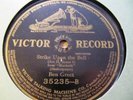
1928 Pompilio Baffigo PREMIO CONCORSO BANDISTICO BANDA Citta di Corato 60034
$
25


Favourite Auctions
To save auctions to your favourites, please login
If you don't have an account, please register
Description
A series of great early Opera performances: From 1902 G&Ts to 40s wartime German records:
Winner of the 1928 Rome Band Contest:
PREMIO CONCORSO BANDISTICO Roma 1928 Vincitrice 1a BANDA "Citta di Corato"
Baffigo Coratina Band, crowned queen of Italy by Mascagni in 1928
The big opportunity for Ripoli and the Corato band came in 1928. On 21 April the first choral band competition was held in Rome in which 73 bands from all over Italy participated. The jury was chaired by Pietro Mascagni, a famous composer from Livorno who joined the fascist party in 1932.
no
At the Teatro Adriano, the "Gran Concerto Bandistico Città di Corato" directed by Baffigo, won the competition (with a prize of 40,000 lire) performing "The Hymn to the Sun", taken from the Iris composed by Mascagni himself which - as reported the writer Bianca Tragni - "after having listened to the anthem she met maestro Baffigo and personally congratulated him and the smallest of the musicians, the drummer Felice Sannicandro, mascot of the Coratina band".
Banda "Citta Di Corato"
Label: Columbia – 60034-F
Format:
Shellac, 12", 78 RPM
Country: US
Released:
Genre: Classical
Ero E Leandro. Fugato del Finale 2 Atto / La Maddalena. Marcia Sinfonica, Banda "Citta Di Corato". (Aderente O.N.D.)
Orig US issue Columbia Green Label 12" 78 rpm record
Condition:
VERY GOOD PLUS PLUS unworn but rubbed, plays Excellent very quiet w faint crackle
Rise and decline of the Baffigo Coratina Band, crowned queen of Italy by Mascagni in 1928
There was a time when the town's concert band was a very serious thing, so much so that having a quality one meant having a prestigious role throughout the territory. Corato has had an excellent band tradition, with top-level conductors such as Pasquale Vilella and Raffaele Miglietta and in 1928 it was crowned the best band in Italy ahead of Pietro Mascagni, a great composer between the 19th and 20th centuries.
no
The fascinating story of that triumph was told by Pasquale Tandoi in the book "La banda di Corato", which traces more than 150 years of a reality today associated only with the religious rites of San Cataldo and Holy Week but which brings with it a past rich in history and tradition.
no
In 1925 Italy was fascist and Corato was governed by the lawyer Vincenzo Ripoli who had sworn the oath to the Duce. He was entrusted with the task of giving new life to the city band and, in December of that year, the city council decided to entrust it to maestro Pompilio Baffigo, a Sardinian by birth who had achieved important successes in Chieti.
no
Baffigo, in a short time, managed to bring together many of the best musicians in southern Italy, sparing no expense and offering generous compensation. Baffigo himself, in 1926, earned 12,000 lire a year, much more than a worker. Behind this pharaonic "purchasing campaign" was Ripoli who became a sort of manager.
no
He began to impose fines and fines to replenish the coffers of the band's fund, he had a stone accordion built in Piazza Plebiscito and he put pressure on local and national newspapers to write glorified articles such as the one for the Grand Concert in Piazza Cesare Battisti on the 25th. March 1926, an event that gathered support from many cities in Puglia and beyond. Even the mayor of Naples sent Ripoli a telegram of compliments.
no
The notoriety of the Corato band attracted the mayors of various municipalities in Southern Italy who tried to steal the musicians from Ripoli. The mayor's response was eloquent. He wrote to Mr. Grella from Sturno, in the province of Avellino, who attempted to bring one of the elements to Campania: «If he continues in this undignified work, I will be fascistically forced to put it right».
no
The band continued to perform with drum beaters, enjoying success throughout the South while the Government issued measures to "fascistize" the bands. All musicians had to be members of fascist unions and their uniform became black with a Bersagliere hat.
no
The big opportunity for Ripoli and the Corato band came in 1928. On 21 April the first choral band competition was held in Rome in which 73 bands from all over Italy participated. The jury was chaired by Pietro Mascagni, a famous composer from Livorno who joined the fascist party in 1932.
no
At the Teatro Adriano, the "Gran Concerto Bandistico Città di Corato" directed by Baffigo, won the competition (with a prize of 40,000 lire) performing "The Hymn to the Sun", taken from the Iris composed by Mascagni himself which - as reported the writer Bianca Tragni - "after having listened to the anthem she met maestro Baffigo and personally congratulated him and the smallest of the musicians, the drummer Felice Sannicandro, mascot of the Coratina band".
no
The musicians, returning to Corato, were welcomed by a cheering city: flags on the balconies and thunderous applause. A reception was organized in the Municipality and a performance on the stone stage in Piazza Plebiscito, in front of a delirious audience. The Coratina band began to perform throughout Italy and recorded five albums in Milan, the prize for first place in the Roman competition, with the Columbia label of London.
no
What happened to the great gang that had hit Rome and become famous throughout Italy? He followed the fate of the mayor Ripoli who in November 1928 was no longer mayor of the city, replaced by the prefectural commissioner Perrone. The band was dismantled because it was not economically sustainable and so was the music school that Ripoli had set up, entrusting it to Vilella.
no
Investigations were carried out into the financing of the gang. Ripoli's responsibilities emerged as he had illegally obtained duties and fines disguised as donations to finance the gang. The old mayor was arrested, although it was rumored that there were political reasons behind his arrest and he died in Bari prison on 14 June 1930.
price rating