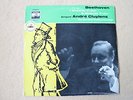
1936 ARTURO TOSCANINI BEETHOVEN Symphony No 7 A Major New York Phil Victor M 317
$
25


Favourite Auctions
To save auctions to your favourites, please login
If you don't have an account, please register
Description
A series of great classical orchestral and instrumental performances by major conductors, composers and instrumentalists.
This is not a late NBC recording,
this 1936 recording PRECEDES his resumption of recordings with the 1937 BBC Orch recordings, and several years before the common NBC Orch recordings:
Arturo Toscanini and the New York Philharmonic Symphony Orch In Beethovens animated Symphony no 7 in A major, the Apetheosis of the Dance
The recording shows that Toscanini was giving the engineers grief about the side cuts: Side one is crammed full with only a 2 1/2" label, while some sides have only 2" of grooves on them.
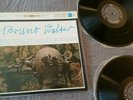
Arturo Toscanini And The Philharmonic-Symphony Orchestra Of New York* / Beethoven* – Symphony No. 7 In A Major (Opus 92)
Label:
Victor Red Seal – M-317
Series:
Musical Masterpiece Series
Symphony No. 7 In A Major (Opus 92)
1st Movement
A Poco Sostenuto; Vivace
B Vivace (Continued)
C Vivace (Concluded)
2nd Movement
D Allegretto
E Allegretto (Continued)
F Allegretto (Concluded)
3rd Movement
G Presto: Presto Meno Assai; Presto
H Presto; Presto Meno Assai: Presto (Concluded)
4th Movement
I Allegro Con Brio
J Allegro Con Brio (Concluded)
Credits
Composed By – Ludwig van Beethoven
Conductor – Arturo Toscanini
Orchestra – Philharmonic-Symphony Orchestra Of New York*
Recorded April 9 & 10, 1936.
Biography
Toscanini was born in Parma, Emilia-Romagna, and won a scholarship to the local music conservatory, where he studied the cello. He joined the orchestra of an opera company, with which he toured South America in 1886. While presenting Aida in Rio de Janeiro, the orchestra's conductor was booed by the audience and forced to leave the podium. Although he had no conducting experience, Toscanini was persuaded to take up the baton, and led a magnificent performance completely from memory. Thus began his career as a conductor at age 19.
Upon returning to Italy, Toscanini self-effacingly returned to his chair in the cello section, and participated as cellist in the world premiere of Verdi's Otello (La Scala, 1887) under the composer's supervision. (Verdi, who habitually complained that conductors never seemed interested in directing his scores the way he had written them, was impressed by reports from Arrigo Boito about Toscanini's ability to interpret his scores. The composer was also impressed when Toscanini consulted him personally, indicating a ritardando where it was not set out in the score and saying that only a true musician would have felt the need to make that ritardando.)
Gradually the young musician's reputation as an operatic conductor of unusual authority and skill supplanted his cello career. In the following decade he consolidated his career in Italy, entrusted with the world premieres of Puccini's La Bohème and Leoncavallo's Pagliacci. In 1896 he conducted his first symphonic concert (works by Schubert, Brahms, Tchaikovsky, and Wagner), in Turin. By 1898 he was resident conductor at La Scala, Milan and remained there until 1908, returning during the 1920s. He took the Scala Orchestra to the United States on a concert tour in 1920-21; it was during that tour that Toscanini made his first recordings (for the Victor Talking Machine Company).
International recognition
Outside of Europe, he conducted at the Metropolitan Opera in New York (1908–1915) as well as the New York Philharmonic Orchestra (1926–1936). He toured Europe with the New York Philharmonic in 1930; he and the musicians were acclaimed by critics and audiences wherever they went. As was also the case with the New York Philharmonic, Toscanini was the first non-German conductor to appear at Bayreuth (1930–1931). In the 1930s he conducted at the Salzburg Festival (1934–1937) and the inaugural concert in 1936 of the Palestine Symphony Orchestra (now the Israel Philharmonic Orchestra) in Tel Aviv, and later performed with them in Jerusalem, Haifa, Cairo and Alexandria.
Toscanini ran in 1919 unsuccessfully as a Fascist parliamentary candidate in Milan and had been called "the greatest conductor in the world" by Mussolini; however, he became disillusioned with fascism and notably refused to conduct Giovinezza at a May 1931 concert at La Scala, after which he was roughed up by a group of blackshirts, and thereafter left Italy until 1938
He left for the United States where the NBC Symphony Orchestra was created for him in 1937. He conducted the first broadcast concert on December 25, 1937, in NBC Studio 8-H in New York City's Rockefeller Center. The acoustics were very dry, until some remodeling in 1939 added a bit more reverberation to the studio.
One of the more remarkable broadcasts was in July 1942, when Toscanini conducted the American premiere of Dmitri Shostakovich's Symphony No. 7. Due to World War II, the score was microfilmed in the Soviet Union and brought by courier to the United States. Stokowski wanted to conduct the premiere and there were a number of remarkable letters between the two conductors (reproduced by Harvey Sachs in his biography) before Stokowski agreed to let Toscanini have the privilege of conducting the first performance. Unfortunately for New York listeners, a major thunderstorm virtually obliterated the NBC radio signals there, but the performance was heard elsewhere and preserved on transcription discs. Shostakovich himself reportedly expressed a dislike for the performance, after he heard a recording of the broadcast.
price rating








![ART NEVILLE on Specialty [656] —ARABIAN LOVE CALL— soul mod r&b 45 | LISTEN](https://www.popsike.mobi/php/thumbnail.php?url=https://www.popsike.pics/pix/20220316/384784211385.jpg)