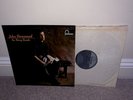
1937 Artur SCHNABEL DIABELLI VARIATIONS Beethoven Piano Sonata Society 78
$
42


Favourite Auctions
To save auctions to your favourites, please login
If you don't have an account, please register
Description
WEEK 1 of two weeks of great auctions ending May 11.
IF you are a non-US buyer or if buy multiple records, pls do not use EBAY check out.
Send me an invoice request (click on MORE ACTIONS to the right of the item), I can probably get you better shipping rate.
I am happy to hold your records and combine you winnings in one economic parcel after May 11.
Due to the volume of sales, invoicing and shipping may take up to 48 hours.
****
A series of great orchestral recordings:
Great German Pianist Arthur Schnabel in Beethoven Society Vol V:
Diabelli Variations in C Major, Op. 120 complete
HMV initiated “Beethoven Society Recordings” on a subscription basis in advance of recording, and, at a time when Beethoven’s sonatas for piano were not as popular as a cycle as nowadays, the marketing was quite a success. Indeed, the records in one form or another have remained in the catalogue for nearly 80 years. In addition to the sonatas, a number of shorter and longer pieces were also recorded, including the Diabelli Variations, and by the time the project was completed in 1935, it amounted to fifteen volumes and a total of more than 200 sides of shellac. The total cost of a hundred 78s was beyond most people’s pockets in those days; whichever transfers are chosen by today’s collectors are a real bargain in comparison to what one’s parents or grandparents had to pay.
6x12" HMV Records
Condition:
EXCELLENT rare scuffs, a great copy, no album.
Check my other auctions for more great classical recordings!
Great Pianists: Artur Schnabel: BEETHOVEN: Piano Works Vol. 10
Diabelli Variations, Op. 120 • Bagatelles, Op. 126 • Rondo a capriccio, Op. 129
It was not until 1932 that Artur Schnabel, then fifty years old, finally consented to make recordings. He had long been considered the leading authority on Beethoven’s piano music, and he agreed to record nearly all of the solo piano music for subscription release through the Beethoven Sonata Society (BSS). Over the course of the decade he completed 204 discs for HMV at Abbey Road Studios in London. After recording all of the sonatas, he turned in 1937 to other works by Beethoven. Some were familiar pieces associated with amateur music making. Others were rarely performed and never previously recorded.
The Diabelli Variations were little known in the 1930s. Beethoven had begun them in 1819 and made the final revisions in 1823. The reason why he had composed them is unclear. The composer Antonio Diabelli had invited numerous Viennese composers to each write a single variation on his German waltz theme. From this humble material Beethoven created a work of monumental proportions. So daunting was the work that even by the twentieth century few pianists ventured to play it in public. By championing the work Schnabel challenged his listeners. Following a February 1929 performance at the Queen’s Hall in London, the critic of The Times (possibly Ernest Newman) noted that by placing the Variations at the end of a very long and demanding programme Schnabel ‘was to test the endurance of the audience rather severely’. Despite the work’s length and form, Schnabel ‘kept his hearers entranced not by his own virtuosity, but the inexhaustible fertility of Beethoven’s mind and art. When he sailed into the final repose of the Tempo di Menuetto he had spanned the Beethoven of the last Sonatas and the last quartets in a performance of singular clarity and vision.’ At this performance, Schnabel was said to have attracted ‘a large audience, who came in the most reverential mood’. This was not always the case. Later that same year Schnabel embarked upon a tour of Spain, where he continued to perform the Diabelli Variations. He relates in his autobiography, My Life and Music, that while playing the work in Seville he thought ‘Now this is really unfair! I am the only person here who is enjoying this, and I get the money; they pay, and have to suffer’.
The audiences and critics proved most receptive in London. After a performance there in January 1932, the music critic of The Times reported the Variations to have ‘provided the finest vehicle for the pianist’s art, for they are an epitome of the whole range of Beethoven’s pianoforte style, of its weaknesses no less than of its strength and profound beauty. Mr. Schnabel is just the pianist to transcend all the weaknesses and to engage our interest during the hour-long duration of the work by the intensity of his concentration upon the music and the sheer beauty of his pianoforte tone.’ Schnabel completed his recording of the Diabelli Variations on 1st November 1937 and later that month played them again in London. Once again The Times provided a glowing report: ‘To hear these Variations, played with such insight and sincerity, was to marvel afresh at the immense imaginative power which could win from Diabelli’s trivial waltz such an infinite variety of patterns and of moods, ranging from pure frivolity to the sublime. They vary in quality as well, of course, but it would be hard to single out those which gave the most pleasure in this performance, for Herr Schnabel succeeded above all in imposing a sense of unity on the work. Technically it was his grading of tone which most impressed; and to this the unusually satisfying effect produced by Nos. 9, 14, 18, and the C minor groups which precede the E flat Fugue, owed much.’
When Schnabel’s recording was released, nearly a year later, the same newspaper reported that it ‘gives a very clear and true impression of Herr Schnabel’s performance.’ The critic noted that there were differing opinions on Schnabel’s playing, and those concerned more with the ‘niceties of pianoforte playing than with the expression of musical thought may find Herr Schnabel’s approach too uncompromising in its refusal to tolerate any adventitious aids to an appreciation of Beethoven’s ideas. It could be objected, for instance, that No. 10 is not brilliant enough, that Nos. 25 and 27 are made unnecessarily stern. But taking the work as a whole, it must be acknowledged that the relation of each mood to the general scheme is judged with a wonderful precision. Care, even too much care, is greatly to be preferred to glibness in such a work, and if occasionally one feels that a point is too heavily underlined, the sudden conclusion of No.19, for example, that is a small price to pay for an interpretation which in so many of the Variations penetrates right to the heart of the music. For one could scarcely ask for more poetic playing than that of Nos. 8, 18, 20, and the three variations which usher in the Fugue. In these three [Nos. 29-31] especially the pianist’s feeling for line and texture, his grading of tone, the subtlety of his phrasing win constant admiration, and just as in No. 9 the friendly appeal of the music is conveyed without a trace of effort, so, too, is the haunting beauty of the “Andante Cantabile” [No. 30].’ In his review in the August 1938 issue of The Gramophone, Alec Robertson wrote that ‘one has only to hear the first, twentieth, and last Variations to estimate how finely Schnabel has risen to the greatness of the work. Variation XX is one of the most profound pages in Beethoven and its haunting atmosphere is completely captured in playing and recording. There is true double piano here. Schnabel is least likeable where Beethoven, as it were, makes him so: but those pages must be tackled with energy, with hard and uncompromising tone. The portrait Beethoven has drawn could not be toned down without becoming ridiculous.’
Both critics discussed the value of this première recording in allowing the public to get to know this complex work better. Robertson described the Variations as an ‘unloveable masterpiece,’ that ‘engages the mind’ rather than the heart, but that ‘reflects almost his every mood and presents a unique insight into [Beethoven’s] creative mind,’ and felt that Schnabel’s recording succeeded in most ways. ‘The piano is exceptionally well recorded in the higher treble and bass, but is twangy sometimes in the middle of its compass. This we have had before in Schnabel’s recordings. I am sure this issue will take a very high place in Schnabel’s long list of Beethoven recordings and it should arouse much interest in a rarely played work.’ The Times, referring to the ‘astonishing world of music’ contained in the Variations, noted how the recording would enable listeners for the first time ‘to juxtapose this and that section, to hear the theme restarted whenever the want is felt to repeat again and again such Variations as No. 20 until it ceases to be a harmonic puzzle and becomes poetry which touches the deepest springs of the imagination – these are the unquestionable advantages’.
In the 1930s the public was of course well acquainted with the Bagatelles, Op. 126, and with the Rondo a capriccio in G, which had been posthumously published as Beethoven’s Op. 129. Both were contained in volume 14 of the BSS recordings. In his review in the February 1939 issue of The Gramophone, Robertson called the set ‘a volume full of “small” Beethoven, and no piece without great interest’. Everyone knows the Rondo a capriccio, Op. 129, with the tune that seems to reiterate with ever-growing irritation “where is the ruddy thing, wherever can it be, wherever can it be.”’ Although individually modest, together the Bagatelles form an integrated cycle of short pieces, carefully ordered by Beethoven. Robertson described the set as ‘a sort of sound-sketch book’ of Beethoven in daily life. ‘Here we see him tender or humorous (Nos. 3 and 2), furious (No. 4) or placid (No. 5). No. 6 which begins and ends in a rage, but contains a long section of great beauty in the middle – an extraordinary contrast this – ends this deeply engrossing set.’ Without discussing the interpretation in detail, he cited the first Bagatelle ‘as an example of fine playing and insight’. ‘You may not like his touch here and the uncompromising treatment of the high treble notes, but given the ironic implications of the piece, his method is surely exactly right. A word of praise must also go to the vividly clear playing of the really “furious” No. 4 – the note on which the last Bagatelle ends. But the quiet moments throughout are also beautifully treated. I do not, however, care for the oddly dry staccato as recorded. With this reservation, and the lack of fullness of tone often present in these albums before, the recording is excellent.’
By looking back at the initial reception of these recordings, we may gain a better appreciation of Schnabel’s enormous contribution to sound recording and to the Beethoven discography. In his 1957 biography of Schnabel, César Saerchinger writes: ‘It must be understood that he was – as always – not merely learning but forcing others to learn. He rejected out of hand the contention that recordings must be made within a certain limited range of dynamics, and he decided that this was one of the main reasons for the smooth but un-plastic, impersonal recordings of performances by artists who certainly could play better than they sounded on records, and for the pale and partial reflections of great masterpieces that already crowded the market.’ Returning to Schnabel’s recordings in this considerably more saturated market is time well spent. Few listeners in the 1930s agreed with everything Schnabel did, but through his performances many discovered aspects of Beethoven that they heard nowhere else. Given Schnabel’s reputation, the recordings are now essential documents in the genealogy of Beethoven interpretation. They are also simply to be appreciated for the vibrancy and beauty they contain.
* * *
Quick NOTE ON GRADING AND SHIPPING:
As you can see from my feedback, I try hard to earn your POSITIVE FEEDBACK and FIVE STAR RATINGS.
If for any reason your transaction was NOT SATISFACTORY, pls contact me and I will work something out with you. YOU WILL NEVER HAVE A REASON TO GIVE ME A NEGATIVE RATING or a LOW STAR RATING.
Quick note on grading:
The Grade (Excellent to Fair, I don't give Mint) refers to the WEAR of the record. Any other defects, like cracks, chips and scratches, are stated separately
When I listen to a record, I may also make a SUBJECTIVE judgment of the pressing quality for hiss and surface noise.
"SUPERQUIET" is basically noiseless, like a vinyl pressing.
"VERY QUIET" is an exceptionally quiet record for a given pressing.
"Quiet" is a record that is a great example without undue noise for a given pressing.
These judgments are SUBJECTIVE and will depend one the styli, phonograph etc. you use on your own equipment.
Pls check my other auctions for more great records and phonograph items:
http://stores.ebay.com/carstensf
http://stores.ebay.com/carstensf
====
I am happy to hold your items and bill you at the end of the auction cycle. Pls send me a note if you would like me to hold records
Multiple item shipping: I am happy to combine items for shipment in one parcel.
If you win multiple items, pls send me an INVOICE REQUEST to calculate the correct postage. Ebay check out will not give you the multiple item discount!
Records will be packed safely between corrugated cardboard in a sturdy box with plenty of padding for safe shipment.
Shipment is usually Media Mail, unless another service is requested. Shipping is at your risk.
If you are in the San Francisco area, I encourage pick-up in person.
US Domestic Shipping:
Here is a guideline for US Media Mail Shipping:
Prices below are for regular 78 rpm records. Up to about 5 records, I will ship Edison Discs for the same rates. Albums from Album Sets count as 1 record. Above that and for international shipments, it will be actual weight plus a small packing charge (1-3$ depending on size of shipment)
1 record: 4.50$
2 records: 5.50$
5 records: 7.50$
10 records: 9.50$
MANY MORE RECORDS: Don't worry. I safely ship 40 - 50 pounds of records double boxed in moving boxes, and even then Media Mail will probably not exceed 30$.
Please send me a message if you would like to lower your shipping rates!
International Buyers:
All'attenzione degli acquirenti italiani:
ATTENTION TO ITALIAN BUYERS:
Due to rare problems with delivery in ITALY, I will NOT GUARANTEE delivery of parcels sent by US Postal Service First Class and Priority Mail. If you prefer secure delivery, I will be happy to quote you either Registered Mail or shipment by FEDEX
I am very happy to ship records worldwide.
The US POSTAL SERVICE has increased international shipping rates in 2013.
A single record ships for around 25$ worldwide, depending on the weight.
There are some great options available for shipping multiple records at excellent rates.
Pls contact me if you plan to buy multiple records, and I will be happy to give you an estimate for best rates on USPS or Fedex. Pls let me know your country, home town and postal code for an estimate
=====
As always, I would appreciate any suggestions and corrections from you, pls contact me with any question.
Thank you very much, and good luck bidding !!!
price rating