1937 Bei Mir Bist Du Schön KLEZMER Benny Goodman Quartet schon YIDDISH Vic 25751
$
60


Favourite Auctions
To save auctions to your favourites, please login
If you don't have an account, please register
Description
A series of great JAZZ, Ragtime and Swing Records from early Ragtime to Beb-Bop on 78 rpm Victrola Records
Click this link for more great Jazz and Vocal Records in my other listings!
One of the first recordings of the famous Yiddish Song with the incredible Hot Klezmer Riff by Ziggy Elman
The Benny Goodman Quartet starts out with a cool but swinging instrumental, joined by Martha Tilton, then on the second half of the B-side, Ziggy Elman starts the hot klezmer riff, joined by Goodman on the clarinet.
Written for an early ‘30s Yiddish musical comedy, the tune became a sensation when an up-and-coming girl trio named Andrews recorded it with new English lyrics by Sammy Cahn & Saul Chaplin. Benny, Teddy, Gene, Lionel, and vocalist Tilton are joined on Side 2 by trumpeter Ziggy Elman with a fralich-style chorus previewing his later “Fralich In Swing” (“And The Angels Sing”). The original 78rpm single was issued on Victor 25751 - Bei Mir Bist Du Schön (Jacobs-Secunda-Cahn-Chaplin) by the Benny Goodman Quartet, vocal by Martha Tilton, incidental KLEZMER trumpet by Ziggy Elman, recorded in NYC December 21 & 22, 1937
It seems to be more of a jam session (lots of those from Goodman and his gang). This is a really hot tune performed by the best.
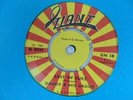
The Benny Goodman Quartet - Bei Mir Bist Du Schön / Bei Mir Bist Du Schön
Label: Victor – 25751
Format:
Shellac, 10", 78 RPM
Country: US
Released: 1938
Genre: Jazz
Style: Big Band
A Bei Mir Bist Du Schön
Vocals [Vocal refrian] – Martha Tilton
B Bei Mir Bist Du Schön
Trumpet – Ziggy Elman
Vocals [Vocal refrian] – Martha Tilton
Record Company – RCA Manufacturing Co., Inc.
Written-By – Jacob Jacobs, Sholom Secunda
Written-By [English version] – Cahn*, Chaplin*
Sub-styles:
A & B: Fox Trot
Original Issue pre war gold circle label 10" record
Condition: EXCELLENT close to PRISTINE faint scuffs, plays EXCEPTIONALLY QUIET few ticks at start
A CHOICE COPY
LYRICS:
Bei Mir Bist Du Schoen
Please let me explain
Bei Mir Bist Du Schoen
Means that you're grand
Bei Mir Bist Du Schoen
Again I'll explain
It means you're the fairest in the land
I could say "Bella, Bella"
Even say "Wunderbar"
Each language only helps me tell you
How grand you are
I've tried to explain
Bei Mir Bist Du Schoen
So kiss me and say you understand
Of all the boys I've known
And I've known some
Until I first met you
I was lonesome
And when you came in sight
Dear, my heart grew light
And this old world seemed new to me
You're really swell
I have to admit you
Deserve expressions that really fit you
And so I've racked my brain
Hoping to explain
All the things that you do to me!
Bei Mir Bist Du Schoen
Please let me explain
Bei Mir Bist Du Schoen
Means that you're grand
Bei Mir Bist Du Schoen
Again I'll explain
It means you're the fairest in the land
I could say "Bella, Bella"
Even say "Wunderbar"
Each language only helps me tell you
How grand you are
I've tried to explain
Bei Mir Bist Du Schoen
So kiss me and say you understand!
"Bei Mir Bistu Shein" (Yiddish: ??? ??? ????? ????, "To Me You're Beautiful") is a popular Yiddish song composed by Jacob Jacobs (lyricist) and Sholom Secunda (composer) for a 1932 Yiddish musical, I Would If I Could (in Yiddish, Men Ken Lebn Nor Men Lost Nisht, "You could live, but they won't let you"), that closed after one season. The score for the song transcribed the Yiddish title as "Bay mir bistu sheyn".[1] Secunda sold the publishing rights to the song for a mere US$30.
The original Yiddish version of the song (in C minor) is really a dialogue between two lovers who share lines of the song.
The song became famous with English lyrics but retaining the Yiddish title, "Bei Mir Bistu Shein". However, it also appeared with the quasi-German title "Bei Mir Bist Du Schoen" (in German: Für mich bist du schön).
In 1937, Sammy Cahn heard a performance of the song, sung in Yiddish by African American performers Johnnie and George at the Apollo Theater in Harlem. On seeing the response, Cahn got his employer to buy the rights so he (together with Saul Chaplin) could rewrite the song with English language lyrics and rhythms more typical of swing music. In Nazi Germany it was also a hit until its Jewish origins were discovered when it was promptly banned.
price rating