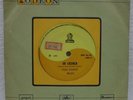
1940 ROLAND HAYES BLACK Tenor unacc NEGRO SPIRITUAL Were you there/ Here de Lamb
$
40


Favourite Auctions
To save auctions to your favourites, please login
If you don't have an account, please register
Description
US Tenor in a great unaccompanied spiritual:
in his great, gripping Spiritual WERE YOU THERE - unaccompanied
“Were You There” Hayes sings a capella. It was was released with “Hear de Lambs a-Cryin’” and “Plenty Good Room” acc Reginald Boardman piano by
Columbia Masterworks in 1940.
After Hayes established himself in Europe, he recorded other Spirituals, including his own
setting of “Sit Down” with the Vocalion label in 1922. Then, starting in September 1939, he
returned to Columbia to record several songs with piano accompanist, Reginald Boardman. One
song, however, he recorded unaccompanied, delivering the stark and powerful words and melody
with the passion and vocal command he had developed over the years of stage performance.
“Were You There” is a Negro Spiritual in which the singer serves as a witness to the suffering
and death of Christ. Author Arthur C. Jones drew direct connections: “In their actual life
experiences, enslaved Africans must have recognized the parallels between the crucifixion of
Jesus and the hangings, whippings and other violent abuses experienced by members of their
own community….”
Hayes selected these verses for his recording:
Were you there when they crucified my Lord?
Were you there when they crucified my Lord?
Oh, sometimes it causes me to tremble, tremble, tremble.
Were you there when they crucified my Lord?
Were you there when they pierced Him in the side?
Were you there when they pierced Him in the side?
Oh, sometimes it causes me to tremble, tremble, tremble.
Were you there when they pierced Him in the side?
Were you there when they laid Him in the tomb?
Were you there when they laid Him in the tomb?
Oh, sometimes it causes me to tremble, tremble, tremble.
Were you there when they laid Him in the tomb?
The tenor’s a cappella recording of this song not only featured the messa di voce and portamento
of past performances, but demonstrated his interpretative freedom to adjust the tempo of the
text’s delivery in order to emphasize specific words as Hayes was moved to do at the moment.
This recording of “Were You There” confirmed that Hayes had, indeed, discovered how to
plumb the rich musical heritage he had inherited and to express its beauty and power in song.
Orig US COLUMBIA 12" 78rpm record
Condition Record: EXCELLENT close to PRISTINE faint scuffs , plays very quiet faintest hiss
A SUPERB COPY
Hayes in 1954, photo by Carl Van Vechten
Roland Hayes (June 3, 1887 – January 1, 1977) was an American lyric tenor. He is considered the first African-American male concert artist to receive wide acclaim both at home and internationally. Critics lauded his abilities and linguistic skills with songs in French, German and Italian.
Contents [hide]
Hayes was born in Curryville, Georgia, near Calhoun, on June 3, 1887, to Fanny and William Hayes. Roland’s parents were tenant farmers on the plantation where his mother had once been a slave. Roland’s father, who was his first music teacher, often took him hunting and taught him to appreciate the musical sounds of nature. When Hayes was eleven his father died, and his mother moved the family to Chattanooga, Tennessee. William Hayes claimed to have some Cherokee ancestry, while his maternal great-grandfather, Aba Ougi (also known as Charles) was a chieftain from Côte d'Ivoire. Aba Ougi was captured and shipped to America in 1790.[1] At Mt. Zion Baptist Church in Curryville (Founded by Roland’s mother[2]) is where Roland first heard the music he would cherish forever, Negro Spirituals. It was Roland’s job to learn new spirituals from the elders and teach them to the congregation.
At the age of twelve Roland discovered a recording of the Italian tenor Enrico Caruso. Hearing the renowned tenor revealed a world of European classical music. Hayes trained with Arthur Calhoun, an organist and choir director, in Chattanooga. Roland began studying music at Fisk University in Nashville in 1905 although he only had a 6th grade education. Hayes’s mother thought he was wasting money because she believed that African-Americans could not make a living from singing.[citation needed] As a student he began publicly performing, touring with the Fisk Jubilee Singers in 1911. He furthered his studies in Boston with Arthur Hubbard, who agreed to give him lessons only if Hayes came to his house instead of his studio. He did not want Roland to embarrass him by appearing at his studio with his white students. During his period studying with Hubbard he worked as a messenger for the Hancock Life Insurance Company to support himself.
[edit]Early career
Hayes performed his own musical arrangements in recitals from 1916–1919, touring from coast to coast. For his first recital he was unable to find a sponsor so he used two hundred dollars of his own money to rent Jordan Hall for his classical recital. To earn money he went on a tour of black churches and colleges in the South. In 1917 he announced his second concert, which would be held in Boston’s Symphony Hall. On November 15, 1917, every seat in the hall was sold and Hayes’s concert was a success both musically and financially but the music industry was still not considering him a top classical performer[3][page needed]. He sang at Walter Craig's Pre-Lenten Recitals[4] and several Carnegie Hall concerts. He performed with the Philadelphia Concert Orchestra, and at the Atlanta Colored Music Festivals and at the Washington Conservatory concerts. In 1917, he toured with the Hayes Trio which he formed with baritone William Richardson and pianist William Lawrence.
In April 1920 he traveled to Europe. He began lessons with Sir George Henschel, who was the first conductor of the Boston Symphony Orchestra, and gave his first recital in London’s Aeolian Hall in May 1920 with pianist Lawrence Brown as his accompanist. Soon Hayes was singing in capital cities across Europe and was quite famous. Almost a year after his arrival in Europe, Hayes had a concert at London’s Wigmore Hall. The next day, he received a summons from King George V and Queen Mary to give a command performance at Buckingham Palace. He returned to the United States in 1923. He made his official debut on 16 November 1923 in Boston's Symphony Hall singing Berlioz, Mozart and spirituals, conducted by Pierre Monteux, which received critical acclaim. He was the first African-American soloist to appear with the Boston Symphony Orchestra.[5] He was awarded the Spingarn Medal in 1924.
[edit]Late career
Hayes finally secured professional management with the Boston Symphony Orchestra Concert Company. He was reportedly making $100,000 a year at this point in his career. In Boston he also worked as a voice teacher. One of his pupils was the Canadian soprano Frances James. He published musical scores for a collection of spirituals in 1948 as My Songs: Aframerican Religious Folk Songs Arranged and Interpreted.
In 1932, while in Los Angeles for a Hollywood Bowl performance, he married Alzada Mann. One year later they had a daughter, Afrika.[6] The family moved into a home in Brookline, Massachusetts. Hayes continued to perform until the age of eighty-five when he gave his last concert at the Longy School of Music in Cambridge, Massachusetts. He died five years later on January 1, 1977.
[edit]Racial Reception
Even when Hayes became a successful musician he faced the same prejudices as most African-Americans at the time. In his Germany tour on 1923, some people protested against his concert in Berlin. A newspaper writer criticized him as “an American Negro who has come to Berlin to defile the name of the German poets and composers.”[citation needed] The night of the concert Roland faced an angry audience who mocked him for ten minutes. Hayes stood still until they stopped and then he began singing Schubert’s "Du bist die Ruh". Hayes’s remarkable voice and musical talent won over the German audience and his concert was a success.[citation needed]
The Chicago Defender (National edition) Jul 25, 1942 paper reported a case in witch Hayes' wife and daughter were thrown out of a Rome, Georgia shoe store for sitting in the white-only section, Hayes confronted the store owner. The police then arrested both Hayes, whom they beat, and his wife. Hayes and his family eventually left Georgia.[3][citation needed]
On many of his concerts Hayes would attempt to abandon the use of segregated seating. At a concert in Atlanta, Georgia[when?] Hayes had the main floor of the auditorium as well as the boxes and first balcony halved between the races. The galleries were reserved for colored students at a special rate. No whites were allowed in them except the ones chaperoning the students.[citation needed]
Hayes taught at Black Mountain College for the 1945 Summer institute where his public concert was, according to Martin Duberman, "one of the great moments in Black Mountain's history" (215).[citation needed] After this concerts, in which unsegregated seating went well, the school had its first full time black student and full time member of the faculty.[7]
price rating