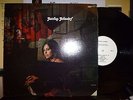
1979 Jeffrey Solow Cello Dominguez Piano Barber Kodaly Dello Vinyl LP Record VG+
$
26


Favourite Auctions
To save auctions to your favourites, please login
If you don't have an account, please register
Description
1979 Jeffrey Solow Cello Albert Dominguez Piano Barber Kodaly Dello Joio Vinyl LP Record VG+
Record Grade per Goldmine Standard: VG+
SIDE ONE BARBER Sonata 1st Mvt: Allegro ma non troppo (8:06) 2nd Mvt: Adagio-Presto-di nuovo Adagio (4:20) 3rd Mvt: Allegro appassionato (5:40) SIDE TWO KODALY Sonata 1st Mvt: FANTASIA. Adagio di molto (7:27) 2nd Mvt: Allegro con spirito (8:4-2) DELLOJOIO Duo Concertato Andantino-Allegro animat o-Andantino (6:04) While studying composition with Rosario Scalero at the Curtis Institute of Music in Philadelphia, Samuel Barber, a young man of eighteen, met Gian-Carlo Menotti, recently ar- rived from Italy. Menotti was also studying with Scalero and soon the two young men were fast friends, a relationship that has endured ever since. Barber spent many summers at the Menotti family home in Cadegliano, Italy, and during the summer of 1932 he and Gian-Carlo set out on a walking tour in the Italian Alps. During this bucolic trek Barber began to compose his Cello Sonata. Two weeks after his arrival at Cadegliano he had completed the first movement and was at work on the Scherzo. The en- tire composition was completed by November in Phila- delphia. The first and last movements, both in C minor, are cast in traditional Sonata-Allegro form, though both display the hall- mark of Barber’s unique style. The short second movement is in a type of ternary form with the first and third sections in the same tempo and key (Adagio, in E-flat). However, the third section seems to be more a continuation of the first, interrupted by a rather jocu- lar, almost humorous, scherzo-like B section (in F) which is totally independent of the other two. • 0 • At the age of fifteen Zoltcin Kodaly began studying com- position at the Royal Academy of Music in Budapest, receiv- ing a doctoral degree from the Academy in 1906. With Bartdk, in 1905, he began an intensive period of col- lecting and researching Hungarian folk music. Kodaly travel- ed extensively, jotting down the native melodies and dances from different localities, later editing and publishing them. This inevitably influenced his own works, but unlike Bartbk who used folk materials as a point of departure for his own creative odysseys, Kodaly quoted native melodies through- out many of his works. On the occasions when he did write original tunes, they were modeled so closely to native pat- terns that they are completely indistinguishable from actual folk materials. A problem for Kodaly (as well as for Bartbk) was that he felt he must personally inaugurate a tradition of nationalistic Hungarian music. Kodaly stated it thus: “From an artistic point of view, folk music means more to us than to nations which created a musical style of their own several centuries ago. In those countries folk music was assimilated by art music and that is the reason why a German musician can find in Bach or Beethoven that which we can seek as yet only in our villages—the organic life of a national tradition." In the two-movement Sonata for Cello and Piano, Kodaly is nearer to folk music than in earlier works, in tune-shape, in figurations and in form. The opening movement Fantasia is improvisatory and episodic in character, the emancipating quality being found in the many metric changes There is also an abruptness in transition from one mood to another that is both striking and compelling. Kodaly takes it as axio- matic that an instrument must be allowed to live according to its own nature. He writes eloquently for the cello, displaying its best characteristics by the urgency of the dominating lyrical passages. The piano writing is improvisatory and freely decorative, clearly influenced by the csardas style. It conveys the essence of pianism, but collaborates and does not control. To Kodaly music is a means of communication and the end of music is not merely to be music, but to add dignity to life. This Sonata is a step along that noble path. Norman Dello Joio represents a phenomenon uniquely characteristic of our cultural life—a first-generation Ameri- can who assimilates the heritage of his fathers to the thought and feeling of the land of his birth. His father, a church organist, emigrated from a small town near Naples and taught young Norman piano, organ and theory. The organ, Catholic Liturgy (Gregorian Chant), Italian opera, jazz, plus the powerful neo-classical influence of Paul Hindemith, all contributed to Dello Joio’s development as he studied at Juilliard and Tanglewood. He has received many awards, among them the Pulitzer Prize in Music (1957), and has been a faculty member of Sarah Lawrence College and the Mannes College of Music. Concertato is an eighteenth century Italian name for “Sym- phonies with the participation of several solo instruments, after the model of the earlier concerto grosso". Dello Joio’s one-movement composition falls into three sections, Andan- tino-Allegro animato-Andantino, and is basically in the tonal- ity of C major, with rhythmic unity established by the piano in the opening motif. Although often labeled a leading figure in the romantic camp of American composers, in this work Dello Joio shows the decided discipline of the neo-classicist. TRUMAN FISHER THE ARTISTS Jeffrey Solow possesses, according to the New York Times, “more technique than anyone has a right to have, a fiery tempera- ment, and a huge tone.” He was winner of the first Gregor Piati- gorsky Award of the Young Musicians Foundation of Los Angeles and received the Young Concert Artists Award in New York. Known not only for his interpretations of the standard cello repertoire, Mr. Solow has also championed new or neglected works including compositions by Walton, Davidoff, Volkmann, Toch, Rozsa and Chihara. Mr. Solow has performed both in re- cital and as soloist with orchestra in Europe, Latin America and the Orient, as well as throughout the United States. As a chamber musician he has performed in the Music Festivals of Spolcto, Marlboro, Sitka and Newport, and has toured with “Music from Marlboro”. He studied with Gabor Rcjto and Gregor Piatigorsky, also acting as assistant to Piatigorsky in his Master Class at the University of Southern California. Mr. Solow is a magna cum laudc graduate in Philosophy from UCLA. Albert Dominguez is equally at home in all styles from the Baroque to the 20th-century. He has performed concert! by Bach, Mozart, Schumann, Ravel, Rachmaninoff, Gershwin and Rozsa, the last under the direction of the composer. Following his debut recital in Los Angeles, the Los Angeles Times said, “He operates from a secure technical base, he has taste, a sense of style, dis- cerning musicianship, unusual poise, and he communicates readi- ly and sensitively.” In 1966 Roger Wagner invited Mr. Dominguez to tour with him through Europe, the Middle East, Japan, Canada and the United States as featured soloist. Mr. Dominguez re- ceived his Bachelor’s and Master’s degrees in Music at the Uni- versity of Southern California, studying piano with Lillian Steu- bcr and accomapnying with Gwendolyn Koldofsky. He was of- ficial pianist for the Jascha Heifetz Master Class and appeared in concert with Heifetz and Gregor Piatigorsky playing Dvorak’s Piano Trio in F Minor. Jeffrey Solow and Albert Dominguez have appeared in recital together many times, often performing the three works featured in this album.
lp1461
price rating