4x JOHN WILLIAMS film OST LPs '63-84 Diamond Head JANE EYRE Eiger Sanction River
£
58
$
77


Favourite Auctions
To save auctions to your favourites, please login
If you don't have an account, please register
Description
Rare (in this condition), precious and beautiful...!
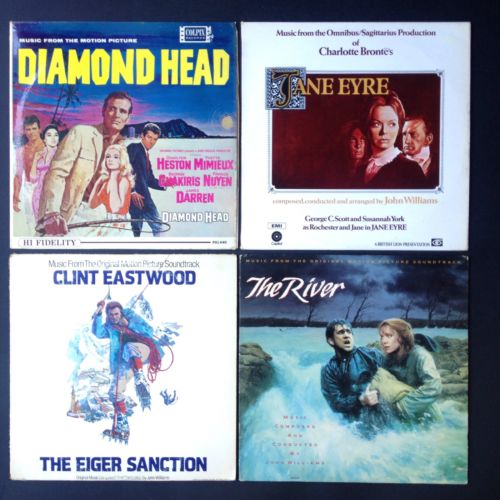
Here I have for sale 4 LPs of soundtracks from films composed by John Williams:
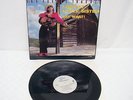
• Diamond Head (1963) – Colpix, UK, mono
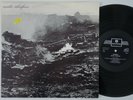
• Jane Eyre (1971) Capitol, UK
• The Eiger Sanction (1975) MCA, USA
• The River (1984) – MCA-6138, USA
Labels: Colpix, Capitol, MCA
Country: USA
Years: 1963, 1971, 1984, 1990
Overall condition:
Vinyls: NEAR MINT to MINT. Clean on visual inspection. Play superbly.
Covers and sleeves: EXCELLENT to NEAR MINT. Colours are unfaded and no tears on the sleeve. Decent examples overall. Very minor marks and edge wear may be visible on some.
––––––––––––––––––––––
1. Diamond Head (1963) – Colpix, UK
A1 Diamond Head 2:45
Composed By – Hugo Winterhalter, Mack DavidVocals – James Darren
A2 Main Title 3:10
A3 Luau Dance 1:52
A4 Sloan Strolls 2:18
A5 Honolulu Dive 2:43
A6 Catamaran 2:52
B1 Diamond Head Theme 2:28
B2 Hawaiian Welcome 2:34
B3 Sloan's Dream 2:59
B4 Mei Chen 2:44
B5 Manoalani 2:30
B6 End Title 1:54
Conductor, Composed By – Johnny Williams*
Review:
Diamond Head (1963) was a big-budget drama starring Charlton Heston as Richard "King" Howland, a wealthy Hawaiian plantation owner involved in messy family affairs. The film tackled issues of racism, abortion and even incest, becoming a moderate commercial success.
Scoring Diamond Head was a young pianist, jazz arranger and television composer just beginning his feature film career: "Johnny" Williams, now known worldwide as John. Diamond Head was one of his few dramas of the 1960s (he otherwise tended to score comedies) and his earliest feature film soundtrack album released.
Like many LPs of the era, the Diamond Head album was a re-recording featuring major score cues, source music, and cover versions of the main title theme (composed by bandleader Hugo Winterhalter, and sung in a vocal version on the record by costar James Darren). Williams adapted Winterhalter's melody for several cues in the underscore, otherwise writing all-new material for supporting characters and situations. Several source cues are more akin to Williams's television work of the time, while dramatic selections anticipate his symphonic glory of years ahead.
––––––––––––––––––––––
2. Jane Eyre (1971) Capitol, UK
Track listing:
A1 Jane Eyre Theme
A2 Overture (Main Title)
A3 Lowood
A4 To Thornfield
A5 String Quartet Festivity At Thornfield
A6 Grace Poole And Mason's Arrival
B1 Trio The Meeting
B2 Thwarted Wedding
B3 Across The Moors
B4 Restoration
B5 Reunion
Engineer – Eric Tomlinson
Flute – Peter Lloyd
Harpsichord – Les Pearson
Oboe – Derek Wiggins*
Piano – Bob Docker*
Violin – Pat Halling*
––––––––––––––––––––––
3. The Eiger Sanction (Music From The Original Motion Picture Soundtrack)
MCA-2088
USA
Track listing:
A1 Main Title 2:24
A2 Theme From "The Eiger Sanction" 2:53
A3 Fifty Miles Of Desert 2:50
A4 The Icy Ascent 3:41
A5 Friends And Enemies 3:01
A6 The Top Of The World 3:05
B1 Theme From "The Eiger Sanction" 2:09
B2 Training With George 2:13
B3 Theme From "The Eiger Sanction" (Hemlock And Jemima) 2:07
B4 George Sets The Pace 2:39
B5 The Microfilm Killing 2:04
B6 Up The Drainpipe 3:18
B7 The Eiger 2:14
Review:
One of his earliest films as director, The Eiger Sanction saw Clint Eastwood playing a retired CIA assassin lured back for one final mission. Set against gorgeous Swiss scenery, it's an entertaining espionage thriller based on the popular novel, and it's also one of the few times the man with no name has hired a "proper" film composer. He couldn't have picked a much better one, either. This is John Williams's only real score in the spy genre, and an impressive one it is at that.
The main theme is what makes it what it is. Heard initially on piano in the main title, it's a very catchy piece, containing the right mix of suave sophistication and mystery; a great piece. It's given a much jazzier rendition in the titular second track, a little kitschy perhaps but no moreso that other scores in this genre from the time. Another great variation on the theme is the romantic "Friends and Enemies", a really lovely piece of music, developing into a pop piece somewhat reminiscent of Lalo Schifrin's more easy listening material. Despite the quality of the thematic material, perhaps the most impressive sections of the score are the grand orchestral cues associated with the mountain from which the movie takes its name. "The Icy Ascent" is a brilliant piece of music, capturing both the beauty of the surroundings and the inherent dangers. Best of all may be "The Top of the World", a rapturous piece full of the kind of orchestral celebration Williams has become so used to writing in the decades since.
"Training with George" is a pseudo-baroque piece full of life and imagination and some really lovely string writing, demonstrating Williams's remarkable versatility while retaining that musical signature that makes all of his scores so recognisably his. The theme is reprised in "George Sets the Pace", though this time heard as a guitar solo with flute harmony, which works very well again. "Microfilm" is a little action music, though it's a bit more detached than maybe people are used to hearing from Williams, taking a somewhat low-key approach - it works quite well, though. "Up the Drainpipe" (which sounds more like the title of a 1960s sitcom set in Yorkshire than a cue title from a John Williams score) is suspense music, very different in tone to the rest of the album, and not particularly good, though it does feature some interesting vaguely dissonant passages. The finale, "The Eiger", is triumphant and beautiful. The Eiger Sanction will never be considered among Williams's finest scores, but it does have a certain allure to it and is rather different from anything else he's done. It's less Sherpa Tensing, more Sherpa Van Trophy, I suppose (don't worry, I don't suppose too many readers will get that curiously parochial reference). It's quite stylish (well, it was 30 years ago) and memorable in some places, beautiful and orchestral in others, so comes recommended.
––––––––––––––––––––––
4. The River (1984)
Track listing:
A1 The River
A2 Growing Up
A3 The Pony Ride
A4 Love Theme From The River
A5 The Ancestral Home
B1 Rain Clouds Gather
B2 From Farm To Factory
B3 Back From Town
B4 Tractor Scene
B5 A Family Meeting
B6 Young Friends Farewell
Art Direction – Vartan
Composed By – John Williams
Design – Tracy Veal
Engineer – Dan Wallen
Flute – Jim Walker
Guitar – Tommy Tedesco
Producer – John Williams
Trumpet – Warren Luening
Review:
One of the least well-known of John Williams's scores, at least from the time since he wrote Jaws in 1975, is The River. The movie is directed by Mark Rydell, who also worked with Williams on The Reivers and The Cowboys, two of his earliest truly impressive scores, and stars Mel Gibson as a struggling farmer in the mid-West of America. In common with his other music for Rydell, Williams crafted a lovely piece of Americana, nostalgic but also very beautiful, but whereas the two previous scores contained great big hints of especially Copland but also other American composers, this one seems to be more like pure Williams.
The main theme is a gem. Setting it, as he does, against a pop beat most of the time dates it a little and, perhaps, cheapens it a little, but its underlying charm is impossible to deny. In fact the opening cue is wonderful all the way though - the middle part sees the main theme, but either side there is some terrific writing for flute and trumpet, featuring sterling work by the Hollywood musicians. "Growing Up" is a lovely piece dominated by guitar, sounding remarkably fresh and highly-evocative. The "Love Theme" is an expansion on the trumpet melody heard in the opening cue; for a love theme it's surprisingly mournful and is peculiarly similar to Jerry Goldsmith's Chinatown, but none the worse for that. "The Ancestral Home" is one of the best cues, a stirring and powerful version of the main theme without the synth accompaniment.
Things take on a darker tone in "From Farm to Factory", but Williams's orchestral magic still weaves its spell. "Back from Town" begins with some very attractive material but then turns somewhat sour and suspenseful, signaling a change in direction for the score as a whole. "Tractor Scene" is actually fairly dissonant, representing the tougher side of life, but also reasonably anonymous. Things do then pick up again for the final couple of cues, "A Family Meeting" - quite beautiful and also admirably restrained, not perhaps a quality often associated with Williams - and "Young Friends' Farewell", in which the guitar is again allowed to take centre-stage. I know not many people agree, but I think that this is the kind of score that Williams is best at, in which his mastery of the orchestra is perhaps allowed to shine on a slightly smaller scale. The River is a warm and very attractive score but, unlike many of its type, it is composed so well that there is always more to discover with each new listen. Sadly, the CD's quite rare now, but if you can find a copy (possibly used from Amazon at the link below) then it's well worth it.
––––––––––––––––––––––
Postage and packaging FREE to UK. Will post worldwide. Europe £12; N and S America, USA, Canada £16; Asia, Australia, Japan £19. No returns accepted.
Payment by cheque (UK only) or Paypal please.
Please see my other soundtrack listings.
Thanks for looking and happy eBaying!
price rating