A Tribute to BOB WILLS 50th anniversary Texas Playboys Reunion rare old 5 lp set
$
40


Favourite Auctions
To save auctions to your favourites, please login
If you don't have an account, please register
Description
rare lp records
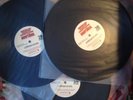
A TRIBUTE TO BOB WILLS. 5 lp record set. delta records DLP-1161
vinyl in Near Mint NM to Mint condition. box has some wear, yellowing, spots, 4 pieces of tape that were holding top on.
musicians include:
- TED ADAMS
- DANNY ALGUIRE
- JOE ANDREWS
- LOUISE ROWE BEASLEY
- MOE BILLINGTON
- BOB BOATRIGHT
- BILLY BOWMAN
- BILLY BRIGGS
- BILLY CARTER
- GENE CROWNOVER
- JERRY CUNNINGHAM
- TRUITT CUNNINGHAM
- JOHNNY CUVIELLO
- SMOKY DACUS
- CASEY DICKENS
- GLYNN DUNCAN
- JOHNNY EDWARDS
- JOE FRANK FERGUSON
- BENNY GARCIA
- GENE GASAWAY
- DARRELL JONES
- BOBBY LEE
- CHARLES R DOC LEWIS
- LEON MCAULIFF
- BILLY MCBAY
- BOBBY MCBAY
- LAURA LEE MCBRIDE
- PAUL MCGHEE
- CHARLIE MEEKS
- JUNIOR MITCHAN
- JODY NIX
- TOMMY PERKINS
- GEORGE PETTON
- LEON RAUSCH
- RAMONA REED
- HERB REMINGTON
- GLEN RHEES
- LEE ROSS
- ELDON SHAMBLIN
- DARLA DARET STEVENS
- AL STRICKLIN
- GENE THOMAS
- GEORGE UPTMOR
- JUNE WHALIN
- BOB WHITE STEEL
- BOB WHITE FIDDLE
- JIMMY WIDENER
- WOODY WOOD.
.
These records came from the estate of Lew Dewitt, Lewis Calvin "Lew" DeWitt (March 12, 1938 - August 15, 1990) was an American country music singer and composer. He was also a well known country music guitarist and tenor singer and was the original tenor and founding member of The Statler Brothers
visit my Ebay store bunch of old Stuff for lots of great books and more. Check out my other items!
James Robert "Bob" Wills (March 6, 1905 – May 13, 1975) was an American Western swing musician, songwriter, and bandleader. Considered by music authorities as the co-founder of Western swing,[1][2][3] he was universally known as the King of Western Swing (after the death of Spade Cooley who used the moniker "King Of Western Swing" from 1942 to 1969).
Wills formed several bands and played radio stations around the South and West until he formed the Texas Playboys in 1934 with Wills on fiddle, Tommy Duncan on piano and vocals, rhythm guitarist June Whalin, tenor banjoist Johnnie Lee Wills, and Kermit Whalin, who played steel guitar and bass. The band played regularly on a Tulsa, Oklahoma radio station and added Leon McAuliffe on steel guitar, pianist Al Stricklin, drummer Smokey Dacus, and a horn section that expanded the band's sound. Wills favored jazz-like arrangements and the band found national popularity into the 1940s with such hits as "Steel Guitar Rag", "New San Antonio Rose", "Smoke On The Water", "Stars And Stripes On Iwo Jima", and "New Spanish Two Step".
Wills and the Texas Playboys recorded with several publishers and companies, including Vocalion, Okeh, Columbia, and MGM, frequently moving. In 1950, he had two Top 10 hits, "Ida Red Likes The Boogie" and "Faded Love", which were his last hits for a decade. Throughout the 1950s, he struggled with poor health and tenuous finances, but continued to perform frequently despite the decline in popularity of his earlier music as rock and roll took over. Wills had a heart attack in 1962 and a second one the next year, which forced him to disband the Playboys although Wills continued to perform solo.
The Country Music Hall of Fame inducted Wills in 1968 and the Texas State Legislature honored him for his contribution to American music.[4] In 1972, Wills accepted a citation from the American Society of Composers, Authors and Publishers in Nashville. He was recording an album with fan Merle Haggard in 1973 when a stroke left him comatose until his death in 1975. The Rock and Roll Hall of Fame inducted Wills and the Texas Playboys in 1999. He was born on a farm near Kosse, Texas,[5] in Limestone County near Groesbeck, to Emma Lee Foley and John Tompkins Wills.[6] His father was a statewide champion fiddle player[7] and the Wills family was either playing music, or someone was "always wanting us to play for them", in addition to raising cotton on their farm.
In addition to picking cotton, the young Jim Bob learned to play the fiddle and the mandolin. Both a sister and several brothers played musical instruments, while another sister played piano. The Wills family frequently held country dances in their home, and there was dancing in all four rooms. While living in Hall County, Texas, they also played at 'ranch dances' which were popular in both North Texas and eastern New Mexico.[8]
Wills not only learned traditional music from his family, he learned some Negro songs directly from African Americans in the cotton fields near Lakeview, Texas, and said that he did not play with many white children other than his siblings, until he was seven or eight years old. African Americans were his playmates, and his father enjoyed watching him jig dance with black children.[9]
"I don't know whether they made them up as they moved down the cotton rows or not," Wills once told Charles Townsend, author of San Antonio Rose: The Life And Times Of Bob Wills, "but they sang blues you never heard before. After forming a new band, The Playboys, and relocating to Waco, Wills found enough popularity there to decide on a bigger market. They left Waco in January 1934 for Oklahoma City. Wills soon settled the renamed Texas Playboys in Tulsa, Oklahoma, and began broadcasting noontime shows over the 50,000 watt KVOO radio station. Their 12:30–1:15 p.m. Monday–Friday broadcasts became a veritable institution in the region. Nearly all of the daily (except Sunday) shows originated from the stage of Cain's Ballroom. In addition, they played dances in the evenings, including regular ones at the ballroom on Thursdays and Saturdays.
Wills added a trumpet to the band inadvertently when he hired Everet Stover as an announcer, not knowing that he had played with the New Orleans symphony and had directed the governor's band in Austin. Stover, thinking he had been hired as a trumpeter, began playing with the band with no comment from Wills. Young sax player Zeb McNally was allowed to play with the band, although Wills initially discouraged it. With two horns in the band, Wills realized he would have to add a drummer to balance things and create a fuller sound. He hired the young, "modern style musician" Smoky Dacus.[13] By 1935, Wills had added horn and reed players as well as drums to the Playboys. The addition of steel guitar whiz Leon McAuliffe in March 1935 added not only a formidable instrumentalist but a second engaging vocalist. Wills himself largely sang blues and sentimental ballads. Wills and the Texas Playboys did their first recordings on September 23–25, 1935 in Dallas, Texas, being produced by Don Law and Art Satherley of the American Record Corporation. There is strong evidence that the 1935 sessions took place at 508 Park Avenue along with sessions in 1937 and 1938.
With its jazz sophistication, pop music and blues influence, plus improvised scat and wisecrack commentary by Wills, the band became the first superstars of the genre. Milton Brown's death in 1936 had cleared the way for the Playboys.
Session rosters from 1938 show both "lead guitar" and "electric guitar" in addition to guitar and steel guitar in the Texas Playboys recordings.[27] Wills' 1938 recording of "Ida Red" served as a model for Chuck Berry's decades later version of the same song, "Maybellene".[28][29]
About this time, Wills purchased and performed with an old Guadagnini violin that had once fetched $7,600 for $1,600, the equivalent of about $24,000 in 2009.[13][30]
In 1940, "New San Antonio Rose" sold a million records and became the signature song of The Texas Playboys. The song's title referred to the fact that Wills had recorded it as a fiddle instrumental in 1938 as "San Antonio Rose". By then, the Texas Playboys were virtually two bands: one a fiddle-guitar-steel band with rhythm section and the second a first-rate big band able to play the day's swing and pop hits as well as Dixieland.
The "front line" of Wills' orchestra consisted of either fiddles or guitars after 1944
Three years later, DeWitt, feeling that his health had taken a turn for the better through continuing treatment, mounted a solo career. During this time he would return to touring and would release two albums: Here to Stay (1984)[3] and On My Own (1985).[4] He also charted a solo single on the country charts: the No. 77 "You'll Never Know" in 1985. A third and final album for the Compleat label remains unreleased, although two singles were pulled from it just prior to the label going into bankruptcy.
He would remain active as a performer until late 1989,[5] when his health went into a downward spiral which culminated in his death on August 15, 1990. The cause of death was heart and kidney disease, stemming from complications of Crohn's disease.
The Statler Brothers (sometimes referred to in country music circles as simply The Statlers) were an American country music, gospel, and vocal group. The quartet was formed in 1955 performing locally and in 1964 they began singing backup for Johnny Cash.
Originally performing gospel music at local churches, the group billed themselves as The Four Star Quartet, and later The Kingsmen.[1] In 1963, when the song "Louie, Louie" by the garage rock band also called The Kingsmen became famous, the group elected to bill themselves as The Statler Brothers. Despite the name, only two members of the group (Don and Harold Reid) are actual brothers and none has the surname of Statler. The band, in fact, named themselves after a brand of facial tissue they had noticed in a hotel room (they joked that they could have turned out to be the Kleenex Brothers).[2] Don Reid sang lead; Harold Reid, Don's older brother, sang bass; Phil Balsley sang baritone; and Lew DeWitt sang tenor and was the guitarist of the Statlers before being replaced by Jimmy Fortune in 1983 due to DeWitt's ill health.[3] DeWitt continued to perform as a solo artist until his death on August 15, 1990 from heart and kidney disease.[4]
The band's style was closely linked to their gospel roots. "We took gospel harmonies," said Harold Reid, "and put them over in country music."[1]
The group remained closely tied to their gospel roots, with a majority of their records containing at least one gospel song. They produced several albums containing only gospel music and recorded a tribute song to the Blackwood Brothers, who influenced their music. The Statler Brothers also wrote a tribute song to Johnny Cash, who discovered them. The song was called "We Got Paid by Cash", and it reminisces about their time with Cash. Very early on in the group's history, before the group named themselves "The Statler Brothers," Joe McDorman was their original lead singer.[5]
The Statler Brothers started their career at a performance at Lyndhurst Methodist Church near their hometown of Staunton.[1] In 1964, they started to become Johnny Cash's backing vocal for an ?8 1?2-year run as his opening act.[2] This period of their career was memorialized in their song "We Got Paid by Cash". They were featured regularly on Cash's hit show The Johnny Cash Show on ABC. The show ran from 1969-1971. Due to their expanding career the Statlers left Cash's entourage around the mid 1970s to pursue their own careers. They left Cash on good terms.
Two of their best-known songs are "Flowers on the Wall", their first major hit that was composed and written by Lew DeWitt, and the socially conscious "Bed of Rose's". In the 1980s, the Statlers were a mainstay on The Nashville Network (TNN), where their videos were shown regularly. Also on TNN, between 1991 and 1998, they hosted their own show, The Statler Brothers Show, a weekly variety show which was the channel's top-rated program for its entire run.[6][7] Their songs have been featured on several film soundtracks. These range from "Charlotte's Web" in Smokey and the Bandit II, to "Flowers on the Wall" in the crime dramedy Pulp Fiction.
Throughout their career, much of their appeal was related to their incorporation of comedy and parody into their musical act, thanks in large part to the humorous talent of group member Harold Reid; they were frequently nominated for awards for their comedy as well as their singing. They recorded two comedy albums as Lester "Roadhog" Moran and the Cadillac Cowboys, and one-half of one side of the album Country Music Then and Now was devoted to satirizing small-town radio stations' Saturday morning shows.
They earned the number one spot on the Billboard chart four times: for "Do You Know You Are My Sunshine?" in 1978; "Elizabeth" in 1984; and in 1985, "My Only Love" and "Too Much on My Heart".[8]
Since forming, the Statler Brothers have released over 40 albums.[9]
The Statler Brothers purchased and renovated their former elementary school in Staunton, and occupied the complex for several years. The complex consisted of offices for the group, a small museum and auditorium, as well as an adjacent building which served as office space for unrelated businesses. A garage was built to store the two tour buses that the group had used for many years. The group has since sold the building which has been converted back into a school.[citation needed]
In 1970, the group began performing at an annual Independence Day festival in Gypsy Hill Park in Staunton. The event, known as "Happy Birthday USA", lasted for 25 years and included many country music figures including Mel Tillis, Charley Pride and many others. The event drew as many as 100,000 fans each year. The group also honored their hometown with the song "Staunton, Virginia" on their 1973 album Do You Love Me Tonight
Location: stack 11-B records should be cleaned before playing. may have dust, fingerprints, etc.
I am not a record grading expert, I have just visually inspected the records and used the goldmine grading as a guide. I think you will be very happy with these records.
price rating