(ALAN BOWN-Listen)-[ORIGINAL 1970 1st Pressing]-British beat/psych era-C7-LP
A$
35
$
23
![(ALAN BOWN-Listen)-[ORIGINAL 1970 1st Pressing]-British beat/psych era-C7-LP](https://www.popsike.pics/pix/20170326/222452084828.jpg)

![Pic 2 (ALAN BOWN-Listen)-[ORIGINAL 1970 1st Pressing]-British beat/psych era-C7-LP](https://www.popsike.pics/pix/20170326/222452084828_2.jpg)
![Pic 3 (ALAN BOWN-Listen)-[ORIGINAL 1970 1st Pressing]-British beat/psych era-C7-LP](https://www.popsike.pics/pix/20170326/222452084828_3.jpg)
![Pic 4 (ALAN BOWN-Listen)-[ORIGINAL 1970 1st Pressing]-British beat/psych era-C7-LP](https://www.popsike.pics/pix/20170326/222452084828_4.jpg)
Favourite Auctions
To save auctions to your favourites, please login
If you don't have an account, please register
Description
ITEM: VINYL 12” LP 33 1/3rpm
ARTIST: ALAN BOWN
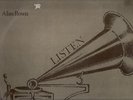
TITLE: Listen
COUNTRY PRINTED: OZ
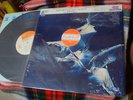
CAT No: ISLAND, ILPS-9131 (ORIGINAL 1st pressing 1970)
COVER: (Grade at EXCELLENT+) light creases
LABELS: (Grade at NEAR MINT+)
VINYL: (Grade at EXCELLENT+ to NEAR MINT-)
Pink Island label.
Sleeve has "Alan Bown"
Label has "The Alan Bown"
Artwork based on but different to the UK and US copies (two tone front, two tone back, textured sleeve).
TRACKS:
A1 Wanted Man 4:20
A2 Crash Landing 5:55
A3 Loosen Up 3:25
A4 Pyramid 3:46
A5 Forever 2:50
B1 Curfew 4:00
B2 Make Us All Believe 4:30
B3 Make Up Your Mind 8:45
B4 Get Myself Straight 4:00
COMMENT: Biography by Bruce Eder
Alan Bown made an improbable rock star -- though it could be argued that he was never really a "star." With the trumpet as his instrument, he wasn't even a terribly likely rock & roll bandleader, but he definitely was that, and for a lot of years. And if his bands' recordings had been as successful as their live shows, he'd likely have been a star and then some.
Any musical aspirations that he harbored were invisible until he completed a stint in the Royal Air Force at the outset of the 1960s. He found a music scene that was booming throughout England with an important extension to Germany, and which encompassed not only rock & roll but also blues, R&B, and jazz. The latter two areas were where Bown's interest lay, and he was soon a member of a group called the Embers that was booked into the Star Club in Hamburg, Germany, working on the same bills as such Liverpool-based artists as Tony Sheridan, the Beatles, the Undertakers, et al. He returned to England after the extended engagement and joined the John Barry Seven, led by the trumpeter/arranger John Barry. He was actually more involved with the group than Barry, whose burgeoning careers as a record producer and film music composer were taking off in a big way and keeping him busy outside of performing. When Barry disbanded the group in 1964, Bown picked up the pieces and formed an outfit of his own -- his proposed name was ABC, standing for Alan Bown Community, but at the behest of his manager he chose the Alan Bown Set instead. The sextet was an immediate success as a live act, and it became an audience and critical favorite in London.
Oddly enough, Bown and company never even thought about a recording contract, intending the band as a vehicle for steady work for themselves, doing what they enjoyed. It wasn't until a couple of years into their history that Tony Reeves (the future member of Colosseum), an A&R man for Pye Records, spotted the Alan Bown Set and got them under contract, which resulted in a string of 45s and half of an LP called London Swings that included part of their live show, in tandem with Jimmy James & the Vagabonds. The Pye contract ended in late 1967, and the group was then signed to the British division of MGM Records, to an imprint called Music Factory. By this time, they'd modified their image and sound -- the interest in R&B and soul was fading somewhat in the London clubs, even as psychedelic music was starting to become all the rage. And so, for its MGM/Music Factory releases, a somewhat longer-haired and more flamboyant version of Bown's band was seen, and in lieu of the Alan Bown Set, the group was simply known as the Alan Bown!, complete with exclamation point. They cut a song called "We Can Help You," which had originated with the British band Nirvana -- and the Alan Bown version started to make a splash in England in terms of exposure.
But on the week of the record's actual release, disaster struck on both sides of the Atlantic simultaneously. A strike at the plant where the record was pressed and due to ship from prevented its release, at precisely the moment when it had to be in stores. And MGM Records chose to abandon the Music Factory label -- though the Alan Bown! would remain with the company on the MGM label proper, this also meant that the company abandoned all promotional and distribution efforts involving the Music Factory releases. "We Can Help You," despite a string of promotional appearances by the band on its behalf (including the television show Top of the Pops), was left to die and rot on the vine, and the accompanying LP, called Outward Bown, was ignored. A pair of singles that followed, "Toyland" b/w "Technicolour Dream" and "Story Book" b/w "Little Lesley," both failed to chart. The album included the group's psychedelic pop version of Bob Dylan's "All Along the Watchtower," which the Alan Bown! had been doing in their live shows as well -- the record label would never consider it for a single release, but Jimi Hendrix (who apparently knew their version) was more successful with his own Track Records label and got a hit single out of the same song.
A contract with Deram Records, the progressive rock imprint of English Decca, followed, along with a pair of singles and a self-titled LP, and there was also a lineup shift that, for a time, brought Robert Palmer into the group as its lead singer. But despite a lot of touring and television exposure, and the reconstituting of its sound and image in a much more progressive rock vein, the group's moment had clearly passed by the start of the new decade. Even a signing to the Island label failed to re-ignite their commercial prospects, though Bown did keep a version of the band -- including Mel Collins on saxophone -- together for touring purposes as late as 1972. After that last tour, Bown himself -- following a short stay in a band called Jonesy -- moved on to a producer's spot with British CBS Records, where he was one of those involved with the signing of Mott the Hoople and Sailor. By the 1980s, he had long since abandoned performing in favor of the business side of the music business, and started his own production and publishing company. Thanks to the continued reissue of his '60s-era recordings, however, he remains a much-loved and fondly remembered figure as a performer, from the British beat era into the psychedelic period.
VINYL GRADING SYSTEM
MINT:
RECORD: New condition with no surface marks or loss of sound quality.
COVER: New condition with no surface marks, creases or wear.
NEAR MINT:
RECORD: Barely noticeable surface mark with no loss of sound quality.
COVER: Barely noticeable surface mark/ wear.
EXCELLENT:
RECORD: Some signs of being played with extremely little if no loss of sound quality.
COVER: Slight wear or creasing.
VERY GOOD:
RECORD: Obviously been played with noticeable surface marks & the occasional light scratches but exhibits no major loss of sound quality.
COVER: Noticeable wear on cover, seam or spine.
+(PLUS)/-(MINUS):
Slightly up or down in condition as appears in the comments above.
NOTE:
Gradings are done visually unless there appears to be a questionable surface mark on the vinyl, it is then put on the turntable to check. A comment describing the outcome will appear if this is the case.
COMBINED/BULK POSTAGE SAVINGS
WITHIN AUSTRALIA
1 LP:
Use the Post Calculator or see above to find the POST COST of this item within OZ.
WANT TO ADD MORE ITEMS?
ALL AUSTRALIAN STATES=$18.95 for 2-17 LPs (or up to 5kg).
NOTE:
Double albums count as 2 LPs; triple albums count as 3 LPs etc
PAYMENT METHOD
WITHIN AUSTRALIA
Option…
Internet Bank Deposit /Money Order/Personal Cheque (waiting period 5 days till cleared) /Paypal in $AUD
GUARANTEE
We strive to provide an accurate grading to ensure a quality product.
But sometimes an error is made.
If you consider this is the case, then please contact us for the refund of your purchase.
FEEDBACK
When you get your item, please examine or test it.
If you are satisfied, then leave some positive feedback for me.
I will have already left feedback for you.
price rating