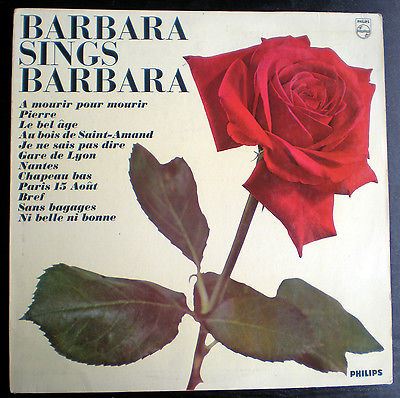
BARBARA SINGS BARBARA,FRENCH CHANSON,MONIQUE SERF,RARE PHILIPS U.K.PRESSING,LP
$
50


Favourite Auctions
To save auctions to your favourites, please login
If you don't have an account, please register
Description
This item will be shipped outside U.S.
Shipping to U.S. is not $ 4.00
Registered air mail to all countries is $ 10.00
BARBARA SINGS BARBARA ( FRENCH CHANSON )
VERY RARE PHILIPS MONO PRESSING, (BL 7700 ) B77806 L, MADE IN U.K.
Side On
1 A Mourir Pour Mourir
2 Pierre
3 Le Bel Age
4 Au Bois De Saint-Amand
5 Je Ne Sais Pas Dire...
6 Gare De Lyon
Side Two
1 Nantes
2 Chapeau Bas
3 Paris 15 Aout
4 Bref
5 Sans Bagages
6 Ni Belle Ni Bonne
Condition:
Vinyl - visually is VG, no major damage, clean.
Play Very Good ( without distortion in sound, play very well - excellent audiophile pressing )
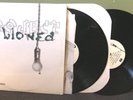
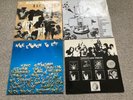
Cover is EXCELLENT , see photos
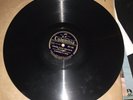
Labels - NEAR MINT, see photos
Although Barbara certainly didn't like the thought of it, she actually was part of the legendary club formed by her friend Jacques Brel, Georges Brassens, Léo Ferré, and Edith Piaf. A truly generous and humble woman, Barbara insisted on living up to her audience's expectations and was constantly questioning her success. As an artist, she achieved one of the most incredible communions with several generations of listeners. As a woman, Barbara contributed to major evolutions in mentalities in a mainly masculine music business. For that matter, having gained Georges Brassens' respect stands as a major feminist breakthrough in its own right. If "L'Aigle Noir" was to become the most vibrant echo to her memory, it would also sadly tend to crystallize common believes and clichés about her dark dresses and moods. When she passed away in 1997, France lost its last cabaret legend, thereby closing this illustrious chapter of its musical history. Her songbook includes many classics like "Göttingen," "Nantes," "Quand Ceux Qui Vont," "A Mourir Pour Mourir," "L'Aigle Noir," "Dis Quand Reviendras-Tu?," or "Ma Plus Belle Histoire d'Amour."
Barbara was born Monique Andrée Serf in Paris on June 9, 1930. She lived a difficult childhood, living a complex relationship with her father and constantly moving from place to place, scars that would greatly influence her work and personality. She moved to Bruxelles as soon as possible to live and work in a cabaret under the name of Barbara Brody, after having seriously and successfully learned piano in France. Those were rough times for Barbara, who worked day and night, but eventually succeeded in her second audition at the famous Paris cabaret L'Ecluse in 1953. Settling in Paris, she kept working at L'Ecluse until she became the cabaret's main attraction in 1958, year she released her first French single, "La Chanteuse de Minuit." In 1959, she was ready to record her first LP, Barbara Chante Brassens. Brassens (not famous for his respect to womankind) didn't care too much for that newcomer but the two artists ended up getting along with time and conversation. The record was warmly received and rewarded by the Grand Prix du Disque, and in 1961 she released a second LP, Barbara Chante Jacques Brel. Brel, as it turned out, was to become a dear friend of hers. 1961 was also the year she learned about her father's death. He had gone missing for years and those were emotionally difficult times for Barbara, as told in her touching song "Nantes."
Barbara Chante Barbara By 1963, she was multiplying performances, slowly drifting away from L'Ecluse to Bobino over the years, and had divorced her first husband, Claude Suys. 1964 was a major step in Barbara's career. She performed for the last time at L'Ecluse in February, released her first set of original material, Barbara Chante Barbara, and opened for Brassens at Bobino at the end of the year. In 1965, Barbara Chante Barbara was rewarded by the Académie Charles Cros Award, and she began touring alongside Serge Gainsbourg. In 1967, the year her mother passed away, she released a new LP, Ma Plus Belle Histoire d'Amour (an homage to her beloved faithful audience), and all along the end of the '60s, she would go on increasingly large tours (expanding to Switzerland, Belgium, Italy, Romania, U.S.S.R., Israel, Canada, and Japan -- in the '70s) and become a major name in the French music business.
I grade all my records using the Record Collector's Grading System:
Mint - The record itself is in brand new condition with no surface marks or deterioration in sound quality. The cover and any extra items such as the lyric sheet, booklet or poster are in perfect condition. Records advertised as Sealed or Unplayed should be Mint.
Excellent - The record shows signs of having been played, but there is very little lessening in sound quality. The cover and packaging might have slight wear and/or creasing.
Very Good - The record has obviously been played many times, but displays no major deterioration in sound quality, despite noticable surface marks and the occasional light scratch. Normal wear and tear on the cover or extra items, without any major defects, is acceptable.
Good - The record has been played so much that the sound quality has noticeably deteriorated, perhaps with some distortion and mild scratches. The cover and contents suffer from folding, scuffing of edges, spine splits discoloration etc.
Fair - The record is still just playable but has not been cared for properly and displays considerable surface noise: it may even jump. The cover and contents will be torn, stained and/ or defaced.
Poor - The record will not play properly due to scratches, bad surface noise, etc. The cover and contents will be badly damaged or partly missing.
price rating


![Daniel Santos Con La Sonora Matancera Vol I [VINYL] NEVER PLAYED VERY RARE](https://www.popsike.mobi/php/thumbnail.php?url=https://www.popsike.pics/pix/20160628/262501691215.jpg)