BB KING Orchestra Please Hurry Home RARE 1953 RPM 7" 45 HEAR electric blues B
$
30


Favourite Auctions
To save auctions to your favourites, please login
If you don't have an account, please register
Description
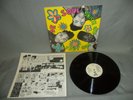
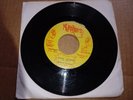
Record: Good (G) has marks and slight warp with heat damage, plays generally pleasant VG (actual sound sample provided) Hole wear, Label has a vintage number sticker and a few tears Cover: Generic Labels: has vintage number sticker and a few tears B.B. King Please Hurry Home 1953 United States RPM RPM 391 7" [[M/S/Q]] Single bbking7plsRPM
B.B. King
Please Hurry Home
1953 United States RPM Single
Original press RARE!
Condition
Vinyl: Good (G) has marks and slight warp with heat damage, plays generally pleasant VG (actual sound sample provided) Hole wear, Label has a vintage number sticker and a few tears
Sleeve: Generic
See Item Specifics section above for additional details
(clickable images enlarge)
Tracks:
B. B. King And His Orchestra* ?– Please Hurry Home / Neighborhood Affair Label: RPM Records (5) – 45X391 Format: Vinyl, 7", 45 RPM Country: US Released: 1953 Genre: Blues Style: Electric Blues Tracklist? A Please Hurry Home B Neighborhood Affair
BB KING Orchestra Please Hurry Home RARE 1953 RPM 7" 45 HEAR electric blues B Riley B. King (born September 16, 1925), known by the stage name B.B. King, is an African-American blues songwriter, vocalist and guitarist. Rolling Stone magazine ranked him at No. 6 on its list of the 100 greatest guitarists of all time,[1] and he was ranked No. 17 in Gibson's Top 50 Guitarists of All Time.[2] According to Edward M. Komara, King "introduced a sophisticated style of soloing based on fluid string bending and shimmering vibrato that would influence virtually every electric blues guitarist that followed."[3] King was inducted into the Rock and Roll Hall of Fame in 1987. He is considered one of the most influential blues musicians of all time, because of this he is often nicknamed 'The King of Blues'. He is also known for performing tirelessly throughout his musical career appearing at 250-300 concerts per year until his seventies. In 1956 it was noted that he appeared at 342 shows, and still at the age of 87 King appears at 100 shows a year. Over the years, King has developed one of the world's most identifiable guitar styles. He borrowed from Blind Lemon Jefferson, T-Bone Walker and others, integrating his precise and complex vocal-like string bends and his left hand vibrato, both of which have become indispensable components of rock guitarist's vocabulary. His economy and phrasing has been a model for thousands of players, from Eric Clapton and George Harrison to Jeff Beck. King has mixed blues, jazz, swing, mainstream pop and jump into a unique sound. In King's words, "When I sing, I play in my mind; the minute I stop singing orally, I start to sing by playing Lucille." Contents [show] [edit]Early life King was born in a small cabin on a cotton plantation outside of Berclair, Mississippi, to Albert King and Nora Ella Farr on September 16, 1925. In 1930, when King was four years old, his father abandoned the family, and his mother married another man. Because Nora Ella was too poor to raise her son, King was raised by his maternal grandmother Elnora Farr in Kilmichael, Mississippi.[4] King grew up singing in the gospel choir at Elkhorn Baptist Church in Kilmichael. At the age of 12, he purchased his first guitar for $15.00,[4] although another source indicates he was given his first guitar by Bukka White, his mother's first cousin (King's grandmother and White's mother were sisters).[5] In 1943, King left Kilmichael to work as a tractor driver and play guitar with the Famous St. John's Quartet of Inverness, Mississippi, performing at area churches and on WGRM in Greenwood, Mississippi.[6][7] In 1946, King followed Bukka White to Memphis, Tennessee. White took him in for the next ten months.[4] However, King shortly returned to Mississippi, where he decided to prepare himself better for the next visit, and returned to West Memphis, Arkansas, two years later in 1948. He performed on Sonny Boy Williamson's radio program on KWEM in West Memphis, where he began to develop a local audience for his sound. King's appearances led to steady engagements at the Sixteenth Avenue Grill in West Memphis and later to a ten-minute spot on the legendary Memphis radio station WDIA. King's Spot became so popular, it was expanded and became the Sepia Swing Club. Initially he worked at WDIA as a singer and disc jockey, gaining the nickname Beale Street Blues Boy, which was later shortened to Blues Boy and finally to B.B.[8][9] It was there that he first met T-Bone Walker. "Once I'd heard him for the first time, I knew I'd have to have [an electric guitar] myself. 'Had' to have one, short of stealing!", he said. 1949–2005 In 1949, King began recording songs under contract with Los Angeles-based RPM Records. Many of King's early recordings were produced by Sam Phillips, who later founded Sun Records. Before his RPM contract, King had debuted on Bullet Records by issuing the single "Miss Martha King" (1949), which did not chart well. "My very first recordings [in 1949] were for a company out of Nashville called Bullet, the Bullet Record Transcription company," King recalls. "I had horns that very first session. I had Phineas Newborn on piano; his father played drums, and his brother, Calvin, played guitar with me. I had Tuff Green on bass, Ben Branch on tenor sax, his brother, Thomas Branch, on trumpet, and a lady trombone player. The Newborn family were the house band at the famous Plantation Inn in West Memphis."[11] Performing with his famous guitar, Lucille King assembled his own band; the B.B. King Review, under the leadership of Millard Lee. The band initially consisted of Calvin Owens and Kenneth Sands (trumpet), Lawrence Burdin (alto saxophone), George Coleman (tenor saxophone),[12] Floyd Newman (baritone saxophone), Millard Lee (piano), George Joyner (bass) and Earl Forest and Ted Curry (drums). Onzie Horne was a trained musician elicited as an arranger to assist King with his compositions. By his own admission, he cannot play chords well[13] and always relies on improvisation. This was followed by tours across the USA with performances in major theaters in cities such as Washington, D.C., Chicago, Los Angeles, Detroit and St. Louis, as well as numerous gigs in small clubs and juke joints of the southern US states. In the winter of 1949, King played at a dance hall in Twist, Arkansas. In order to heat the hall, a barrel half-filled with kerosene was lit, a fairly common practice at the time. During a performance, two men began to fight, knocking over the burning barrel and sending burning fuel across the floor. The hall burst into flames, which triggered an evacuation. Once outside, King realized that he had left his guitar inside the burning building. He entered the blaze to retrieve his beloved guitar, a Gibson hollow electric. Two people died in the fire. The next day, King learned that the two men were fighting over a woman named Lucille. King named that first guitar Lucille, as well as every one he owned since that near-fatal experience, as a reminder never again to do something as stupid as run into a burning building or fight over women. King meanwhile toured the entire "Chitlin' circuit" and 1956 became a record-breaking year, with 342 concerts booked. The same year he founded his own record label, Blues Boys Kingdom, with headquarters at Beale Street in Memphis. There, among other projects, he produced artists such as Millard Lee and Levi Seabury. In the 1950s, B.B. King became one of the most important names in R&B music, amassing an impressive list of hits including "3 O'Clock Blues", "You Know I Love You," "Woke Up This Morning," "Please Love Me," "When My Heart Beats like a Hammer," "Whole Lotta Love," "You Upset Me Baby," "Every Day I Have the Blues", "Sneakin' Around," "Ten Long Years," "Bad Luck," "Sweet Little Angel", "On My Word of Honor," and "Please Accept My Love." In 1962, King signed to ABC-Paramount Records, which was later absorbed into MCA Records, and this hence into his current label, Geffen Records. In November 1964, King recorded the Live at the Regal album at the Regal Theater in Chicago, Illinois. King won a Grammy Award for a tune called "The Thrill Is Gone";[14] his version became a hit on both the pop and R&B charts, which was rare during that time for an R&B artist. It also gained the number 183 spot in Rolling Stone magazine's 500 Greatest Songs of All Time. He gained further visibility among rock audiences as an opening act on The Rolling Stones' 1969 American Tour. King's mainstream success continued throughout the 1970s with songs like "To Know You is to Love You" and "I Like to Live the Love". King was inducted into the Blues Hall of Fame in 1980, and inducted into the Rock and Roll Hall of Fame in 1987. In 2004 he was awarded the international Polar Music Prize, given to artists "in recognition of exceptional achievements in the creation and advancement of music."[15] B.B. King in concert in France 1989 From the 1980s onward he has continued to maintain a highly visible and active career, appearing on numerous television shows and performing 300 nights a year. In 1988, King reached a new generation of fans with the single "When Love Comes to Town", a collaborative effort between King and the Irish band U2 on their Rattle and Hum album. Also that year King played for the 1988 Republican National Convention at the behest of the notorious Republican operative Lee Atwater. King has remained friendly with the Bush Family ever since and in 1990 was awarded the Presidential Medal of the Arts by George H.W. Bush and the Medal of Freedom by George W. Bush in 2008. In 2000, King teamed up with guitarist Eric Clapton to record Riding With the King. In 1998, King appeared in The Blues Brothers 2000, playing the part of the lead singer of the Louisiana Gator Boys, along with Clapton, Dr. John, Koko Taylor and Bo Diddley. biography[-]by Bill Dahl Universally hailed as the reigning king of the blues, the legendary B.B. King is without a doubt the single most important electric guitarist of the last half century. His bent notes and staccato picking style have influenced legions of contemporary bluesmen, while his gritty and confident voice -- capable of wringing every nuance from any lyric -- provides a worthy match for his passionate playing. Between 1951 and 1985, King notched an impressive 74 entries on Billboard's R&B charts, and he was one of the few full-fledged blues artists to score a major pop hit when his 1970 smash "The Thrill Is Gone" crossed over to mainstream success (engendering memorable appearances on The Ed Sullivan Show and American Bandstand). Since that time, he has partnered with such musicians as Eric Clapton and U2 while managing his own acclaimed solo career, all the while maintaining his immediately recognizable style on the electric guitar. The seeds of Riley B. King's enduring talent were sown deep in the blues-rich Mississippi Delta, where he was born in 1925 near the town of Itta Bena. He was shuttled between his mother's home and his grandmother's residence as a child, his father having left the family when King was very young. The youth put in long days working as a sharecropper and devoutly sang the Lord's praises at church before moving to Indianola -- another town located in the heart of the Delta -- in 1943. Country and gospel music left an indelible impression on King's musical mindset as he matured, along with the styles of blues greats (T-Bone Walker and Lonnie Johnson) and jazz geniuses (Charlie Christian and Django Reinhardt). In 1946, he set off for Memphis to look up his cousin, a rough-edged country blues guitarist named Bukka White. For ten invaluable months, White taught his eager young relative the finer points of playing blues guitar. After returning briefly to Indianola and the sharecropper's eternal struggle with his wife Martha, King returned to Memphis in late 1948. This time, he stuck around for a while. King was soon broadcasting his music live via Memphis radio station WDIA, a frequency that had only recently switched to a pioneering all-black format. Local club owners preferred that their attractions also held down radio gigs so they could plug their nightly appearances on the air. When WDIA DJ Maurice "Hot Rod" Hulbert exited his air shift, King took over his record-spinning duties. At first tagged "The Peptikon Boy" (an alcohol-loaded elixir that rivaled Hadacol) when WDIA put him on the air, King's on-air handle became "The Beale Street Blues Boy," later shortened to Blues Boy and then a far snappier B.B. King had a four-star breakthrough year in 1949. He cut his first four tracks for Jim Bulleit's Bullet Records (including a number entitled "Miss Martha King" after his wife), then signed a contract with the Bihari Brothers' Los Angeles-based RPM Records. King cut a plethora of sides in Memphis over the next couple of years for RPM, many of them produced by a relative newcomer named Sam Phillips (whose Sun Records was still a distant dream at that point in time). Phillips was independently producing sides for both the Biharis and Chess; his stable also included Howlin' Wolf, Rosco Gordon, and fellow WDIA personality Rufus Thomas. the Biharis also recorded some of King's early output themselves, erecting portable recording equipment wherever they could locate a suitable facility. King's first national R&B chart-topper in 1951, "Three O'Clock Blues" (previously waxed by Lowell Fulson), was cut at a Memphis YMCA. King's Memphis running partners included vocalist Bobby Bland, drummer Earl Forest, and ballad-singing pianist Johnny Ace. When King hit the road to promote "Three O'Clock Blues," he handed the group, known as the Beale Streeters, over to Ace. It was during this era that King first named his beloved guitar "Lucille." Seems that while he was playing a joint in a little Arkansas town called Twist, fisticuffs broke out between two jealous suitors over a lady. The brawlers knocked over a kerosene-filled garbage pail that was heating the place, setting the room ablaze. In the frantic scramble to escape the flames, King left his guitar inside. He foolishly ran back in to retrieve it, dodging the flames and almost losing his life. When the smoke had cleared, King learned that the lady who had inspired such violent passion was named Lucille. Plenty of Lucilles have passed through his hands since; Gibson has even marketed a B.B.-approved guitar model under the name. The 1950s saw King establish himself as a perennially formidable hitmaking force in the R&B field. Recording mostly in L.A. (the WDIA air shift became impossible to maintain by 1953 due to King's endless touring) for RPM and its successor Kent, King scored 20 chart items during that musically tumultuous decade, including such memorable efforts as "You Know I Love You" (1952); "Woke Up This Morning" and "Please Love Me" (1953); "When My Heart Beats like a Hammer," "Whole Lotta' Love," and "You Upset Me Baby" (1954); "Every Day I Have the Blues" (another Fulson remake), the dreamy blues ballad "Sneakin' Around," and "Ten Long Years" (1955); "Bad Luck," "Sweet Little Angel," and a Platters-like "On My Word of Honor" (1956); and "Please Accept My Love" (first cut by Jimmy Wilson) in 1958. King's guitar attack grew more aggressive and pointed as the decade progressed, influencing a legion of up-and-coming axemen across the nation. In 1960, King's impassioned two-sided revival of Joe Turner's "Sweet Sixteen" became another mammoth seller, and his "Got a Right to Love My Baby" and "Partin' Time" weren't far behind. But Kent couldn't hang onto a star like King forever (and he may have been tired of watching his new LPs consigned directly into the 99-cent bins on the Biharis' cheapo Crown logo). King moved over to ABC-Paramount Records in 1962, following the lead of Lloyd Price, Ray Charles, and before long, Fats Domino. In November of 1964, the guitarist cut his seminal Live at the Regal album at the fabled Chicago theater and excitement virtually leaped out of the grooves. That same year, he enjoyed a minor hit with "How Blue Can You Get," one of his many signature tunes. "Don't Answer the Door" in 1966 and "Paying the Cost to Be the Boss" two years later were Top Ten R&B entries, and the socially charged and funk-tinged "Why I Sing the Blues" just missed achieving the same status in 1969. Across-the-board stardom finally arrived in 1969 for the deserving guitarist, when he crashed the mainstream consciousness in a big way with a stately, violin-drenched minor-key treatment of Roy Hawkins' "The Thrill Is Gone" that was quite a departure from the concise horn-powered backing King had customarily employed. At last, pop audiences were convinced that they should get to know King better: not only was the track a number-three R&B smash, it vaulted to the upper reaches of the pop lists as well. King was one of a precious few bluesmen to score hits consistently during the 1970s, and for good reason: he wasn't afraid to experiment with the idiom. In 1973, he ventured to Philadelphia to record a pair of huge sellers, "To Know You Is to Love You" and "I Like to Live the Love," with the same silky rhythm section that powered the hits of the Spinners and the O'Jays. In 1976, he teamed up with his old cohort Bland to wax some well-received duets. And in 1978, he joined forces with the jazzy Crusaders to make the gloriously funky "Never Make Your Move Too Soon" and an inspiring "When It All Comes Down." Occasionally, the daring deviations veered off-course; Love Me Tender, an album that attempted to harness the Nashville country sound, was an artistic disaster. Although his concerts were consistently as satisfying as anyone in the field (King asserted himself as a road warrior of remarkable resiliency who gigged an average of 300 nights a year), King tempered his studio activities somewhat. Nevertheless, his 1993 MCA disc Blues Summit was a return to form, as King duetted with his peers (John Lee Hooker, Etta James, Fulson, Koko Taylor) on a program of standards. Other notable releases from that period include 1999's Let the Good Times Roll: The Music of Louis Jordan and 2000's Riding with the King, a collaboration with Eric Clapton. King celebrated his 80th birthday in 2005 with the star-studded album 80, which featured guest spots from such varied artists as Gloria Estefan, John Mayer, and Van Morrison. Live was issued in 2008; that same year, King released an engaging return to pure blues, One Kind Favor, which eschewed the slick sounds of his 21st century work for a stripped-back approach. A long overdue career-spanning box set of King's over 60 years of touring, recording, and performing, Ladies and Gentlemen...Mr. B.B. King, appeared in 2012. GENRES Blues R&B STYLES Modern Electric Blues Soul-Blues Early R&B Memphis Blues Regional Blues ACTIVE 1940s - 2010s BORN September 16, 1925 in Indianola, MS ALIASES Riley B. King Universally hailed as the reigning king of the blues, the legendary B.B. King is without a doubt the single most important electric guitarist of the last half century. His bent notes and staccato picking style have influenced legions of contemporary bluesmen, while his gritty and confident voice -- capable of wringing every nuance from any lyric -- provides a worthy match for his passionate playing. Between 1951 and 1985, King notched an impressive 74 entries on Billboard's R&B charts, and he was one of the few full-fledged blues artists to score a major pop hit when his 1970 smash "The Thrill Is Gone" crossed over to mainstream success (engendering memorable appearances on The Ed Sullivan Show and American Bandstand). Since that time, he has partnered with such musicians as Eric Clapton and U2 while managing his own acclaimed solo career, all the while maintaining his immediately recognizable style on the electric guitar. The seeds of Riley B. King's enduring talent were sown deep in the blues-rich Mississippi Delta, where he was born in 1925 near the town of Itta Bena. He was shuttled between his mother's home and his grandmother's residence as a child, his father having left the family when King was very young. The youth put in long days working as a sharecropper and devoutly sang the Lord's praises at church before moving to Indianola -- another town located in the heart of the Delta -- in 1943. Country and gospel music left an indelible impression on King's musical mindset as he matured, along with the styles of blues greats (T-Bone Walker and Lonnie Johnson) and jazz geniuses (Charlie Christian and Django Reinhardt). In 1946, he set off for Memphis to look up his cousin, a rough-edged country blues guitarist named Bukka White. For ten invaluable months, White taught his eager young relative the finer points of playing blues guitar. After returning briefly to Indianola and the sharecropper's eternal struggle with his wife Martha, King returned to Memphis in late 1948. This time, he stuck around for a while. King was soon broadcasting his music live via Memphis radio station WDIA, a frequency that had only recently switched to a pioneering all-black format. Local club owners preferred that their attractions also held down radio gigs so they could plug their nightly appearances on the air. When WDIA DJ Maurice "Hot Rod" Hulbert exited his air shift, King took over his record-spinning duties. At first tagged "The Peptikon Boy" (an alcohol-loaded elixir that rivaled Hadacol) when WDIA put him on the air, King's on-air handle became "The Beale Street Blues Boy," later shortened to Blues Boy and then a far snappier B.B. King had a four-star breakthrough year in 1949. He cut his first four tracks for Jim Bulleit's Bullet Records (including a number entitled "Miss Martha King" after his wife), then signed a contract with the Bihari Brothers' Los Angeles-based RPM Records. King cut a plethora of sides in Memphis over the next couple of years for RPM, many of them produced by a relative newcomer named Sam Phillips (whose Sun Records was still a distant dream at that point in time). Phillips was independently producing sides for both the Biharis and Chess; his stable also included Howlin' Wolf, Rosco Gordon, and fellow WDIA personality Rufus Thomas. the Biharis also recorded some of King's early output themselves, erecting portable recording equipment wherever they could locate a suitable facility. King's first national R&B chart-topper in 1951, "Three O'Clock Blues" (previously waxed by Lowell Fulson), was cut at a Memphis YMCA. King's Memphis running partners included vocalist Bobby Bland, drummer Earl Forest, and ballad-singing pianist Johnny Ace. When King hit the road to promote "Three O'Clock Blues," he handed the group, known as the Beale Streeters, over to Ace. It was during this era that King first named his beloved guitar "Lucille." Seems that while he was playing a joint in a little Arkansas town called Twist, fisticuffs broke out between two jealous suitors over a lady. The brawlers knocked over a kerosene-filled garbage pail that was heating the place, setting the room ablaze. In the frantic scramble to escape the flames, King left his guitar inside. He foolishly ran back in to retrieve it, dodging the flames and almost losing his life. When the smoke had cleared, King learned that the lady who had inspired such violent passion was named Lucille. Plenty of Lucilles have passed through his hands since; Gibson has even marketed a B.B.-approved guitar model under the name. The 1950s saw King establish himself as a perennially formidable hitmaking force in the R&B field. Recording mostly in L.A. (the WDIA air shift became impossible to maintain by 1953 due to King's endless touring) for RPM and its successor Kent, King scored 20 chart items during that musically tumultuous decade, including such memorable efforts as "You Know I Love You" (1952); "Woke Up This Morning" and "Please Love Me" (1953); "When My Heart Beats like a Hammer," "Whole Lotta' Love," and "You Upset Me Baby" (1954); "Every Day I Have the Blues" (another Fulson remake), the dreamy blues ballad "Sneakin' Around," and "Ten Long Years" (1955); "Bad Luck," "Sweet Little Angel," and a Platters-like "On My Word of Honor" (1956); and "Please Accept My Love" (first cut by Jimmy Wilson) in 1958. King's guitar attack grew more aggressive and pointed as the decade progressed, influencing a legion of up-and-coming axemen across the nation. In 1960, King's impassioned two-sided revival of Joe Turner's "Sweet Sixteen" became another mammoth seller, and his "Got a Right to Love My Baby" and "Partin' Time" weren't far behind. But Kent couldn't hang onto a star like King forever (and he may have been tired of watching his new LPs consigned directly into the 99-cent bins on the Biharis' cheapo Crown logo). King moved over to ABC-Paramount Records in 1962, following the lead of Lloyd Price, Ray Charles, and before long, Fats Domino. In November of 1964, the guitarist cut his seminal Live at the Regal album at the fabled Chicago theater and excitement virtually leaped out of the grooves. That same year, he enjoyed a minor hit with "How Blue Can You Get," one of his many signature tunes. "Don't Answer the Door" in 1966 and "Paying the Cost to Be the Boss" two years later were Top Ten R&B entries, and the socially charged and funk-tinged "Why I Sing the Blues" just missed achieving the same status in 1969. Across-the-board stardom finally arrived in 1969 for the deserving guitarist, when he crashed the mainstream consciousness in a big way with a stately, violin-drenched minor-key treatment of Roy Hawkins' "The Thrill Is Gone" that was quite a departure from the concise horn-powered backing King had customarily employed. At last, pop audiences were convinced that they should get to know King better: not only was the track a number-three R&B smash, it vaulted to the upper reaches of the pop lists as well. King was one of a precious few bluesmen to score hits consistently during the 1970s, and for good reason: he wasn't afraid to experiment with the idiom. In 1973, he ventured to Philadelphia to record a pair of huge sellers, "To Know You Is to Love You" and "I Like to Live the Love," with the same silky rhythm section that powered the hits of the Spinners and the O'Jays. In 1976, he teamed up with his old cohort Bland to wax some well-received duets. And in 1978, he joined forces with the jazzy Crusaders to make the gloriously funky "Never Make Your Move Too Soon" and an inspiring "When It All Comes Down." Occasionally, the daring deviations veered off-course; Love Me Tender, an album that attempted to harness the Nashville country sound, was an artistic disaster. Although his concerts were consistently as satisfying as anyone in the field (King asserted himself as a road warrior of remarkable resiliency who gigged an average of 300 nights a year), King tempered his studio activities somewhat. Nevertheless, his 1993 MCA disc Blues Summit was a return to form, as King duetted with his peers (John Lee Hooker, Etta James, Fulson, Koko Taylor) on a program of standards. Other notable releases from that period include 1999's Let the Good Times Roll: The Music of Louis Jordan and 2000's Riding with the King, a collaboration with Eric Clapton. King celebrated his 80th birthday in 2005 with the star-studded album 80, which featured guest spots from such varied artists as Gloria Estefan, John Mayer, and Van Morrison. Live was issued in 2008; that same year, King released an engaging return to pure blues, One Kind Favor, which eschewed the slick sounds of his 21st century work for a stripped-back approach. A long overdue career-spanning box set of King's over 60 years of touring, recording, and performing, Ladies and Gentlemen...Mr. B.B. King, appeared in 2012. Blues Chicago Blues,Electric Blues,Texas/West Coast Blues 1st Edition 45 RPM B.B. King Please Hurry Home 1953 United States RPM RPM 391 7" Single Cover: Generic Record: Good (G) has marks and slight warp with heat damage, plays generally pleasant VG (actual sound sample provided) Hole wear, Label has a vintage number sticker and a few tears Labels: has vintage number sticker and a few tears bbking7plsRPM
This exquisite slice of retro music history is a vinyl sound recording (not a CD). Please reference Item Specifics above for additional detail. Strict Goldmine grading -- Over 16 years on Ebay! Combine Items to Save $$$!
©A Sound Deal
price rating