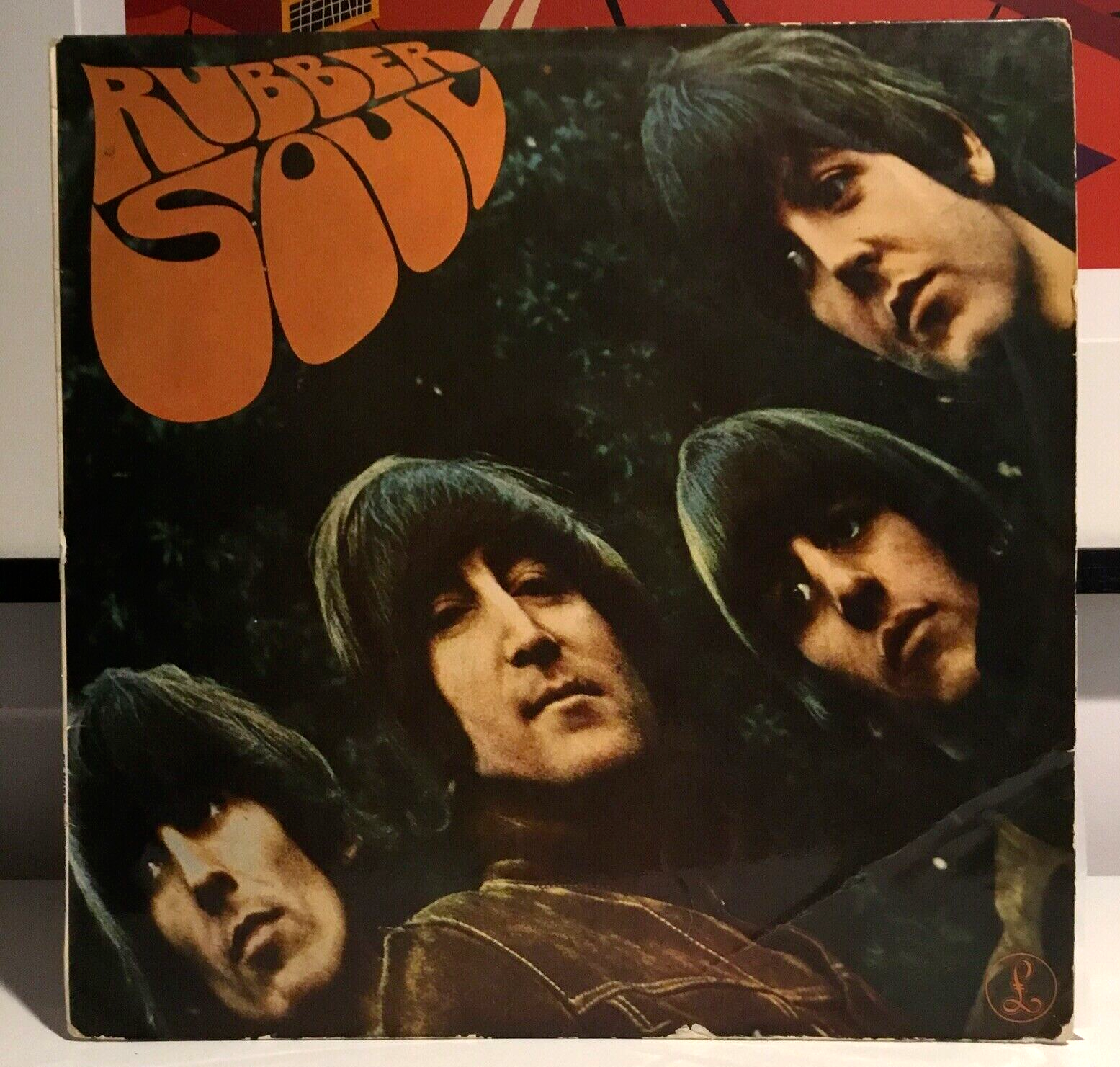
BEATLES Rubber Soul VINYL LP 1969 Australian Yellow Parlophone STEREO PCS0-3075
A$
55
$
35


Favourite Auctions
To save auctions to your favourites, please login
If you don't have an account, please register
Description
FOR SALE
Super Rare Stereo 1969 Feb ???
Yellow Parlophone Australian Vinyl pressing
BEATLES Rubber Soul VINYL LP
1969 Australian Yellow Parlophone STEREO PCS0-3075
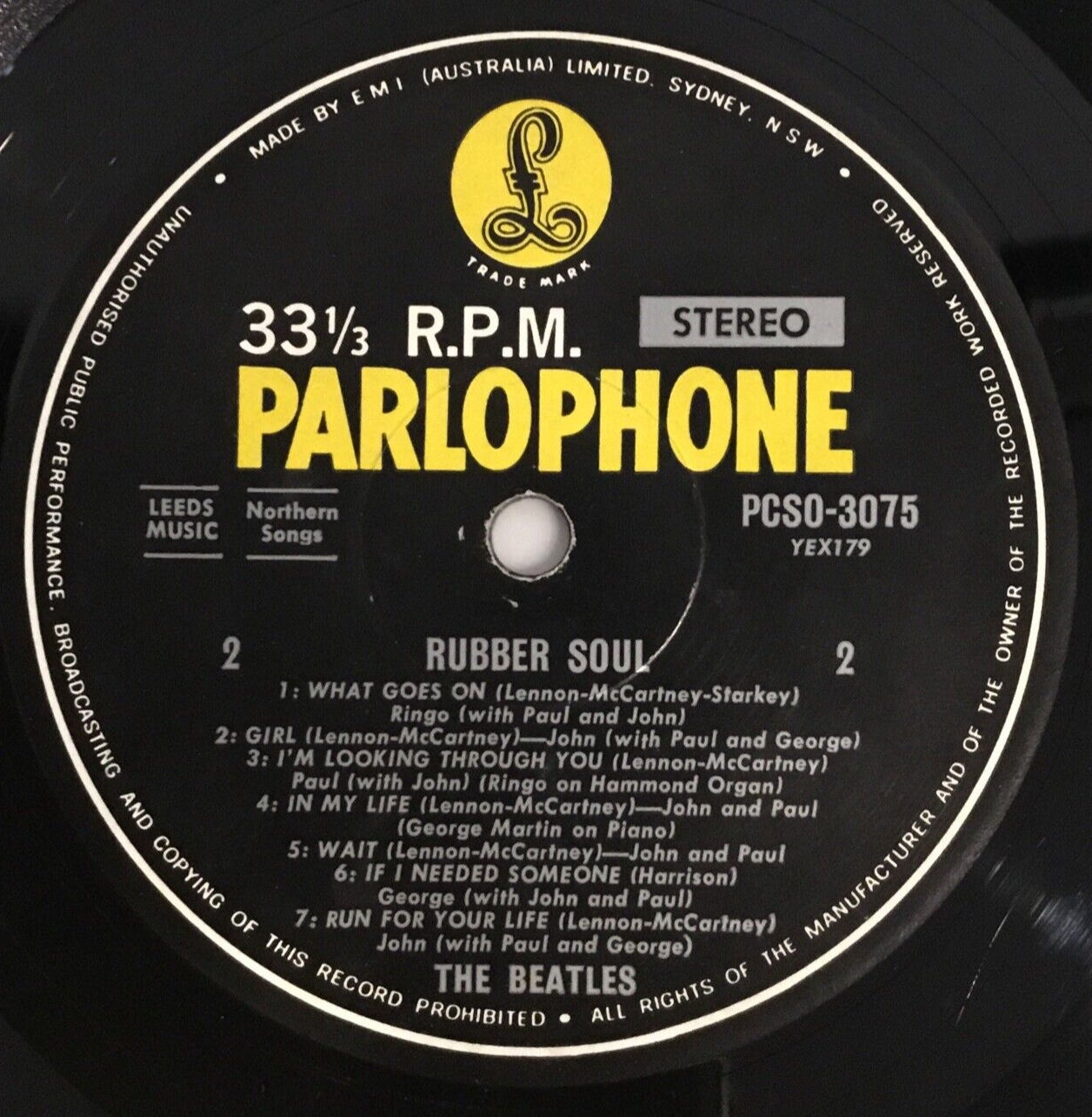
LABEL STYLES - ALBUMS YELLOW/BLACK STEREO Hard to find any info on this one not listed on discogs Although the Australian yellow/black Parlophone label is generally associated with mono pressings, the label style was also used on stereo pressings of select titles between February 1969 and July 1969, primarily to use up existing label stock resulting from the phasing out of mono pressings before the adoption of the new orange Parlophone label. The stereo format is designated via PCSO number and a prominent grey rectangular box containing STEREO text situated above and somewhat justified-right of "PARLOPHONE".
The Beatles – Rubber Soul - Vinyl LP
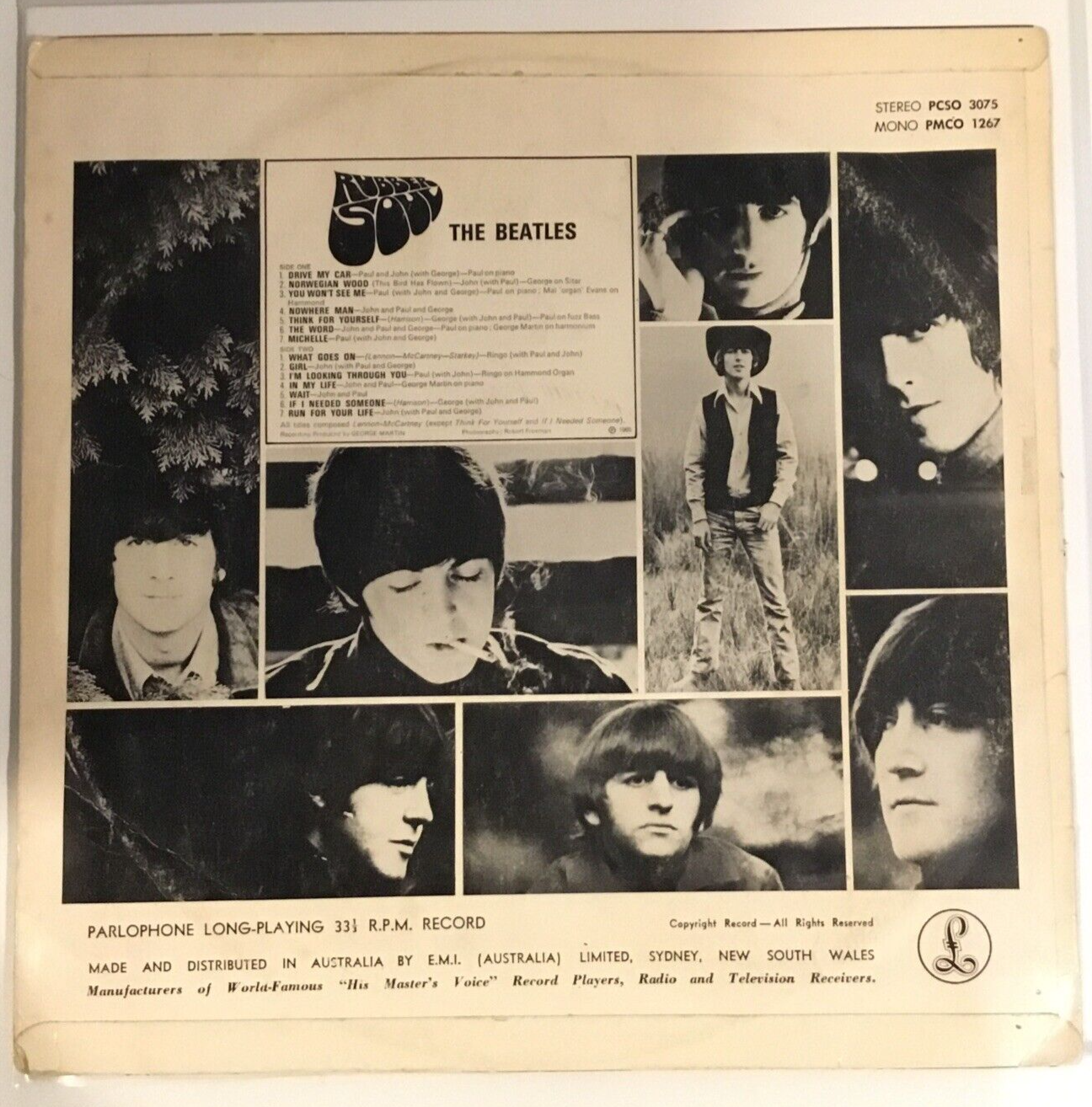
This version: Yellow & Black labels. Leeds Music on left & PCSO 3075 YEX178 on right hand side of label. Made by E.M.I (Australia) Limited, Sydney, N.S.W. across top. Laminated cover. Made & distributed in Australia by E.M.I. (Australia) Limited, Sydney, New South Wales. Top right-hand corner has Stereo PCSO 3075 as well as Mono PMCO 1267 Spine also has PCSO 3075 and PMCO 1267 Matrix / Runout (Label A-side): YEX.178 Matrix / Runout (Label B-side): YEX.17 Housed in a twin-flipback printed cover.
Catalog No. "PCSO 3075 and PMCO 1267" was printed on upper right corner of the back cover. Great sounding pressing was pressed from the same mother as the UK -2 stereo. A lot of the Australian Beatles albums used either tapes made by EMI UK or the same mothers used to stamp the UK pressings. These Aussie pressings sound nearly identical to their UK counterpart. Given this is pressed from UK metal,
Condition: Cover: VG creasing Front has color fade at opening edge, bend at lower right corner and some small bends on lamination. Back has dark lines along the flip backs. Minor Scuffs and Corner Crease on Cover. The record has clean labels Housed in a twin-flipback printed cover Media Vinyl: Vinyl sounds like it could be VG+ but visually VG ......is a strong VG with great gloss and a few light scuffs. sounds great .SEE PICTURES as they form part of the description
'All individually listed records (non-lot and not sealed) are shipped with vinyl out of jacket,
with both vinyl & jacket in clear poly protective cover
Guaranteed as described and winner is obligated for shipping cost
HAPPY TO COMINE POSTAGE IF YOU PURCHASE MORE THAN ONE ITEM ECORD GRADING Here are the standard grades for record albums, from best to worst.
MINT (M)
These are absolutely perfect in every way. Often rumored but rarely seen, Mint should never be used as a grade unless more than one person agrees that the record or sleeve truly is in this condition. There is no set percentage of the Near Mint value these can bring; it is best negotiated between buyer and seller.
NEAR MINT (NM OR M-)
A good description of a NM record is “it looks like it just came from a retail store and it was opened for the first time.” In other words, it’s nearly perfect. Many dealers won’t use a grade higher than this, implying (perhaps correctly) that no record or sleeve is ever truly perfect.
NM records are shiny, with no visible defects. Writing, stickers or other markings cannot appear on the label, nor can any “spindle marks” from someone trying to blindly put the record on the turntable. Major factory defects also must be absent; a record and label obviously pressed off center is not Near Mint. If played, it will do so with no surface noise. (NM records don’t have to be “never played”; a record used on an excellent turntable can remain NM after many plays if the disc is properly cared for.)
NM covers are free of creases, ring wear and seam splits of any kind.
NOTE: These are high standards, and they are not on a sliding scale. A record or sleeve from the 1950s must meet the same standards as one from the 1990s or 2000s to be Near Mint! It’s estimated that no more than 2 to 4 percent of all records remaining from the 1950s and 1960s are truly Near Mint.
This is why they fetch such high prices, even for more common items.
Don’t assume your records are Near Mint. They must meet these standards to qualify!
VERY GOOD PLUS (VG+) or EXCELLENT (E)
A good description of a VG+ record is “except for a couple minor things, this would be Near Mint.” Most collectors, especially those who want to play their records, will be happy with a VG+ record, especially if it toward the high end of the grade (sometimes called VG++ or E+).
VG+ records may show some slight signs of wear, including light scuffs or very light scratches that do not affect the listening experience. Slight warps that do not affect the sound are OK. Minor signs of handling are OK, too, such as telltale marks around the center hole, but repeated playing has not misshapen the hole. There may be some very light ring wear or discoloration, but it should be barely noticeable.
VG+ covers should have only minor wear. A VG+ cover might have some very minor seam wear or a split (less than one inch long) at the bottom, the most vulnerable location. Also, a VG+ cover may have some defacing, such as a cut-out marking. Covers with cut-out markings can never be considered Near Mint.
Very Good (VG)
Many of the imperfections found on a VG+ record are more obvious on a VG record. That said, VG records — which usually sell for no more than 25 percent of a NM record — are among the biggest bargains in record collecting, because most of the “big money” goes for more perfect copies. For many listeners, a VG record or sleeve will be worth the money.
VG records have more obvious flaws than their counterparts in better shape. They lack most of the original gloss found on factory-fresh records. Groove wear is evident on sight, as are light scratches deep enough to feel with a fingernail. When played, a VG record has surface noise, and some scratches may be audible, especially in soft passages and during a song’s intro and ending. But the noise will not overpower the music otherwise.
price rating


