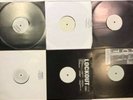
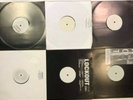
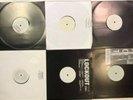
BLOOD SWEAT & TEARS - II cbs S 63054 1969 IT ottimo
€
69
$
80


Favourite Auctions
To save auctions to your favourites, please login
If you don't have an account, please register
Description
endrucomics Store
PREMESSA: LA SUPERIORITA' DELLA MUSICA SU VINILE E' ANCOR OGGI SANCITA, NOTORIA ED EVIDENTE. NON TANTO DA UN PUNTO DI VISTA DI RESA, QUALITA' E PULIZIA DEL SUONO, TANTOMENO DA QUELLO DEL RIMPIANTO RETROSPETTIVO E NOSTALGICO , MA SOPRATTUTTO DA QUELLO PIU' PALPABILE ED INOPPUGNABILE DELL' ESSENZA, DELL' ANIMA E DELLA SUBLIMAZIONE CREATIVA. IL DISCO IN VINILE HA PULSAZIONE ARTISTICA, PASSIONE ARMONICA E SPLENDORE GRAFICO , E' PIACEVOLE DA OSSERVARE E DA TENERE IN MANO, RISPLENDE, PROFUMA E VIBRA DI VITA, DI EMOZIONE E DI SENSIBILITA'. E' TUTTO QUELLO CHE NON E' E NON POTRA' MAI ESSERE IL CD, CHE AL CONTRARIO E' SOLO UN OGGETTO MERAMENTE COMMERCIALE, POVERO, ARIDO, CINICO, STERILE ED ORWELLIANO, UNA DEGENERAZIONE INDUSTRIALE SCHIZOFRENICA E NECROFILA, LA DESOLANTE SOLUZIONE FINALE DELL' AVIDITA' DEL MERCATO E DELL' ARROGANZA DEI DISCOGRAFICI .
BLOOD , SWEAT & TEARS
same
Disco LP 33 giri , CBS , S 63054 , 1969 , Italia, first pressing
OTTIME CONDIZIONI, vinyl ex++ , cover ex++
I Blood, Sweat & Tears (BS&T) sono un gruppo formatosi nel 1967 a New York City. La band fuse rock, blues, pop e jazz, un ibrido che venne poi conosciuto come Jazz-rock. Diversamente dalle altre band "Fusion", le canzoni dei BS&T mischiano gli stili rock, pop, R&B, soul aggiungendo anche elementi della tradizione dei gruppi musicali jazz. Il nucleo originale della band era formato da Al Kooper, Jim Fielder, Fred Lipsius, Randy Brecker, Jerry Weiss, Dick Halligan, Steve Katz e Bobby Colomby.
Blood, Sweat & Tears is the 1969 self-titled second album by the band Blood, Sweat & Tears.
After the critical success of the first album, bandleader Al Kooper and two other members left the group. Bobby Colomby and Steve Katz searched for a replacement singer, settling on David Clayton-Thomas; three more musicians joined to bring the band to nine members. Columbia assigned James William Guercio (who was simultaneously working with new band Chicago) to produce a new album.
The song selection was much more pop-oriented than the first album, with more compositions from outside the band; as a result, the album was a huge commercial success, rising to the top of the U.S. charts and yielding three successive Top 5 singles. It also received favorable reviews from the music critics, and received a Grammy Award for Album of the Year in 1970.
.
Etichetta: CbsCatalogo: S 63054
Data di pubblicazione: 1969
Matrici: CI S 63504 1L / CI S 63504 2L
Data matrici : 5/8/69 , 11/8/69
- Supporto:vinile 33 giri
- Tipo audio: stereo
- Dimensioni: 30 cm.
- Facciate: 2
- Copertina frontale laminata / laminated front sleeve , red orange label, original Cbs italian catalogue inner sleeve
Track listing
A1 Variazioni Su Un Tema Di Erik Satie (I E II Movimento) (2:33) Arranged By - Dick Halligan A2 Smiling Phases (5:08) Arranged By - Al Kooper , Dick HalliganPiano [Solo], Arranged By - Fred Lipsius A3 Something In Winter (3:08) Flute [Solo], Arranged By - Dick Halligan
Vocals - Steve Katz A4 More And More (3:03) Arranged By - Al Kooper , Fred Lipsius
Guitar [Solo] - Steve Katz A5 And When I Die (4:04) Harmonica [Solo] - Steve Katz
Piano [Solo], Arranged By - Dick Halligan A6 God Bless The Child (5:57) Arranged By - Dick Halligan
Saxophone [Alto] [Solo] - Fred Lipsius
Trombone [Solo] - Jerry Hyman
Trumpet [Solo] - Lew Soloff B1 Spinning Wheel (4:06) Arranged By - Fred Lipsius
Trumpet - Alan Rubin
Trumpet [Solo] - Lew Soloff B2 You've Made Me So Very Happy (4:18) Arranged By - Al Kooper , Fred Lipsius B3 Blues - Parte II (11:55) Arranged By - Blood, Sweat And Tears
Bass [Acoustic] [Solo] - Jim Fielder
Drums [Solo] - Bobby Colomby
Lyrics By - David Clayton-Thomas
Organ [Solo] - Dick Halligan
Saxophone [Alto] [Solo] - Fred Lipsius B4 Variazioni Su Un Tema Di Erik Satie (I Movimento) (1:37) Arranged By - Dick Halligan
Personnel
David Clayton-Thomas: Vocals (Except "Sometimes in Winter")
Steve Katz: Guitar, Hamonica, Vocals (Lead on "Sometimes in Winter")
Bobby Colomby: Drums, Percussion, Vocals
Jim Fielder: Bass
Fred Lipsius: Alto Saxaphone, Piano
Lew Soloff: Trumpet, Fluegelhorn
Chuck Winfield: Trumpet, Fluegelhorn
Jerry Hyman: Trombone
Dick Halligan: Organ, Piano, Flute, Trombone, Vocals
Alan Rubin: Trumpet on "Spinning Wheel."
Lucy Angle: Footsteps
Chart History:
According to Al Quaglieri in the What Goes Up! liner notes, this record was released December 11, 1968 (Columbia 9720). All Music Guide lists it as January of 1969. Three top five singles came from the album, "You've Made Me So Very Happy," (Columbia 44776) released 2/15/69 was the first gold single, peaking at #2. The next single, "More and More/Spinning Wheel," (Columbia 44871) released 6/07/69 also peaked at #2 and went gold. Finally, released in September of 1969, the third gold single from the album, "And When I Die/Sometime's In Winter" (Columbia 45008) was released 10/25/69 and also made #2 by November. It was the first time since the RIAA started certifying gold records that an album had spawned three gold singles. The album peaked at #1 on the U.S. Charts, staying there for seven weeks, going double platinum by the end of 1969, and stayed on the top 40 for 66 weeks. It is also available in a Mobile Fidelity Labs Gold Disc, which has recently gone out of print.
The Grammy's:
March 11, 1970 saw BS&T win Grammy's for Album of the Year, Best Arrangment (Fred Lipsius for "Spinning Wheel") and Best Contemporary Instrumental Performance. ("Trois Gymnopedies On A Theme By Erik Satie.") Despite their pop success, it should be noted that Chicago has only won Grammy's for a record cover (Chicago X) and Male Pop Vocal (If you leave me now)
David Clayton-Thomas says:
"You've Made Me So Very Happy was one of those songs where I flew into New York from Toronto and it was the first thing I recorded with Blood, Sweat, and Tears. We walked out of the recording studio and every band member knew we'd just cut a hit record. It was just magic from the first note to the last."
Bobby Colomby notes that
"Guercio really didn't stick around for a lot of that record. He left before the thing ws really done, he lost interest; he hated David, he hated Steve, it was like "these guys are prima donnas, I can't stand it, I gotta get outta here."
It should also be noted that James William Guercio only produced the album because Columbia promised him they would sign and release the first album by the Chicago Transit Authority.
William Ruhlmann of the All Music Guide writes:
Arguably, the BS&T that made this self-titled second album, consisting of five of the eight original members and four newcomers, including singer David Clayton-Thomas, was really a different group from the one that made the debut album, Child is Father to the Man, which was largely under the direction of singer/songwriter/keyboard player/arranger Al Kooper. BS&T Mark II had certain similarities to the original: the musical mixture of classical, jazz, and rock elements was still apparent, and the interplay between the horns and the keyboards was still ocurring, even if those instruments were being played by different people. Kooper was even still present as an arranger on two of the tracks, notably the initial hit "You've Made Me So Very Happy." But the second BS&T, under the aegis of producer James William Guercio, was a less adventurous unit, and, as fronted by Clayton-Thomas, a far more commercial one. Not only did the album contain three songs that neared the top of the charts as singles--"Happy," "Spinning Wheel," and "And When I Die"--but the whole album, including an arrangement of "God Bless The Child" and the radical rewerite of Traffic's "Smiling Phases," was wonderfaully accessible. It was a repetoire to build a career on, and BS&T did exactly that, although they never came close to equalling this album. [(c)1996 All Music Guide]
Blood, Sweat & Tears (also known as "BS&T") is an American music group, originally formed in 1967 in New York City. Since its beginnings in 1967, the band has gone through numerous iterations with varying personnel and has encompassed a multitude of musical styles. What the band is most known for, from its start, is the fusing of rock, blues, pop music, horn arrangements and jazz improvisation into a hybrid that came to be known as "jazz-rock". Unlike "jazz fusion" bands, which tend toward virtuostic displays of instrumental facility and some experimentation with electric instruments, the songs of Blood, Sweat & Tears merged the stylings of rock, pop and R&B/soul music with big band, while also adding elements of small combo jazz traditions.
The Al Kooper era
Al Kooper, Jim Fielder, Fred Lipsius, Randy Brecker, Jerry Weiss, Dick Halligan, Steve Katz, and Bobby Colomby formed the original incarnation of the band. The creation of the group was fueled by the "brass-rock" ideas of The Buckinghams and its producer, James William Guercio, as well as the early 1960s Roulette-era Maynard Ferguson Orchestra (according to Kooper's autobiography).
"Blood, Sweat & Tears" was the name chosen by Al Kooper, inspired by both the 1963 album with this title by Johnny Cash and after a late-night gig in which Kooper played with a bloody hand. Kooper was the group's initial bandleader, having insisted on that position based on his experiences with The Blues Project, his previous band with Steve Katz, which had been organized as an egalitarian collective. Jim Fielder was from Frank Zappa's Mothers Of Invention and had played briefly with Buffalo Springfield. But undoubtedly, Kooper's fame as a high-profile contributor to various historic sessions of Bob Dylan, Jimi Hendrix, the Rolling Stones, and so forth, was the catalyst for the prominent debut of Blood, Sweat & Tears in the musical counterculture of the mid-sixties.
Al, Bobby, Steve & Jim did a few shows as a quartet at the Cafe Au Go Go in New York City in September 1967 opening for Moby Grape . Fred Lipsius then joined the others two months later. A few more shows were played as a quintet, including one at the Fillmore East in New York. Lipsius then recruited the other three, who were New York jazz horn players he knew. The final lineup debuted late November ’67 at The Scene in NYC. The band was a hit with the audience, who liked the innovative fusion of jazz with acid rock and psychedelia. After signing to Columbia Records, the group released perhaps one of the most critically acclaimed albums of the late 1960s, Child Is Father to the Man that featured the Harry Nilsson song, "Without Her", and perhaps Kooper's most memorable blues number, "I Love You More Than You'll Ever Know". The album cover was considered quite innovative showing the band members sitting and standing with child-sized versions of themselves. Characterized by Kooper's penchant for studio gimmickry, the album slowly picked up in sales amidst growing artistic differences between the founding members. Colomby and Katz wanted to move Kooper exclusively to keyboard and composing duties, while hiring a stronger vocalist for the group.
As the music of Blood, Sweat & Tears slowly achieved commercial success alongside similarly configured ensembles such as Chicago and the Electric Flag, Kooper left the group to become a record producer for the Columbia label. The group's trumpeters, Randy Brecker and Jerry Weiss, also left after the album was released, and were replaced by Lew Soloff and Chuck Winfield. Brecker joined Horace Silver's band with his brother Michael, and together they eventually formed their own horn-dominated musical outfits, Dreams and The Brecker Brothers. Jerry Weiss went on to start the similarly-styled group Ambergris.
The David Clayton-Thomas era
Colomby and Katz then started looking for singers, considering Stephen Stills and Laura Nyro before deciding upon David Clayton-Thomas, a Canadian singer, born in Surrey, England. Reportedly, folk singer Judy Collins had seen him perform at a New York City club and was so taken and moved by his performance that she told her friends Bobby Colomby and Steve Katz about him (knowing that they were looking for a new lead singer to front the band). With her prodding, they came to see him perform and were so impressed with him that Clayton-Thomas was offered to be lead singer of a re-constituted Blood Sweat & Tears. Halligan took up the organ chores and Jerry Hyman joined on trombone. New trumpeters Lew Soloff and Chuck Winfield brought the band up to nine total members.
Eponymous 1969 album Blood, Sweat & Tears
Blood, Sweat & Tears, the group's self-titled second album, was produced by James William Guercio and released in 1969. The album was much more pop-oriented, featuring decidedly fewer compositions from within the band. The record quickly hit the top of the charts, winning Album of the Year at the Grammy Awards. Blood, Sweat & Tears spawned three major hit singles: a cover of Berry Gordy and Brenda Holloway's "You've Made Me So Very Happy" (US #2), Clayton-Thomas' "Spinning Wheel" (US #2), and a version of Laura Nyro's "And When I Die" (US #2). The commercial and critical acclaim enjoyed by the band in 1969 culminated in an appearance at the Woodstock Festival, in which the band enjoyed headliner status.
Arguably, as a result of Al Kooper's departure, Blood, Sweat & Tears had difficulty maintaining its status as a counterculture icon at a time when record company executives deemed this characteristic important as a tool to lure young consumers. This was compounded by a United States Department of State-sponsored tour of Eastern Europe in 1970. Any voluntary association with the government was highly unpopular at the time and the band was ridiculed for it. In retrospect, it is now known that the State Department subtly requested the tour in exchange for more amicability on the issuance of a visa to Clayton-Thomas.
After returning to the U.S., the group released Blood, Sweat & Tears 3; which was another popular success, spawning hit singles with a cover of Carole King's "Hi-De-Ho" and another Clayton-Thomas composition, "Lucretia MacEvil". While this was a successful attempt to re-create the amalgam of styles found on the previous album, the band once again depended almost exclusively on cover material. Album reviews sometimes focused solely upon the band's willingness to work with the U.S. State Department, without bothering to discuss the actual music. Compounding the image problems of the band was a decision to play at Caesars Palace on the Las Vegas Strip, widely seen at the time as a mainstream venue for acts that did not engage in radical politics. In 1970, the band provided music for the soundtrack of the film comedy The Owl and the Pussycat , further damaging the group's underground reputation.
Following this period of controversy, the group reconvened with jazz writer Don Heckman serving as their producer and, with Dave Bargeron replacing Jerry Hyman, recorded material that would comprise their fourth album, BS&T 4. For the first time since the first album, Blood, Sweat & Tears presented a repertoire of songs composed almost entirely from within the group. Included on the album is a cover of former member Al Kooper's "Holy John (John The Baptist)". Loaded with hooks and a wide variety of moods (featuring such songs as "Go Down Gamblin'", "Lisa Listen To Me", "High on a Mountain", "Redemption"), Blood, Sweat & Tears 4 broke into the album charts, resulting in a gold record for the group. Unfortunately, none of the singles from the album managed to land in the Top 30 on any of the singles charts, and the period after the release of the fourth album began the group's commercial decline.
The Jerry Fisher era
Difficulties arose inside the group between its pop-rock and jazz factions, with Clayton-Thomas refusing to pick sides and eventually choosing to leave to pursue a solo career in early January 1972. He was briefly replaced by Bobby Doyle, and then Jerry Fisher who went on to front the next generation of Blood, Sweat & Tears. Fred Lipsius left and was replaced by jazz legend Joe Henderson (who did not stay long enough to record), before Lou Marini settled into the new lineup. Another founding member, Dick Halligan, also departed, replaced by jazz pianist Larry Willis, and Swedish guitarist Georg Wadenius joined as lead guitarist around the same time. Amidst the personnel changes, a Greatest Hits album was released, which hit the top 20 and eventually went gold. This record would be the band's final gold album.
Cover of 1972 album Greatest Hits
During this period of time, a proliferation of bands employing the jazz-rock stylings of the group began to compete in the popular music marketplace. Among these groups were Chase, Ides of March and Lighthouse, offering testimony to the legacy of Blood, Sweat & Tears.
The new edition of Blood, Sweat & Tears released New Blood, which found the group moving into a more overtly jazz-fusion repertoire. The album broke through the top-40 charts (the last BS&T LP to do so) and spawned a single ("So Long Dixie", chart peak: 44) that received some airplay. Also included on the record was a cover version of Herbie Hancock's "Maiden Voyage," featuring the voice/guitar soloing of Georg Wadenius.
In mid-1973, Katz, who was growing increasingly uncomfortable with the group's leaning towards jazz fusion, decided to leave. Winfield departed as well and was replaced by Tom Malone. Blood, Sweat & Tears' next album, No Sweat (1973), continued in a jazz-fusion vein and featured intricate horn work. The 1974 release Mirror Image saw the addition of vocalist/saxophonist Jerry LaCroix (formerly of Edgar Winter's White Trash), sax player Bill Tillman, bassist Ron McClure and the exodus of Tom Malone and longtime members Lew Soloff and Jim Fielder. This recording features the adoption of a sound pitched between Philly Soul and the mid-1970s albums by Herbie Hancock's Headhunters, along with aspirations to Chick Corea's jazz-fusion group Return to Forever.
Re-formations
Personnel changes continued (see roster below), capped by the return of David Clayton-Thomas at the close of 1974 and the release of the comeback album New City in 1975. This album charted higher than any of their previous albums since New Blood. This was chiefly the result of an entry in the singles charts with a cover of the Beatles' "Got To Get You Into My Life". But it still did not sell as well as albums from the group's 1969-71 commercial peak period. They released a final album for Columbia Records, More Than Ever, before the last original band member, Bobby Colomby, left in 1976. The band then signed a new contract with ABC Records, with Colomby serving as the next album's executive producer and retaining sole ownership of the group's name, despite his no longer appearing on stage with them. Their sole album for ABC, Brand New Day, did not fare well in the charts and the group undertook a European tour in early 1978 to promote the album that ended abruptly after saxophonist Gregory Herbert died of a drug overdose in Amsterdam on January 31st, 1978. Rocked by this shocking turn of events, the group returned home and temporarily ceased activity.
In 1979, David Clayton-Thomas decided to continue Blood, Sweat & Tears with an entirely new lineup that consisted of Canadian musicians. The group signed to Avenue Records subsidiary label LAX (MCA Records), and with producer and arranger Jerry Goldstein, recorded the album Nuclear Blues. The album was yet another attempt to reinvent the group, showcasing the band in a funk sound environment that recalled such acts as Tower of Power and LAX labelmates War (whom BS&T did several shows with in 1980). The album, unfortunately, was regarded by many Blood, Sweat & Tears fans as uncharacteristic of the group's best work. Following more touring, including Australia, this incarnation of the group disbanded in 1981.
Since he did not own the rights to the Blood Sweat & Tears name, Clayton-Thomas attempted to restart his solo career in 1983 after taking some time off. This caused complications during his initial months on the road when promoters would book his group and instead use the Blood, Sweat & Tears name on the marquee. Consequently, his manager at the time, Larry Dorr, negotiated a licensing deal with Bobby Colomby in 1984 for rights to tour using the band's name. For 20 years afterwards, Clayton-Thomas toured the concert circuit with a constantly changing roster of players as "Blood, Sweat & Tears" until his final departure in 2004. Clayton-Thomas now does occasional shows using only his name in promotional efforts. At last count, the overall number of BS&T members since the beginning is up around 130 total people -- roster below.
Current status
Blood, Sweat & Tears continues its heavy touring schedule throughout the world with its current line-up of members, some of whom have been with the band previously during the past two decades. Under the direction of Larry Dorr and founding member Bobby Colomby, the band has enjoyed something of a resurgence. Blood, Sweat & Tears donates money through its "Elsie Monica Colomby" music scholarship fund to deserving schools and students who need help in prolonging their musical education, such as the victims of Hurricane Katrina. The year 2007 witnessed the band's first world tour in a decade. Since late 2005, the band often does shows backing up former Three Dog Night singer Chuck Negron, where the group will play its own set and then another set that includes Chuck's Three Dog Night hits. 2008 brings with it the anticipated return of founding member Steve Katz. The year is also the 40th touring anniversary, and surprise alumni are expected to be joining the band throughout the year.
All of the band's albums, with the exception of Brand New Day, are currently available on compact disc. BS&T's first four albums were reissued by Sony Records in remastered editions (typically with bonus material), except for its third album, which has been reissued by Mobile Fidelity. The later Columbia albums have been reissued by Wounded Bird Records, and Rhino Records has reissued Nuclear Blues. Brand New Day was issued on CD in Russia in 2002, although the disc may not have received authorization from copyright holders.
price rating