BLUE PHANTOM DISTORTIONS KILLER ITALY PSYCH RARE LP '71
£
56
$
74


Favourite Auctions
To save auctions to your favourites, please login
If you don't have an account, please register
Description
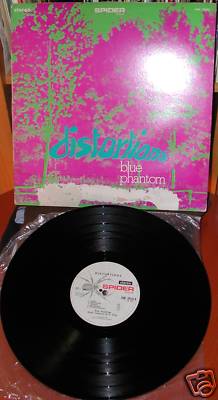
Blue Phantom - Distortions - Spider VSM38543 - Italy 1971 - VG/Mint- (Cover has large damage on lower front side as you can see on the picture)
Absolutely top Italian Psychedelic Rarity - Monster Groove Killer guitar - Italian progressive
Postage Costs Please Attention - Shipping is from Italy
UK & Europe
1-2 Lp’s – £ 7,00
1-2 Lp’s – £ 15,00 (Registered)
3-5 Lp’s – £ 12,00
3-5 Lp’s – £ 21,00 (Registered)
North/South America & Asia
1-2 Lp’s – £ 10,00
1-2 Lp’s – £ 21,00 (Registered)
3-5 Lp’s – £ 18,00
3-5 Lp’s – £ 33,00 (Registered)
Oceania
1-2 Lp’s – £ 13,00
1-2 Lp’s – £ 27,00 (Registered)
3-5 Lp’s – £ 24,00
3-5 Lp’s – £ 37,00 (Registered)
Be sure to add me to your favorites list!
Check out my other items!
SAVE ON SHIPPING FOR MULTIPLE ITEMS
Seller cannot be responsible for loss
or damage in the mail.
ROCK, PUNK, ALTERNATIVE, GRUNGE, METAL, HARD, POP, PSYCH, PROGRESSIVE, ITALIAN SOUNDTRACKS, JAZZ RARITIES FROM ALL OVER THE WORLD
Psychedelic progressive 1971 album "Distortions" released on Spider label is mostly considered the best instrumental psych record coming out of Italy. Entirely instrumental, Distortions was released in Italy in 1971, along with a single, and later released in other European countries, among which England, this time with a complete different artwork. Both album and single appeared in Italy on Vedette subsidiary Spider label Spider (VSM 38543), and were composed (under his nickname Tical) and played by Armando Sciascia. Vedette’s recording studios also served as experimental music labs not only for electronic music, but where some of Italy’s finest jazz and studio musicians often gathered for impromptu sessions or live recordings, In fact, it was from one of these spontaneous musical conversations that Blue Phantom emerged as one of the first successful so-called “heavy rock psychedelic” recordings in Italy with both songs and arrangements by Sciascia. What with today’s plethora of electronic gadgets, distortion of sound is by now common practice, but in the ‘60s, especially when one considers that Moog was still an experiment, and digital still a long way off, Blue Phantom’s sound was not only revolutionary, it was almost anathema! The titles of this collection, however, clearly indicate the group knew what they were saying, and correctly guessed there were lots fans out there who understood and loved what they heard!
Un album conosciuto dai collezionisti di psichedelia e prog europeo, Distortions venne in realtà registrato in Italia e realizzato nel 1971, insieme ad un singolo, da un gruppo di musicisti di studio sconosciuti, e più tardi stampato anche in altri paesi europei tra cui l'Inghilterra. In Italia venne stampato dalla Spider, un'etichetta di proprietà della Vedette, e i brani vennero composti (sotto il suo pseudonimo Tical) e suonati da Armando Sciascia. L'album è interamente strumentale e con influenze del sound psichedelico della fine degli anni '70.
Praticamente introvabile, questo oscuro album viene citato negli annali del prog nostrano non tanto per conformità al genere, quanto perchè dietro lo pseudonimo dell'autore di tutti i brani ("H. Tical") si celava il notissimo Maestro abruzzese Armando Sciascia che aveva già al suo attivo almeno una decina di colonne sonore e un Lp di stampo sinfonico-orchestrale ("Tre colpi di Winchester per Ringo", 1966).
In più, in qualità di dirigente della casa discografica Vedette, Sciascia fu anche produttore dei "Panna Fredda" e artefice del controverso e ricercatissimo album dei Pooh "Contrasto" (1968). Pubblicato in Italia nel 1971 dalla Spider (una gregaria della Vedette) ed edito dalla Eliseo, "Distorsions" venne anche stampato nel 1972 in Inghilterra e Francia con copertine differenti. Collezionando pazientemente le scarsissime informazioni disponibili, sembra che l'album sia stato eseguito da un gruppo di turnisti professionisti sotto la guida del Maestro Sciascia e solo successivamente autobattezzatisi Blue Phantom. Il groove del disco è in linea di massima un rock psichedelico fortemente riconducibile alla fine degli anni '60 con qualche episodio smaccatamente commerciale. Pur se non menzionata da nessuna parte, la formazione comprende sicuramente un basso, almeno due chitarre, batteria, tastiere, e delle percussioni. Interamente strumentale, l'album è talmente cesellato in quanto a composizione, tecnica e produzione da sembrare quasi concepito come colonna sonora o musica da sottofondo e del resto, non potrebbe esservi altra spiegazione: i Blue Phantom non si esibirono mai dal vivo, non fecero alcuna apparizione televisiva, non ebbero promozione alcuna e non diedero mai seguito al loro primo disco.
">price rating