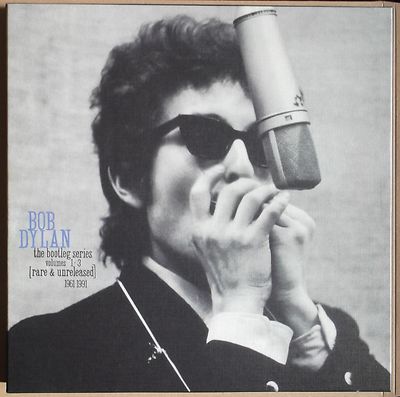
BOB DYLAN - THE BOOTLEG SERIES VOL 1-3 - 5LP BOX SET - NM/MINT - Vinyl LP's
£
104
$
138


Favourite Auctions
To save auctions to your favourites, please login
If you don't have an account, please register
Description
BOB DYLAN
"THE BOOTLEG SERIES VOL 1-3"
rare and unreleasd 1961-1991
5LP BOX SET INCLUDING 70 PAGE BOOKLET
5 LP BOX SET
Vinyl LP's
SHIPPING PRICE'S ARE VIA COURIER SERVICE
1991 original release vinyl LP on the COLUMBIA/SONY record label Cat n# COL 468086-1 Made in HOLLAND
The album Box is in NM/MINT condition. No problems, the inner sleeves are in NM/MINT condition, the 70 page booklet is in NM/MINT condition no tears or splits
The vinyl itself is in NM/MINT condition there no problems, these LP'S have only been played once and i am sure 2 or 3 have not been played at all.
If you need anymore information and pictures please get in touch, thanks.
Sorry if the shipping charges seem a bit high, the reason being i use heavy/strong packaging and the high cost of the Royal Mail price structure
THIS IS AS GOOD EXAMPLE OF WELL LOOKED AFTER OLD LP RECORD
Full track list
Side One
1."Hard Times in New York Town" (December 22, 1961); "Minnesota Hotel Tape," a home tape recorded by Tony Glover
2."He Was a Friend of Mine" (November 20, 1961); Bob Dylan outtake; (Traditional)
3."Man on the Street" (November 22, 1961); Bob Dylan outtake
4."No More Auction Block" (October 1962); Live at the Gaslight cafe, Greenwich Village; (Traditional)
5."House Carpenter" (November 22, 1961) Bob Dylan outtake; (Traditional)
6."Talkin' Bear Mountain Picnic Massacre Blues" (April 25, 1962) The Freewheelin' Bob Dylan outtake
7."Let Me Die in My Footsteps" (April 25, 1962) The Freewheelin' Bob Dylan outtake
8."Rambling, Gambling Willie" (April 24, 1962) The Freewheelin' Bob Dylan outtake .
Side Two
1."Talkin' Hava Negeilah Blues" (April 25, 1962) The Freewheelin' Bob Dylan outtake
2."Quit Your Low Down Ways" (July 9, 1962) The Freewheelin' Bob Dylan outtake
3."Worried Blues" (July 9, 1962) The Freewheelin' Bob Dylan outtake; (Traditional)
4."Kingsport Town" (November 14, 1962) The Freewheelin' Bob Dylan outtake; (Traditional)
5."Walkin' Down the Line" (1963) Publishing demo for the Witmark Music Publishing Company
6."Walls of Red Wing" (April 24, 1963) The Freewheelin' Bob Dylan outtake
7."Paths of Victory" (August 12, 1963) The Times They Are A-Changin' outtake .
Side Three
1."Talkin' John Birch Paranoid Blues" (October 26, 1963) Live at Carnegie Hall
2."Who Killed Davey Moore?" (October 26, 1963) Live at Carnegie Hall
3."Only a Hobo" (August 12, 1963) The Times They Are A-Changin' outtake
4."Moonshiner" (August 12, 1963) The Times They Are A-Changin' outtake; (Traditional)
5."Last Thoughts on Woody Guthrie" (April 12, 1963) Poem recited live in concert at New York City's Town Hall .
Side Four
1."When the Ship Comes In" (1963) Demo for the Witmark Music Publishing Company
2."The Times They Are A-Changin'" (1963) Demo for the Witmark Music Publishing Company
3."Seven Curses" (August 6, 1963) The Times They Are A-Changin' outtake
4."Eternal Circle" (October 24, 1963) The Times They Are A-Changin' outtake
5."Suze (The Cough Song)" (October 24, 1963) The Times They Are A-Changin' outtake
6."Mama, You Been on My Mind" (June 9, 1964) Another Side of Bob Dylan outtake
7."Farewell, Angelina" (January 13, 1965) Bringing It All Back Home outtake .
Side 5
1."Subterranean Homesick Blues" (January 13, 1965) Bringing It All Back Home alternate take (take 1; acoustic version)
2."If You Gotta Go, Go Now (Or Else You Got to Stay All Night)" (January 15, 1965) Bringing It All Back Home outtake
3."Sitting on a Barbed Wire Fence" (June 15, 1965) Highway 61 Revisited outtake
4."Like a Rolling Stone" (June 15, 1965) Rehearsal in studio, original short version in 3/4 waltz time
5."It Takes a Lot to Laugh, It Takes a Train to Cry" (June 15, 1965) Highway 61 Revisited alternate take
6."I'll Keep It with Mine" (January 27, 1966) Rehearsal in studio
7."She's Your Lover Now" (January 21, 1966) Blonde on Blonde outtake .
Side 6
1."I Shall Be Released" (Fall 1967) Basement Tape recording
2."Santa-Fe" (Fall 1967) Basement Tape recording
3."If Not for You" (May 1, 1970) New Morning alternate take
4."Wallflower" (November 4, 1971) previously unreleased recording
5."Nobody 'Cept You" (November 2, 1973) Planet Waves outtake
6."Tangled Up in Blue" (September 16, 1974) Blood on the Tracks alternate take .
Side 7
1."Call Letter Blues" (September 16, 1974) Blood on the Tracks outtake
2."Idiot Wind" (September 19, 1974) Blood on the Tracks alternate take
3."If You See Her, Say Hello" (September 16, 1974) Blood on the Tracks alternate take
4."Golden Loom" (July 30, 1975) Desire outtake
5."Catfish" (July 28, 1975) Desire outtake (Dylan/Levy) .
Side 8
1."Seven Days" (April 21, 1976) Live performance, Tampa, Florida
2."Ye Shall Be Changed" (May 2, 1979) Slow Train Coming outtake
3."Every Grain of Sand" (September 23, 1980) Publishing demo for Special Rider Music
4."You Changed My Life" (April 23, 1981) Shot of Love outtake
5."Angelina" (May 4, 1981) Shot of Love outtake .
Side 9
1."Need a Woman" (May 4, 1981) Shot of Love outtake
2."Someone's Got a Hold of My Heart" (April 25, 1983) Early version of the song "Tight Connection to My Heart (Has Anybody Seen My Love)" from Empire Burlesque
3."Tell Me" (April 21, 1983) Infidels outtake
4."Lord Protect My Child" (May 3, 1983) Infidels outtake .
Side 10
1."Foot of Pride" (April 25, 1983) Infidels outtake
2."Blind Willie McTell" (May 5, 1983) Infidels outtake
3."When the Night Comes Falling from the Sky" (February 19, 1985) Empire Burlesque alternate take
4."Series of Dreams" (March 23, 1989) Oh Mercy outtake. This track was remixed in January 1991 .
All songs written by Bob Dylan, except where noted; all arrangements by Bob Dylan.
.The Band
Bob Dylan – vocals, guitars, harmonica, piano
Additional musicians
Roy Bittan – keyboards
Mike Bloomfield – electric guitar
Russell Bridges – bass guitar
Harvey Brooks – bass guitar
Charlie Brown – guitar
Tony Brown – bass guitar
Gary Burke – conga drum
T Bone Burnett – guitar
Kenny Buttrey – drums
Buddy Cage – pedal steel guitar
Alan Clark – keyboards
Roddy Colonna – drums
Richard Crooks – drums
Charlie Daniels – bass guitar
Rick Danko – bass guitar, vocals
Carolyn Dennis – vocals
Rick DiFonzi – guitar
Tim Drummond – bass guitar
Sly Dunbar – drums
Erik Frandsen – guitar
Glenn Fukunaga – bass guitar
Full Force – backing vocals
Al Gorgoni – guitar
Bobby Gregg – drums
Paul Griffin – keyboards
Emmylou Harris – vocals
George Harrison – guitar
Regina Havis – vocals
Levon Helm – drums, vocals
Garth Hudson – organ
Ben Keith – pedal steel guitar
Jim Keltner – drums
Clydie King – vocals
Mark Knopfler – guitar
Sandy Konikoff – drums
Al Kooper – organ
Barry Kornfeld – guitar
Danny "Kootch" Kortchmar – guitar
Russ Kunkel – drums
Daniel Lanois – guitar, bass guitar, percussion
Little Steven – guitar
Joseph Macho, Jr. – bass guitar
David Mansfield – mandolin
Richard Manuel – piano, vocals
Tom McFaul – keyboards
Bob Neuwirth – guitar
Cyril Neville – talking drum
Kenny Rankin guitar
Steve Ripley – guitar
Scarlet Rivera – violin
Robbie Robertson – guitar
Mick Ronson – guitar
Mason Ruffner – guitar
Robbie Shakespeare – bass guitar
Steven Soles – guitar
Rob Stoner – bass guitar
Sugar Blue – harmonica
Fred Tackett – guitar
Mick Taylor – guitar
Benmont Tench – organ
Jennifer Warnes – vocals
Eric Weissberg – guitar
Pick Withers – drums
Peter Wood – keyboards
Howie Wyeth – drums .
Content
Of the 58 total tracks, 46 are session outtakes from the recording sessions for studio albums. The remaining dozen tracks are with one exception live recordings and demo records, three of latter being later duplicated on Volume 9 of the series.
Released in 1991 to satisfy enormous demand for Dylan's much-bootlegged unissued material, it contains rarities and unreleased works from the sessions for 1962's eponymous debut Bob Dylan to 1989's Oh Mercy. Unlike subsequent editions, which to date have all been double-disc packages, each volume in this set is a single compact disc, and the three volumes are not available separately
ROLLING STONE REVIEW
Three CDs, fifty-eight tracks, nearly four hours of music – the first three volumes of The Bootleg Series stand solidly on their own terms as an essential statement of the breadth of Bob Dylan's artistic achievement. This collection is obviously not where a newcomer to Dylan – whoever such a person might be – should begin. These songs – outtakes from albums, alternative versions of well-known and lesser-known tunes, the occasional live track2 demos Dylan recorded for his music publisher so his songs could be transcribed and made available to other artists – are not his greatest hits or his most influential work. They do not even demonstrate a definite creative progress, as do the songs on Biograph – despite the absurdly confused chronology of that earlier collection.
No, the tracks on The Bootleg Series document the blue highways of Dylan's imagination, the paths not taken, the back roads that sometimes run parallel to and sometimes veer away from the main road – songs from a planned live album that got scuttled, songs that seemed old-fashioned after fresher impulses gripped Dylan's restless soul, songs too similar to or too different from other songs on a particular album, sketches that never quite assumed full character. With the help of John Bauldie's excellent liner notes – detailed without being obsessive, interpretive without being bullying, appreciative without being fawning – listeners can get a distinct feel from this set for the kinds of decisions that make a song or shape a career.
But The Bootleg Series by no means requires such specialized interest in exchange for its pleasures. Hearing the songs without any reference to their standing in the Dylan canon is a spellbinding experience. In fact, it could even temporarily diminish one's enjoyment of a song like "Rambling, Gambling Willie" – even as it deepens one's understanding of Dylan – to know that the tune was pulled from The Freewheelin' Bob Dylan so that "Bob Dylan's Dream" could be included on the album. Without question, "Bob Dylan's Dream" – a dark, troubling reflection on innocence forever lost – is the superior song, but nearly thirty years later the comparison is important only to the most dedicated Dylan followers. More casual fans can simply be swept up in the exuberant spirit Dylan brings to the out-law ballad of "Rambling, Gambling Willie" and enjoy the charming innocence that Dylan, who was all of twenty-one at the time, felt he had outgrown.
Beyond that, some of the performances on The Bootleg Series are just extraordinary, up to the standard of Dylan's most profound moments on record. The contradictory emotions – longing, bitterness, affection, resignation – that inform Dylan's world-weary rendering of "Mama, You Been on My Mind," an outtake from Bringing It All Back Home, will be familiar to anyone who has been haunted by a former lover. "I'm just whispering to myself, so I can't pretend that I don't know," he sings, letting his pride slip and his honesty show, his voice lagging dreamily behind his own tempo on acoustic guitar. "Mama, you're on my mind." Another outtake from Bringing It All Back Home – the poetic "Farewell, Angelina," a surreal meditation on leaving love behind – is equally transporting. On the arresting "Blind Willie McTell," recorded with Dylan on piano and Mark Knopfler on guitar during the 1983 sessions for Infidels, Dylan transforms an oblique celebration of a dead blues master into a stark, existential indictment of the emptiness of life in the modern world.
Dylan's political aspect is also well represented on The Bootleg Series. Recorded in 1962, "Let Me Die in My Footsteps," with its stirring refrain, "Let me die in my footsteps/Before I go down under the ground," is a dignified response to the bomb-shelter craze generated by cold-war paranoia. On a similar but lighter note, "Talkin' John Birch Paranoid Blues," recorded live at Carnegie Hall, in New York, in 1963, skewers the lingering vestiges of McCarthyism in America. And Dylan's rendition of the slave spiritual "No More Auction Block," from a 1962 performance at the Gaslight Café, in New York's Greenwich Village, is riveting; he would later adapt the tune's melody for "Blowin' in the Wind." "Man on the Street" and "Only a Hobo," which, in a better world, might merely seem like sentimental holdovers from Dylan's fascination with Depressionera ballads, take on an unsettling contemporary resonance, given the problem of homelessness ravaging this country.
Meanwhile, Dylan the rocker steps forward on a torrid version of "Seven Days," recorded live in Tampa on the 1976 Rolling Thunder tour, as well as on the ardently sensual "Need a Woman," an outtake from Shot of Love, and "Foot of Pride," a blistering track left over from Infidels. Guitarist Michael Bloomfield tears into a faster alternate version of "It Takes a Lot to Laugh, It Takes a Train to Cry," from the sessions for Highway 61 Revisited, while Dylan and the Band, then known as the Hawks, shake up the acerbic "She's Your Lover Now," recorded during the 1966 sessions for Blonde on Blonde.
Finally, however, The Bootleg Series is not about the rockers, splendid as those tracks are. With two exceptions – one being Dylan's nervous, moving recital of one of his poems, "Last Thoughts on Woody Guthrie," at a 1963 New York concert, the other being a song on which he is joined by a second, unidentified guitarist – the first twenty-eight tracks on the collection feature Dylan performing solo on acoustic guitar or piano, and on many of the other tracks the accompaniment is spare. Indeed, Dylan's vocals often take on the contemplative quality of someone thinking, rather than singing aloud.
These songs, then, are testament to an individual's struggle to bring meaning to experience, to an artist searching for a personal voice that can take the measure of an emotion and a time, to that voice rising to say what it needs to say. Traveling the hidden byways charted on The Bootleg Series, Dylan found his voice, and it's inspiring to hear it ring so true now, in all its starts and hesitations, its yearnings and disappointments – in all its triumphs. (RS 601)
ANTHONY DECURTIS (Posted: Apr 4, 1991).
Thanks for taking the time to look at this auction
RECORD COLLECTOR GRADING SYSTEM
In order to assist everyone who buys and sells rare discs, Record Collector magazine has originated a set of standards for the condition
of second-hand records, cassettes and CDs. Anyone buying or selling records through the magazine must use our conditions to state whatamount of wear and tear the disc, its sleeve and/or contents have been subject to. The seven standard condition categories, and a descriptionof what each one means, are listed below:
MINT: The record itself is in brand new condition with no surface marks
or deterioration in sound quality. The cover and any extra items such
as the lyric sheet, booklet or poster are in perfect condition. Records
advertised as Sealed or Unplayed should be Mint.
EXCELLENT: The record shows some signs of having been played, but there
is very little lessening in sound quality. The cover and packaging
might have slight wear and/or creasing.
VERY GOOD: The record has obviously been played many times, but
displays no major deterioration in sound quality, despite noticeable
surface marks and the occasional light scratch. Normal wear and tear on
the cover or extra items, without any major defects, is acceptable.
GOOD: The record has been played so much that the sound quality has
noticeably deteriorated, perhaps with some distortion and mild
scratches. The cover and contents suffer from folding, scuffing of
edges, spine splits, discoloration, etc.
FAIR: The record is still just playable but has not been cared for
properly and displays considerable surface noise; it may even jump.
The cover and contents will be torn, stained and/or defaced.
POOR: The record will not play properly due to scratches, bad surface
noise, etc. The cover and contents will be badly damaged or partly
missing.
BAD: The record is unplayable or might even be broken, and is only of use as a collection-filler.
price rating