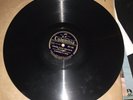
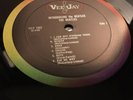
Beatles Original Vinyl Album - Introducing the Beatles
$
55


Favourite Auctions
To save auctions to your favourites, please login
If you don't have an account, please register
Description
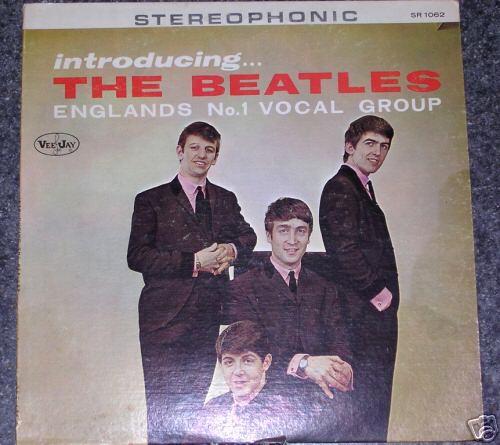
This is an Original Beatles Vinyl Album from VEE-JAY records. It has amazing historic value. See story below.Stereophonic -SR 1062. The album was supposedly issued on 22 July 1963. In reality, although copies may have been pressed early on, the album was not released until 1964.
Side One includes "I SAW HER STANDING THERE"- "MISERY" - "ANNA" - "CHAINS" - "BOYS" - "LOVE ME DO"
Side Two includes "P.S. I LOVE YOU" - "BABY IT'S YOU" - "DO YOU WANT TO KNOW A SECRET" - "TASTE OF HONEY" - and the Beatles classic rendition or "TWIST AND SHOUT"
Vinyl record appears to be in good shape. Can't play - I have no player.
Cover shows some wear and tear - see photos
This Album represents a fantastic historical battle for the right to publish the Beatles between VEE JAY records and Capital Records.
THIS IS A MUST HAVE FOR ANY REAL BEATLE COLLECTOR!
T o understant the incredible historic value of this album. PLEASE READ THIS EXCERP FROM http://www.dermon.com/Beatles/Veejay.htm
Vee Jay Records was the most successful Black owned and operated record company before Motown. Founded in 1953 by Vivian Carter (the "Vee") and her husband, James (Jimmy) Bracken (the "Jay") in Gary, Indiana, Vee Jay contributed a tremendous catalog of blues, rhythm and blues, doo-wop, jazz, soul, pop, and rock n' roll music. The label started as an outgrowth of the Bracken's successful record shop, and Vivian's stint as a disc jockey at WGRY in Gary. The black music Vivian was Vee & Jayplaying on her radio show at the time was not generally available on records.
The Brackens decided to start recording some of these artists, and Vee Jay was born. The couple felt that they could get a label together that could get radio play and sales through their broadcasting and retail contacts. The first artists signed to the label were the Spaniels and Jimmy Reed. In a 1981 interview, first published in Goldmine, Calvin Carter, Vivian's brother, said "Vivian and Jimmy borrowed $500 to produce the first record, borrowed it from a pawnshop. The pawnbroker's name was Maurice Tepper."
The first Vee Jay sessions by Jimmy Reed and the Spaniels were held with an eye toward release in June 1953. While the Bracken's arranged their distribution channels, these first Vee Jay singles were issued on Art Sheridan's Chance label. By December, both titles appeared with the Vee Jay imprint, and the label was up and running. It wasn't until the 1955 hiring of Ewart Abner Jr., a shrewd black record executive, that Vee Jay was catapulted into the big leagues. Rather than cater exclusively to blacks, Abner aimed to make Vee Jay a "full line" label.
Bluesman Jimmy Reed became the most consistent seller on the label. His easy going style regularly showed up on both the R&B and pop charts with songs such as 'Bright Lights, Big City' and 'You Don't Have To Go'. The Vee Jay catalog holds many more blues recordings by Eddie Taylor, Billy Boy Arnold, Snooky Pryor, John Lee Hooker, Big Joe Williams, Floyd Jones, Pee Wee Crayton, J.B. Lenoir and Elmore James.
With the addition of Calvin Carter as chief A&R man (promoter), the label didn't limit itself to blues, issuing numerous pop and R&B crossover hits by Gene Chandler ('The Duke Of Earl'), Dee Clark ('Raindrops'), Jerry Butler and the Impressions ('For Your Precious Love'), The Spaniels ('Goodnight Sweetheart Goodnight'), Betty Everett ('The Shoop Shoop Song'), Roscoe Gordon ('Just A Little Bit'), the El Dorados ('Crazy Little Mama') and the Dells ('Oh What A Night').
The label even regularly issued jazz albums by Wynton Kelly, Wayne Shorter, Eddie Harris, Lee Morgan, and gospel with the early recordings of the Staple Singers, the Highway QC's, the Original Five Blind Boys, the Harmonizing Four, the Caravans, the Gospel Harmonettes and the Swan Silvertones among them. Young unknowns David Gates (of Bread), Hoyt Axton and Jimi Hendrix briefly appeared on the label, as did Little Richard. As a result, Vee Jay attained national attention in September of 1962, with the smash hit song 'Sherry' by the Four Seasons. This group would go on to have 10 top 40 hits for the label.
Vee Jay was now being noticed as a potent force within the record industry. EMI, the British record company with ties to the U.S. Capitol label, approached Vee Jay in Summer 1962 after Capitol had used their right of first refusal to turn down a couple of artists EMI had offered. The Beatles at that time had yet to record 'Love Me Do', which was their first real British hit, and the decision to pass them up was made on the strength of several German recordings with Tony Sheridan, and a few items like 'Ain't She Sweet' and 'My Bonnie'.
Calvin CarterAccording to Calvin Carter, "At the time, we were pretty hot. We had the Four Seasons and we got a lot of airplay. There was a #1 record over in England at the time, and our lawyer, who represented us in other countries, was Paul Marshall. Trans-Global (an EMI affiliate), a company over there had a #1 record and they asked us if we wanted it, and of course we wanted it. It was 'I Remember You,' by Frank Ifield. We took the record, and as a throw in, they had a group and asked us if we would take them, too.
The group turned out to be the Beatles, and we got a five-year contract on the Beatles as a pickup on the Frank Ifield contract."
The Beatles recorded 'Love Me Do' in September 1962, a few weeks after the deal that contracted the group to Vee Jay, and the single hovered in the twenties of the English charts from November to January. The Beatles' next single, 'Please Please Me' / 'Ask Me Why', hit #1 in March 1963. When it hit #2 in early February, Vee Jay decided to release the single in the US, which they did on 25 February 1963 (VJ 498). The song did get some airplay from Chicago top 40 giant WLS, and was placed on their top 40 charts for two weeks, making it the first local top 40 appearance for the group in the US. The group was such an unknown that their name was misspelled "Beattles" on the record label and the top 40 charts.
The single slipped into obscurity soon after its release. This 45 however, was the first true Beatles single to be released in the U.S. The Decca single, 'My Bonnie' / 'The Saints' (Decca 31382) released in early 1962 merely features the Beatles as a backup group to Tony Sheridan.
In the Spring of 1963, some odd rumors started going around within the industry that Vee Jay was in financial trouble, and that they weren't paying the Four Seasons all of their royalties. Part of the trouble was that even though Vee Jay had exploded with several million sellers in 1962, the company was to a large extent still being run like it had been when it was a small business. Many of the financial records, were being kept in Ewart Abner's head, and there was question as to how well these records were being kept. As the Four Seasons situation became more and more tense over the summer, the Brackens decided to make a change in management.
From Me To YouThe Beatles' third British single, 'From Me To You', dashed up the English charts with astonishing speed, making #1 in only three weeks and staying there for six straight weeks. News items in the trade magazines such as Billboard began to indicate that something was happening over there that may be interesting. Vee Jay released the single as 'From Me To You' / 'Thank You Girl' (VJ 522) on 27 May 1963. The single was made 'Pick Of the Week' by Cash Box magazine, but it ran into cover problems!
Del Shannon, who by that time had had a string of U.S. hits, heard the Beatles do 'From Me To You' during an English tour, and promptly recorded it for U.S. audiences. The Shannon version sold unevenly, but the Beatles disc barely sold at all. In Chicago, Vee Jay's base of operations, the major top 40 stations, WLS and WJJD, were on the Del Shannon single, and it easily made the top 20. Vee Jay couldn't get the Beatles' version on these stations, although the Beatles did get substantial airplay on some secondary Chicago stations, such as WYNR. Nationwide, the airplay on the Beatles' version of 'From Me To You' was only enough to push it to #116 in Billboard, with this peak coming about 10 August 1963, mainly due to popularity in the Los Angeles area. But by then, Vee Jay was in the middle of a major management crisis.
On 3 August1963, Billboard announced, "A major executive shakeup occurred at Vee Jay Records this week when President Ewart Abner, Jr., public relations chief Barbara Gardner, and promotion and A&R head Bill Sheppard, exited the firm."
It took Vee Jay several weeks to name a new president, and during this interim period, several critical events took place which would affect the company's future. In the confusion, EMI, through Trans-Global asked for a release on Frank Ifield. Calvin Carter remembers, "When we got into a little financial trouble with the Four Seasons, the word passed through the grapevine in the industry that we were in trouble, and EMI asked for a release on the Frank Ifield contract. So we granted their release." This release was apparently granted on 8 August 1963. At that time a new Frank Ifield single was set to be released as Vee Jay 2674 according to a Billboard review on 17 August. A week later, EMI had announced that it had given the disc to Vee Jay by mistake, and that the record would actually be on Capitol. But the Frank Ifield departure had larger implications.
Calvin Carter: "During that time, Ewart Abner left the company and we brought a new management team in, and they were at first under the impression that we had also released the Beatles. But we didn't. EMI claimed they sent us some kind of mysterious telegram, but they never could find the telegram. We were also set to release an album by the Beatles about that time, 'Introducing The Beatles' (VJLP 1062), but we had too many items in our catalog already, and the distributors were complaining. So we eliminated some of these albums we were set to release, and the Beatles album was one of them, because the Beatles just did not sell very well the first time around. I kept the Beatles album in my desk drawer for several months after that."
The last minute cancellation of several albums in the new Fall Catalog just added to the general confusion at Vee Jay during that period.
The other significant event which occurred during the weeks between Vee Jay presidents was that the Four Seasons situation blew up. New contract or no new contract, on 13 August, the Four Seasons filed suit against Genius, Inc. for Vee Jay's nonpayment of royalties. The Four Seasons were technically not under contract to Vee Jay, but to Genius. Genius had the contract with Vee Jay, so the group had to sue Genius and Genius had to sue the label. The firm served notice on Vee Jay that they considered their contract to be void due to Vee Jay's not paying full royalties. This legal maneuvering went on until November, when it became obvious that the Four Seasons had already finished their new single, "Dawn (Go Away)," but were refusing to give it to Vee Jay, at which point Vee Jay countersued.
It was amidst this chaos that Randy Wood was named President of Vee Jay Records the last week in August 1963. Wood had been with Vee Jay since 1960, and had been a substantial force in the label's increased sales over 1960-63. Wood was to continue this excellent sales track record while he remained president of Vee Jay. Shortly thereafter, Jay Lasker was named Executive Vice-President, Calvin Carter was named Vice President in charge of A&R and Publishing, Steve Clark was named Vice President in charge of Sales, and Mark (Manny) Sands named Comptroller. This cast became the new "Executive Management Team" for Vee Jay, a new corporate structure hired to put Vee Jay more along the lines of a large record company, which it had obviously become.
Either because of Trans-Global's actions, or the Beatle's lack of success, the next single, 'She Loves You' / 'I'll Get You' (Swan 4152), was sent to the even smaller Swan label, which was founded in the late 1950's in Philadelphia, where it was issued on 16 September 1963, just after the UK single. Swan Records was best known for Freddy Cannon, whose most well-known hit was 'Tallahassee Lassie'. For a time, all Swan records carried the words "Don't Drop Out," which was a message to American teens to stay in school.
Introducing Still, Vee Jay decided to go ahead and issue the Beatles first album, which had been available since March in the UK. Vee Jay titled the album 'Introducing the Beatles' (VJLP 1062). In an unusual move, Vee Jay removed 'Please Please Me' and 'Ask Me Why' from the record and added 'Love Me Do' and 'P.S. I Love You', meaning that none of the songs on the album had been issued previously in the US. The album was supposedly issued on 22 July 1963. In reality, although copies may have been pressed early on, the album was not released until 1964. As a result of the two unsuccessful singles, Vee Jay did very little to properly distribute and promote the album. The Chicago area, along with the north eastern part of the US, were the areas that gave the LP the bulk of what little success it had. The back cover pictures twenty five "other fine albums of significant interest" by other Vee Jay artists such as Jimmy Reed, Jerry Butler, the Four Seasons, and Frank Ifield. Apparently, Vee Jay was hesitant to list the actual song titles.
In late 1963, Capitol Records launched the largest promotional campaign in music history. The company allegedly spent $50,000 in the New York City area alone. "The Beatles Are Coming" was plastered everywhere. 'I Want To Hold Your Hand' / 'I Saw Her Standing There' (Capitol 5112) was released on 26 December 1963. The latter song was one already in possession of Vee Jay, since it was on their album. 'I Want To Hold Your Hand' hit the #1 spot in all three charts on 13 January 1964.
The new Vee Jay management team took a closer look at the contract arrangements, and were soon convinced that the label had not released the Beatles the previous summer. Consequently, they took the album out and sent it to the pressing plants and prepared for some sales. They also dusted off 'Please Please Me' and 'From Me To You' and paired them on a new single, VJ 581. Capitol was not amused, and on 15 January 1964, hit Vee Jay with an injunction against manufacturing, distributing, advertising, or otherwise disposing of records by the Beatles. And the legal chase began.
The management team had their work cut out for them. For the first time, Vee Jay was involved in a great number of lawsuits. Randy Wood later said, "At one point, we had no fewer than sixty- four legal actions going. It's frightening to think about it even now."
Calvin Carter added, "We put the album out, and EMI, through Capitol, sued us to cease and desist. They got an injunction against us seemingly every week. They would get an injunction against us on Monday, and we would get it off on Friday, then we'd press over the weekend and ship on Monday; we were smooth, we had everybody alerted, and we were pressing records all the time on the weekends."
Capitol contended in the suit that Vee Jay's rights to the Beatles had been canceled on 8 August 1963, for nonpayment of royalties. Calvin Carter stated, "They were trying to get us on something really minor like failure to declare royalties on 500 records we shipped in 1963. But that was not true at all."
A restraining order was placed on Vee Jay. Its managing director, Jay Lasker, said that they had ceased shipping Beatles products because of the order, but were going take legal action as they had a five year contract with the Beatles and were not in default for non-payment of royalties. The legal representatives of both Capitol and Vee Jay decided to settle the matter between themselves due to the complications which could arise from the suits. It was agreed that 'Introducing The Beatles' could be reissued if the two Ardmore & Beechwood tracks were removed.
LMD & PSA second injunction was granted against Vee Jay concerning the publishing rights on 'Love Me Do' and 'P.S. I Love You', two of the tunes on the album. By mid-February, Vee Jay had won the first round with Capitol, whereby they were allowed to press and distribute the Beatles single. The block remained against the album, so Vee Jay took off the two cuts in question and substituted 'Please Please Me' and 'Ask Me Why' instead. The album was now legally clear, and Vee Jay shipped enormous quantities of it in a very short time. By April, it was #2 on the LP charts.
Also about this time, mid January 1964, 'She Loves You' (Swan 4152) was given a second pressing by Swan Records, including the addition of a picture sleeve. 'She Loves You' also hit Number One. Some of these have "Don't Drop Out" on the label, and some don't. Swan also issued a one sided promotional single featuring 'I'll Get You' (also numbered Swan 4152).
On 27 January 1964, Vee Jay re-released the 'Introducing The Beatles' (VJLP 1062) album, which reached #2 in the Billboard and Cash Box charts and #1 in the Record World chart. This time the legally more acceptable 'Please Please Me' and 'Ask Me Why' were in the place of 'Love Me Do' and 'P.S. I Love You'. The back cover to this issue lists the song titles in two columns.
Without any hope of obtaining new Beatles material, which at this point was firmly in the hands of Capitol Records, Vee Jay wanted to take advantage of the limited number of Beatles tracks they had. Vee Jay then began what would become a small string of tactfully conceived records intended to entice the ever hungry public into believing they were purchasing brand new Beatles albums.
Vee Jay's legal problems didn't go away. Capitol considered that Vee Jay had violated their agreement by altering and repackaging 'Introducing The Beatles'. As a result, a trial without jury took place on 15 July 1964 in which Vee Jay pointed out that their 9 April 1964 license did not mention that they could not repackage the Beatle product they had. Capitol disagreed, saying that Vee Jay had breached the agreement by presenting the same album in different packaging.
On 23 July 1964, Judge Mervyn A. Aggeler announced: "The court finds in favor of Vee Jay Records on all the issues raised in their cross complaint. Vee Jay Records has the unqualified right to advertise and promote the covered masters in any cover, jacket or package which Vee Jay Records, Inc., deems appropriate. Vee Jay has the unqualified right to advertise, sell and promote the long playing album, in the type of jacket, a copy of which is attached to Vee Jay Records complaint, marked as Exhibit C."
"Capitol Records and Beechwood Music, Inc., are permanently restrained from declaring that promotion of the long playing record 'Introducing The Beatles', in the redesigned jacket, constitutes or will constitute a breach in contract, the License Agreement and Mechanical License contracts both dated April 9, 1964."
As a result, Vee Jay were allowed to release Beatles records they had masters of in any form until 15 October 1964. After that time, they no longer had the right to issue any Beatles product.
See the web site for the whole story.
Good Luck bidding.
price rating