Black Sabbath Black Sabbath Vertigo VO 6 UK 2nd 1Y/2Y Swirl labels/inner 1970
£
500
$
663


Favourite Auctions
To save auctions to your favourites, please login
If you don't have an account, please register
Description
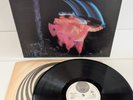
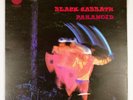
Black Sabbath Black Sabbath Vertigo VO 6 UK 1st press vinyl/2nd press sleeve Vinyl, LP housed in a gate-fold, slightly textured sleeve. The sleeve has the corrected copyright warning, Vertigo in place of Stereo, but all the indications on the LP are that it is a 1st press - particularly the Philips credit on the Label for Side B. The vinyl appears to have been lightly played and is in great condition. It played through beautifully on my stereo - no stick or skip. The slightly textured gatefold cover is in great shape with minimal signs of wear - no rips or writing. The spine is intact and legible. Matrix / Runout Side A : V0 6 1Y * 1 420 12 4 Matrix / Runout Side B : V0 6 2Y * 1 420 12 4
Black Sabbath is the debut studio album by the English heavy metal band Black Sabbath, released on 13 February 1970 by Vertigo Records in the United Kingdom and on 1 June 1970 by Warner Bros. Records in the United States. The album is widely regarded as the first true metal album, and the opening title track, "Black Sabbath", was named the greatest heavy metal song of all time by Rolling Stone and has been referred to as the first doom metal song.
Black Sabbath received generally negative reviews from critics upon its release but was a commercial success, reaching number eight on the UK Albums Charts and number 23 on the US Billboard Top LPs chart. It has retrospectively garnered reappraisal as one of the greatest and most influential heavy metal albums of all time. Black Sabbath is included in Robert Dimery's 2005 musical reference book 1001 Albums You Must Hear Before You Die. Black Sabbath's guitarist and founding member Tony Iommi, the group's debut album was recorded at Regent Sounds Studios on Denmark Street, London in a 12-hour session on 16 October 1969. Iommi said: "We just went in the studio and did it in a day, we played our live set and that was it. We actually thought a whole day was quite a long time, then off we went the next day to play for £20 in Switzerland." Aside from the bells, thunder and rain sound effects added to the beginning of the opening track and the double-tracked guitar solos on "N.I.B." and "Sleeping Village", there were virtually no overdubs added to the album. Iommi recalls recording live: "We thought, 'We have two days to do it and one of the days is mixing.' So we played live. Ozzy was singing at the same time, we just put him in a separate booth and off we went. We never had a second run of most of the stuff."
On release, a writer for The Boston Globe described the music of Black Sabbath as "hard blues-rock". In retrospect, AllMusic's Steve Huey feels that Black Sabbath marks "the birth of heavy metal as we now know it". In his opinion, the album "transcends its clear roots in blues-rock and psychedelia to become something more". He ascribes its "sonic ugliness" as a reflection of "the bleak industrial nightmare" of the group's hometown, Birmingham, England. Huey notes the first side's allusions to themes characteristic of heavy metal, including evil, paganism, and the occult, "as filtered through horror films and the writings of J. R. R. Tolkien, H. P. Lovecraft, and Dennis Wheatley." He characterises side two as "given over to loose blues-rock jamming learned through" the English rock band Cream.
In the opinion of the author and former Metal Maniacs magazine editor Jeff Wagner, Black Sabbath is the "generally accepted starting point" when heavy metal "became distinct from rock and roll". In his opinion, the album represented a transition from blues rock into "something uglier", and that this sound "found deeper gravity via mournful singing and a sinister rhythmic pulse". According to Rolling Stone magazine, "the album that arguably invented heavy metal was built on thunderous blues-rock". Sputnikmusic's Mike Stagno notes that Black Sabbath's combined elements of rock, jazz and blues, with heavy distortion created one of the most influential albums in the history of heavy metal. In retrospect, Black Sabbath has been lauded as perhaps the first true heavy metal album. It has also been credited as the first record in the stoner rock genre. Taking a broader perspective, Pete Prown of Vintage Guitar says, "The debut Black Sabbath album of 1970 was a watershed moment in heavy rock, but it was part of a larger trend of artists, producers, and engineers already moving towards the sound we now call hard rock and heavy metal."
In 1989, Kerrang! ranked Black Sabbath number 31 on their "100 Greatest Heavy Metal Albums of All Time". In 1994, it was ranked number 12 in Colin Larkin's Top 50 Heavy Metal Albums. Larkin praised the album's "crushing atmosphere of doom", which he described as "intense and relentless". In 2000, Q magazine included Black Sabbath in their list of the "Best Metal Albums of All Time", stating: "[This alb
price rating