Brume - Rooster (VINYL) ltd 100 copies YOB, UZALA, SLEEP, ACID KING, ACID KING
£
23
$
30




Favourite Auctions
To save auctions to your favourites, please login
If you don't have an account, please register
Description
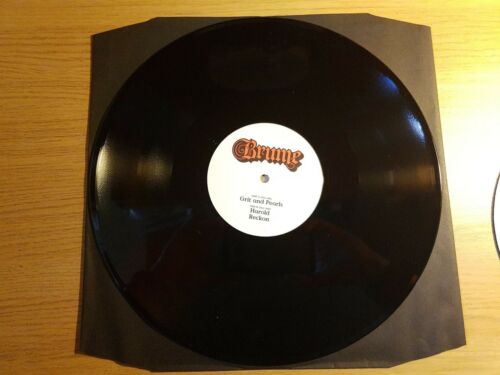
Brume - Rooster (VINYL) YOB, UZALA, SLEEP, ACID KING, ACID KING. Limited numbered edition 100 copies. Condition is "New". Dispatched with Royal Mail 1st Class.
I can offer discounted shipping on multiple items. Please contact me regarding international shipping rates. If posting outside of Europe prices may vary. See my other listings. Estimated UK postage rates below- Royal mail 1st class 1 to 2 cds 2.10 GBP 3 to approx 15 cds - 4.80 GBP 1 - 2 LPs/EPs - 4.80 GBP 3 - 5 LPs - 8.00GBP 1 - 2 double LP - 4.80 GBP
"A dense fog comes to rest over the 51 minutes ofBrumesRooster. By the end of the 10-minute opening track, it has settled in despite or perhaps because of the pervasive thrust the San Francisco trio have conjured, and it remainsa factor for the six-track duration. Fortunately, the three-piece of bassist/vocalistSusie McMullin, guitaristJamie McCathieanddrummerJordan Perkins-Lewischose the most capable of navigators,Billy Anderson(Neurosis,Melvins,Acid King,Sleep, need I go on?), tohelp guide them forward.Rooster, issued throughPerkins-Lewis ownDoom Stew Recordson CD, tape and download with vinyl forthcoming fromDHU Records, winds up not so much getting lost in this fog as inhaling it, plugging in, and riffing out with marked force, thickness and presence. Their 2015 debut EP,Donkey, was a showcase of promise, andRoosteris a longer one, but in stepping forward to give their building audience a first real chance to take in the scope of whatBrume who got together in 2014 can and will be as a band, they do not flub the opportunity. With longer pieces Grit and Pearls (10:06) and Tradewind (11:48) as bookends at the outset and finish, the fervent plod of Harold (7:30), Reckon (9:13) and the rolling Call the Serpents Bluff (9:29) between, as well as the penultimate acoustic-based Welter (2:55) leading into the closer,Roosterrealizes the potential of the prior EP and moves forward with it, successfully melding together influences into whatPerkins-Lewismight call a doom stew of their own recipe. For those new to the band, with the airy, soulful melodicism ofMcMullins voice echoing spaciously over the molasses riffery,one might hear them at first as spiritual successors to the recently-defunctUzala, but the turns of Grit and Pearls immediately widen this impression with rhythmic stops drawn from the post-YOBsphere of cosmic doom andMike Scheidts particular style of angularity. The key, though, is immersion. By the time Grit and Pearls has finished its 10-minute course, shifting from vast plod into quiet atmospherics and back through thefaster ending thats the source of theYOBcomparison above, theyve managed to hook the listener with a repetitive nodding groove. Their sense of pacing and willingness to varytempos emerges as something of a theme throughout, butRoosternever becomes more monotonous than it wants to be. Monolithic, perhaps. Harold begins by teasing the lighter strum-and-pluck that Welter will later bring before crashing in at full weight and unfolding its first ethereal verse, slower and more doomed than Grit and Pearls before it I keep hearing earlyCathedralinMcCathiesguitar progression, but I cant place it exactly and they settle into a consuming roll as they move past the halfway point, the last minute of the song being the real point of departure as the central rhythm gives way to feedback and ambient noise withPerkins-Lewis drums behind, a grueling end that perfectly sets up the doom-gone-TwinPeaks-barroom-blues launch of Reckon. The third ofRoosters six cuts fascinates conceptually asMcMullinplays off the country music trope of the cowgirl singing the tale of meeting a mysterious stranger, but instead of a sharp-eyed, all-chin guy on horseback, hes got a beard and rides a beat-up motorcycle. Nonetheless, the vibe that results makes Reckon a standout, as does its more prevalent hook and open-feeling, drum-and-chanting midsection break that swells to an apex with a layered-over guitar lead that recalls Grit and Pearls in its intent without necessarily retreading whats already been done. It seems likely that Call the Serpents Bluff will mark the start of the vinyls side B after Reckon finishes the albums longer-by-two-minutes side A, and that break between the two songs feels somewhat essential as a factor in the flow throughoutRoosteras a whole. That is, the effect ofPerkins-Lewis drums returning to start Call the Serpents Bluff is best experienced with the breath-catching moment provided to the listener by flipping a record. Even the digital version of Reckon has a couple seconds of silence at the end, and that feels very much on purpose and very correct. When it gets going, with the rumble ofMcMullins bass and feedback fromMcCathies guitar soon enough joining the tom runsto draw the listener into the patient groove, Call the Serpents Bluff swirls out hypnotic, doomedelic nod, an early lead giving way to more insistent pulse before spacious vocal melody transitions into slower riffing, a quiet introduction of the back-half hook and build back to the crawling, crashing finish recitations, ending with the vocals asa standalone element. That subtle moment of minimalism makes an effective transition into Welter the shortest cut and starkest contrast to its surroundings, sonically if not in overall mood. Backed by acoustic strum,McMullinechoes the bluesier feel of Reckon in another context, surrounded by a flourish of keys for a neofolkish stretch one might relate toWindhandbut that serves all the same to further widen the breadthofRoosterahead of Tradewind, which comes to life slowly over likewise quiet strum and cymbal wash before the full heft arrives at around two and a half minutes in to commence a series of loud/quiet tradeoffs that once again findBrumeworking in a varied structural context even as they reinforce the brooding feel of the record as a whole and offer one last deceptively catchy chorus. The nature of their craft, with a focus on longer songs meting out grueling and at times otherworldly doom, doesnt necessarily lend itself toward the expectation of hooks, butBrumehave a few throughoutRooster, as Tradewind duly reminds, and that seems an avenue where the trio might continue to grow as they take the lessons of their debut forward into whatever might come next. Along with the cohesive ambience and fluidity of their presentation on the whole, this underlying foundation of songwriting gives them another tradition to make their own as they begin to do in these tracks." The OBELISK
price rating


![The Downward Spiral [PA] [LP] by Nine Inch Nails (Vinyl, 1994, Nothing...](https://www.popsike.mobi/php/thumbnail.php?url=https://www.popsike.pics/pix/20190501/113733537590.jpg)


![Lungs [lp] - Vinyl by Florence and the Machine.](https://www.popsike.mobi/php/thumbnail.php?url=https://www.popsike.pics/pix/20170523/182588959890.jpg)


