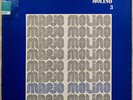
CHRIS LUCEY / BOBBY JAMESON STEREO LP SONGS OF PROTEST & ANTI-PROTEST *HEAR IT*
$
20


Favourite Auctions
To save auctions to your favourites, please login
If you don't have an account, please register
Description
The entire album was played on both sides and some songs sounded EX & others VG so an overall play-grade of VG was given. There was no skipping on any songs. The vinyl is played on a Dual 502 turntable that is equipped with a Shure M75CS cartridge & Shure Hi-Track stylus installed.
EXCERPT FROM WIKIPEDIA:
"After his return to California, Jameson was approached by Mira Records, a company established by Randy Wood, previously of Vee-Jay Records. They had recorded an album, Songs of Protest and Anti-Protest, with another singer-songwriter, Chris Ducey, for release on their mid-price subsidiary Surrey label. The album sleeves had already been printed, with Ducey's name and the track titles, but with a photo showing Brian Jones. However, in the meantime Ducey had entered into another contract with a different company, which meant that Mira were unable to release Ducey's record. The label asked Jameson — who at the time was "broke, homeless, and sleeping on people's couches" — to write and record new songs to match Ducey's song titles, and arranged to have the record sleeves overprinted so that the name "Ducey" would appear as "Lucey". Within two weeks, Jameson wrote the songs, and recorded them with producer Marshall Leib (previously a member of The Teddy Bears with his friend Phil Spector. The record was released without fanfare, with Jameson credited as songwriter, but without any agreement over his legal rights to the recordings. It was later issued on the Joy label in the UK under Jameson's own name, and the title Too Many Mornings. (The real Chris Ducey became a member of The Penny Arkade, who recorded an unreleased album with Mike Nesmith, and was later a member of Prairie Madness. He released a solo album, Duce of Hearts, in 1975.)
Although Songs of Protest and Anti-Protest was not promoted commercially, and was ignored when first released in late 1965, over the years it acquired a strong reputation. According to Dean McFarlane at Allmusic:
"This sought after psychedelic pop gem... [is] often compared to Love's Forever Changes, in that it is an intricate exploration of sophisticated arrangements and bleak and twisted lyricism... [It] may have been a little too courageous for its time, tackling blues, exotic - almost lounge arrangements and pure pop psychedelia. Its beauty is in its absolute fracture and collage of a million and one ideas."
Richie Unterberger wrote:
"There aren't many albums of the time that bear an unmistakable Love similarity, but Songs of Protest and Anti-Protest is one of them. Both the vocals and songwriting bear strong recollections of early Arthur Lee, with the melodic but wistful folk-rock chord changes, occasional Latin jazz tempos, occasional gruff folk-blues downbeat atmosphere, probing yet vague lyrics, and oddball production."
Part of its appeal to record collectors was its "fantastic obscurity", and the fact that little was known about who had made the record. Jameson himself has commented:
"[The album] was a throw away album when it was created. Like it or not, that is a fact. It has, in recent years, taken on a life of its own and for that I am grateful, but it needs to be viewed in real context, to see how it has risen on its own merit to a position it never held when it was created."
Many of the imperfections found on a VG+ record are more obvious on a VG record. That said, VG records — which usually sell for no more than 25 percent of a NM record — are among the biggest bargains in record collecting, because most of the “big money” goes for more perfect copies. For many listeners, a VG record or sleeve will be worth the money.
VG records have more obvious flaws than their counterparts in better shape. They lack most of the original gloss found on factory-fresh records. Groove wear is evident on sight, as are light scratches deep enough to feel with a fingernail. When played, a VG record has surface noise, and some scratches may be audible, especially in soft passages and during a song’s intro and ending. But the noise will not overpower the music otherwise.
Minor writing, tape or a sticker can detract from the label. Many collectors who have jukeboxes will use VG records in them and not think twice. They remain a fine listening experience, just not the same as if it were in better shape.
VG covers will have many signs of human handling. Ring wear in the middle or along the edges of the cover where the edge of a record would reside, is obvious, though not overwhelming. Some more creases might be visible. Seam splitting will be more obvious; it may appear on all three sides, though it won’t be obvious upon looking. Someone might have written or it or stamped a price tag on it, too.
VG covers will look worn, used. There may be some seam splitting . There will be some ring wear, where the ink has begun to wear off. Giving the cover a look of snow falling. If the artwork looks snowy all over, it is less than VG condition. There may be some writing on the cover (still, no Large letters in magic marker).
VG+(VERY GOOD PLUS) Some visible surface wear, very minor scratches and scuffs, but minimal impact on the sound quality. Vinyl will still have good luster; labels may have minor imperfections (small labels or initials, etc.) but otherwise clean.
price rating