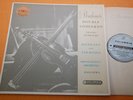
COUP d'ARCHET 2x10" LPs COUP-004: Johanna MARTZY - Beethoven & Dvorak Trios - UK
$
275


$ 275
Sold For
Feb 16, 2020
Sold Date
Nov 22, 2019
Start Date
1
Number Of Bids
USA
Country Of Seller
eBay
Sold at
Favourite Auctions
To save auctions to your favourites, please login
If you don't have an account, please register
Description
****Welcome to our listing, thanks very much for looking!
****See our own website! We have lots of out of print LPs and CDs! Find us on the web at -
hearthedifference.net
****Shipping cost is only an estimate - it depends on the actual weight and size of the package as well as the service required. We do not profit from shipping costs, so if we overcharge, we will refund the difference back to you. It's always best to wait for our invoice before paying for your item. We will combine shipping for multiple items purchased.
****Please see our other listings - new items added daily!
****To access our eBay store click on the little red door at the top right section of any of our eBay listings or, click on -
http://stores.ebay.com/Hear-The-Difference
Background -
This is a very rare 2x10" LP pressing on the Coup d'Archet record label (COUP 004). The LPs were made in the UK (England / Great Britain) with no notations anywhere indicating the date it was issued (but we believe it was issued in 1998). The record jacket is in near mint minus shape with no seam splits. The jacket has NO manual writting on the front or back. The vinyl itself appears in superb overall condition, AS NEW, with perhaps a slight spider mark or two (these are caused by sliding the LP in and out of the paper inner sleeve - most of the time these types of marks don’t sound, but it really depends on the sensitivity of your audio gear).Johanna Martzy Born: October 26, 1924 - Timisoara, Transylvania
Died: August 13, 1979 - Glarus, Switzerland
The Hungarian violinist, Johanna, Martzy, received instruction from Jenö Hubay before entering the Budapest Academy of Music at age 10. She made her debut in Budapest when she was 13, and graduated from the Academy in 1942.
After winning 1st prize in the Geneva Competition in 1947, Johanna, Martzy toured widely; first played in England in 1953 and in the USA in 1957. She acquired a fine reputation as a soloist and chamber music artist.
Johanna Martzy passed away from cancer in 1979 almost unnoticed - particularly in the USA, where she had performed with the New York Philharmonic Orchestra in the late 1950’s but thereafter was an unobtrusive visitor to North America. Though only 54 when she died, she hadn't recorded commercially in decades. Her period in the limelight was brief; her dénouement was long.
Appreciation & Recordings
Johanna Martzy's was a deceptive talent: The tone was filigree and silvery, but not particularly beautiful. The vibrato was quick and applied with a sparseness that never allowed room for sentimentality. Tempos were swift and straight-ahead with no lingering. In later years (the 1970’s), the tone grew a bit leathery but the tempos were more elastic, but in her prime, her playing had a coolness bordering on severity. The soul of her art was her coloristic expressiveness, delivered with such precision and discretion that each phrase became a tiny, and rich, world of its own. Once you've zeroed in on that quality, the ear can't help seizing on it even in her most ensemble-minded, self-effacing chamber recordings, such as her performances of Beethoven's Piano Trio No. 1 and Dvorák's "Dumky" Piano Trio with István Hajdu and Paul Szabo. All of this is encased in a sense of line that's marvelously expansive, unbroken and buoyant. Martzy's expressive parameters were narrow, but they couldn't have been more resolutely defined.
She had a quality of inhabiting a piece from the inside and saw little need to gussy up the surface; to the jaded or inattentive ear, her interpretations can seem to lack incident. Skeptics, however, need only listen to her EMI recordings of the Bach Sonatas and Partitas, music to which her severity couldn't have been better suited. In fact, Bach seems to be the defining composer of her aesthetic: prior to the period-instrument movement, most performances of these masterpieces have moments of heavy weather, of too much sound being crowded into too small a space. And there are easier things in the violin repertoire than sustaining the repeat-laden dance movements. Martzy's recordings are the exception, her precision of tone addressing the problems of the former, her long sense of line carrying her through the latter.
There are downsides to her approach. Cerebral but not intellectual, Johanna Martzy is mostly incapable of projecting the charm of Mozart. In her until-recently-suppressed recording of Mozart's Violin Concerto No. 3 with Wolfgang Sawallisch, she seems relieved to hit the cadenza, in which she can throw off the responsibility to ingratiate. Most puzzling of all are her two EMI recordings of the Felix Mendelssohn concerto. Though it's always tempting to declare the suppressed version to be superior, this time it's really true. The commercially released version conducted by Paul Kletzki emphasizes the music's classical qualities to the point of slickness. Wolfgang Sawallisch is far more attuned to the music's darker underpinnings, inspiring a concentration from Martzy that reminds you - if any doubt remained - that this is a great violinist, albeit one who perhaps didn't know what collaborators were best for her. Might that be the core reason her career never developed?
Posthumous careers such as Martzy's germinate unpredictably, often from the second-hand LP record market. Her EMI and Deutsche Grammophon LPs, dating from the 1950s, now go for hundreds of dollars a disc. Perhaps in response to that, Japanese EMI released the six-disc "Art of Johanna Martzy" in 1988. The first Martzy CD release in the West came in 1994 with her Johannes Brahms and F. Mendelssohn concerto performances on Testament. Then from smaller labels came a flood of previously unreleased material. The England-based Coup d'Archet delivered five discs of European radio releases that were hard to get in the USA (though some have turned up on Amazon.com). The Doremi label has a series of live recitals taped in Canada. Meanwhile, Japanese EMI re-released its Martzy CD box with an added bonus: two long-suppressed recordings from 1954 of the violinist playing F. Mendelssohn and Mozart with Wolfgang Sawallisch, made amid quarrels about tempo and other matters.
Johanna Martzy’s solo J.S. Bach, which has acquired iconic status, is well played technically and very satisfying. Deploying the sturdy rhythm and glowing tone that are features of all her recordings, she gives balanced, middle-of-the-road interpretations, unhurried and free of self-indulgence. The three original LP’s were well received on both sides of the Atlantic. In America the New York Herald Tribune chose the set as one of its recordings of 1956. In England Edward Greenfield of The Manchester Guardian remarked on Martzy’s ‘luscious vibrato’ but was not bothered by it; and on a later occasion he preferred her set of the Sonatas and Partitas to that of Jascha Heifetz. Desmond Shawe-Taylor of The Observer recommended her recordings ‘for sound musicianship and sustained sweetness of tone’. Interestingly, the question of her vibrato was also brought up by Schonberg after her New York début: ‘Her Bach was anything but purist and “classic” in conception. She approached the music with decisive rhythm and a good deal of vibrato (perhaps a little too much vibrato, in the slow movement; but this is a question of taste).’ Although he was writing about a concerto – and his remarks are borne out by live Martzy recordings of the Bach solo concertos - the points he makes are equally applicable to her unaccompanied Bach. Her interpretations are directly in the tradition of Hungarian fiddlers such as Szigeti, Telmányi and Varga: her native flair and unshowy virtuosity make up for any ‘romantic’ habits in her playing.
-
LPs made by COUP d'ARCHET Records, in the UK / England / Great Britain
-
LPs released in 1998 (nothing on jacket or LP to indicate an actual date)
-
LPs are recorded in MONO
-
Record Catalog Number: COUP 004
Beethoven / Dvorak // Johanna Martzy / Paul Szabo / Hajdu Istvan
Title -
Beethoven: Piano Trio No. 3 in C minor, Op. 1, No. 3
Dvorak: Piano Trio in E minor, Op. 90 "Dumky"
Tracks -Beethoven: Piano Trio No. 3 In C Minor, Op. 1 No. 3
A1. Allegro Con Brio
A2. Andanta Cantabile Con Variazioni
B1. Menuetto (Quasi Allegro) And Trio
B2. Finale (Prestisimmo)
Dvo?ák: Piano Trio E-Minor, Op. 90 (Dumky)
C1. Lento Maestoso
C2. Poco Adagio
C3. Andante
D1. Andante Moderato
D2. Allegro
D3. Lento Maestoso
Performers / Credits / Other Information -
• Cello – Paul Szabo
• Piano – Hajdú István
• Violin – Johanna Martzy
These recordings were both made on November 10 1969 and are released with the kind permission of WDR Cologne.
CONDITION Details:
The GATE-FOLD LP jacket is in Near Mint minus overall condition. The jacket is tight and clean, with NO seam splits. The corners are solid. The colors on the jacket are sharp and clean with just slight shelf wear due to age - see pictures as they are of the actual item.
The LP is in Near Mint minus overall condition - AS NEW! There are no serious marks on the vinyl. There may be a light spider mark or two on the LPs (caused by sliding the LP in and out of the inner sleeve) and perhaps a finger print or two. Most of the time, spider marks are not audible, but it really depends on the sensitivity of your audio gear. Considering the vintage of this LP, the vinyl looks superb. This LP retains much of the original gloss and sheen! There are NO serious spindle marks on the record labels either - a superb collector's grade copy.A Short Note About LP GRADING -
- Mint = Only used for sealed items.
- Near Mint = Virtually flawless in every way.
- Near Mint Minus = Item has some minor imperfections, some audible.
- Excellent = Item obviously played and enjoyed with some noise.
- Very Good Plus = Many more imperfections which are noticeable and obtrusive.
For best results, always thoroughly clean your LPs before playing them.
LPs can be audiophile quality pressings (any collector of fine MFSL, half speeds, direct to discs, Japanese/UK pressings etc., can attest to the difference a quality pressing can make to an audio system).
Don't let this rarity slip by!!!price rating