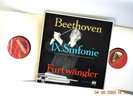
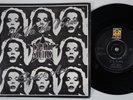
Count Basie Oscar Peterson Timekeepers 2x45rpm 180 G APO Analogue Audiophile M-
$
109


Favourite Auctions
To save auctions to your favourites, please login
If you don't have an account, please register
Description
Count Basie Meets Oscar Peterson ~ The Timekeepers
- Double Record Set, 1 full album on 2 Vinyl.
- 180-gram, 45RPM, Analogue Audiophile, Stereo Pressing.
- Limited edition #0297/1000, low number.
- Mastered at AcousTech by Kevin Gray and Steve Hoffman.
- Analogue Productions Records / Pablo 2310-896
- Vinyl are Mint- to Mint; played only two or three times on Audiophile equipment and handled with care.
- Labels are Mint-, a few, very small, very minor manufacturer imperfections near spindle-hole.
- LP #2 has a very small raise (about .25") during one full rotation and does not affect playback; plays Mint- to Mint.
- Cover is Mint-, small, minor bends on right-corners.
- OUT OF PRINT, Limited album.
- Includes AcousTech 45rpm Insert (VG++ to Mint-; faint creases from vinyl) and Mint- postcard.
"Count Basie was among the most important bandleaders of the swing era. With the exception of a brief period in the early '50s, he led a big band from 1935 until his death almost 50 years later, and the band continued to perform after he died. Basie's orchestra was characterized by a light, swinging rhythm section that he led from the piano, lively ensemble work, and generous soloing. Basie was not a composer like Duke Ellington or an important soloist like Benny Goodman. His instrument was his band, which was considered the epitome of swing and became broadly influential on jazz.
Both of Basie's parents were musicians; his father, Harvie Basie, played the mellophone, and his mother, Lillian (Childs) Basie, was a pianist who gave her son his earliest lessons. Basie also learned from Harlem stride pianists, particularly Fats Waller. His first professional work came accompanying vaudeville performers, and he was part of a troupe that broke up in Kansas City in 1927, leaving him stranded there. He stayed in the Midwestern city, at first working in a silent movie house and then joining Walter Page's Blue Devils in July 1928. The band's vocalist was Jimmy Rushing. Basie left in early 1929 to play with other bands, eventually settling into one led by Bennie Moten. Upon Moten's untimely death on April 2, 1935, Basie worked as a soloist before leading a band initially called the Barons of Rhythm. Many former members of the Moten band joined this nine-piece outfit, among them Walter Page (bass), Freddie Green (guitar), Jo Jones (drums), and Lester Young (tenor saxophone). Jimmy Rushing became the singer. The band gained a residency at the Reno Club in Kansas City and began broadcasting on the radio, an announcer dubbing the pianist "Count" Basie."...
-allmusic.comPACKAGED FOR SAFE SHIPPING - USPS TRACKING NUMBER
Thank you and have the best day ever!
price rating