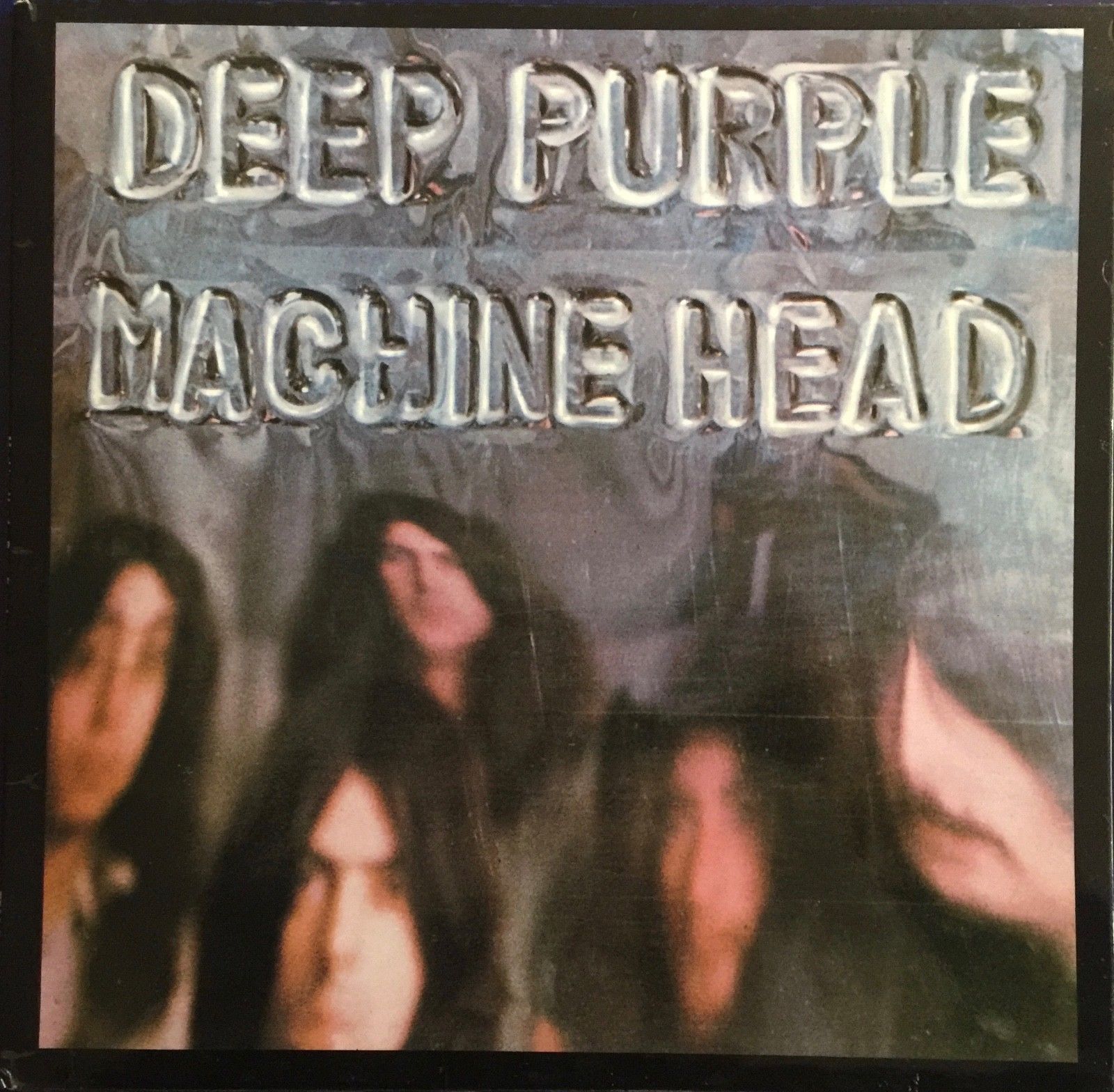
DEEP PURPLE 'MACHINE HEAD" TPSA 7504 UK PURPLE (EMI) 'MADE IN GERMANY' VERSION
£
32
$
42


Favourite Auctions
To save auctions to your favourites, please login
If you don't have an account, please register
Description
DISCOGS:
More Images
Deep Purple ?– Machine Head
Label: Purple Records ?– TPSA 7504, Purple Records ?– IE 06 o 93261 Format: Vinyl, LP, Album, Reissue, Germany Pressing, GatefoldCountry: UK Released: 1973 Genre: Rock Style: Heavy Metal
Tracklist
A1 Highway Star 6:05 A2 Maybe I'm A Leo 4:51 A3 Pictures Of Home 5:03 A4 Never Before 3:56 B1 Smoke On The Water 5:40 B2 Lazy 7:19 B3 Space Truckin' 4:31Companies, etc.
- Published By – HEC Music Ltd.
- Printed By – Garrod & Lofthouse Ltd.
- Made By – Garrod & Lofthouse Ltd.
- Record Company – The Gramophone Co. Ltd.
- Record Company – EMI Records Ltd.
- Pressed By – Sonopress
Credits
- Design [Cover] – J. Coletta*, R. Glover*
- Engineer – Martin Birch
- Photography By – Shepard Sherbell
- Producer – Deep Purple
- Written-By – Gillan*, Paice*, Lord*, Blackmore*, Glover*
Notes
Recorded in Montreux, Switzerland, in the Rolling Stones Mobile Studio.Original pressings have a laminated gatefold sleeve and include a lyric insert.
Record Made in Germany
Barcode and Other Identifiers
- Matrix / Runout (A): TPSA 7504 A1
- Matrix / Runout (B): TPSA 7504 B1
- Matrix / Runout (Machine stamped on all sides): Made in Germany
WIKIPEDIA:
Breakthrough success (1970–1973)[edit]
The classic Deep Purple line up, 1971. From left to right: Jon Lord, Roger Glover, Ian Gillan, Ritchie Blackmore, Ian PaiceShortly after the orchestral release, Deep Purple began a hectic touring and recording schedule that was to see little respite for the next three years. Their first studio album of this period, released in mid-1970, was In Rock (a name supported by the album's Mount Rushmore-inspired cover), which contained the then-concert staples "Speed King", "Into The Fire" and "Child in Time". The non-album single "Black Night", released around the same time, finally put Deep Purple into the UK Top Ten.[47] The interplay between Blackmore's guitar and Lord's distorted organ, coupled with Gillan's howling vocals and the rhythm section of Glover and Paice, now started to take on a unique identity that separated the band from its earlier albums.[5] Along with Zeppelin's Led Zeppelin II and Sabbath's Paranoid, In Rock codified the budding heavy metal genre.[2]
On the album's development, Blackmore stated: "I got fed up with playing with classical orchestras, and thought, 'well, this is my turn.' Jon was into more classical. I thought, 'well you do that, I'll do rock.' And I said, 'If this fails, this record, I'll play with orchestras the rest of my life.'"[48] In Rock performed well, especially in the UK where it reached number 4, while the "Black Night" single reached number 2 on the UK Singles Chart, and the band performed the song live on the BBC's Top of the Pops.[49][50] A second album, the creatively progressive Fireball, was issued in the summer of 1971, reaching number 1 on the UK Albums Chart.[50] The title track "Fireball" was released as a single, as was "Strange Kind of Woman", not from the album but recorded during the same sessions (although it replaced "Demon's Eye" on the US version of the album).[51] "Strange Kind of Woman" became their second UK Top 10 single, reaching number 8.[50]
Vocalist Ian Gillan on stage in Clemson, South Carolina, US, 1972Within weeks of Fireball's release, the band were already performing songs planned for the next album. One song (which later became "Highway Star") was performed at the first gig of the Fireball tour, having been written on the bus to a show in Portsmouth, in answer to a journalist's question: "How do you go about writing songs?" Three months later, in December 1971, the band travelled to Switzerland to record Machine Head. The album was due to be recorded at the Montreux Casino, using the Rolling Stones Mobile Studio, but a fire during a Frank Zappa and the Mothers of Invention gig, caused by a man firing a flare gun into the ceiling, burned down the Casino. This incident famously inspired the song "Smoke on the Water". The album was later recorded in a corridor at the nearby empty Grand Hotel.[52][53]
Continuing from where both previous albums left off, Machine Head became one of the band's most famous albums. It became the band's second number 1 album in the UK, while re-establishing Deep Purple in North America, hitting number 7 in the US and number 1 in Canada.[50] It included tracks that became live classics, such as "Highway Star", "Space Truckin'", "Lazy" and "Smoke on the Water", for which Deep Purple is most famous.[47][54] Deep Purple continued to tour and record at a rate that would be rare thirty years on; when Machine Head was recorded, the group had only been together three and a half years, yet the album was their sixth.
"When I was nine years old it was all about Deep Purple. My all time favourite [album] is still Made in Japan" — Metallica drummer Lars Ulrich.[55]Meanwhile, the band undertook four North America tours in 1972, and a Japan tour that led to a double-vinyl live release, Made in Japan. Originally intended as a Japan-only record, its worldwide release saw the double LP become an instant hit. It remains one of rock music's most popular and highest selling live-concert recordings.[56] The classic Deep Purple Mark II line-up continued to work, and released the album Who Do We Think We Are in 1973. Spawning the hit single "Woman from Tokyo", the album hit number 4 in the UK charts and number 15 in the US charts while achieving gold record status faster than any Deep Purple album released up to that time.[57][58] But internal tensions and exhaustion were more noticeable than ever. Following the successes of Machine Head and Made in Japan, the addition of Who Do We Think We Are made them the top-selling artists of 1973 in the US.[59][60] In Japan alone, Machine Head and Made in Japan would go on to sell well over 1 million copies combined on the back of multiple reissues.[61]
price rating