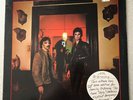
David Bowie Ziggy Stardust Rare 1972 RCA Records Original Press Vinyl LP
$
50


Favourite Auctions
To save auctions to your favourites, please login
If you don't have an account, please register
Description
Welcome to Classic Cadillac Records! I visually grade all my records as accurately as possible and will never grade anything above Near Mint unless it's still sealed. Please note that a visual grade can differ from a play grade, and am happy to spot check a record upon request. All orders are shipped within 1 business day (usually sooner) and packed with extra care to ensure fast, safe arrival. Please look closely at all pictures, read all relevant details and ask any questions you may have before buying. I offer a full 30-day return policy on everything I sell, so buy with confidence! 20% restocking fee charged on items returned for reasons other than it not working properly. Thanks for looking!
The Rise and Fall of Ziggy Stardust and the Spiders from Mars Studio album by David Bowie Released 16 June 1972[a] Recorded
- 9 July 1971 ("It Ain't Easy")
- 8 November 1971 – 4 February 1972
- Glam rock
- proto-punk
- Ken Scott
- David Bowie
(1971) The Rise and Fall of Ziggy Stardust and the Spiders from Mars
(1972) Images 1966–1967
(1973) Singles from The Rise and Fall of Ziggy Stardust and the Spiders from Mars
- "Starman" / "Suffragette City"
Released: 28 April 1972 - "Rock 'n' Roll Suicide"
Released: 11 April 1974
The Rise and Fall of Ziggy Stardust and the Spiders from Mars (often shortened to Ziggy Stardust) is the fifth studio album by the English musician David Bowie, released on 16 June 1972 in the United Kingdom through RCA Records. It was co-produced by Bowie and Ken Scott and features Bowie's backing band the Spiders from Mars, composed of Mick Ronson (guitar), Trevor Bolder (bass) and Mick Woodmansey (drums). It was recorded from November 1971 to February 1972 at Trident Studios in London.
Described as a loose concept album and rock opera, Ziggy Stardust focuses on Bowie's titular alter ego Ziggy Stardust, a fictional androgynous and bisexual rock star who is sent to Earth as a saviour before an impending apocalyptic disaster. In the story, Ziggy wins the hearts of fans but suffers a fall from grace after succumbing to his own ego. The character was inspired by numerous musicians, including Vince Taylor. Most of the album's concept was developed after the songs were recorded. The glam rock and proto-punk musical styles were influenced by Iggy Pop, the Velvet Underground and Marc Bolan. The lyrics explore the artificiality of rock music, political issues, drug use, sexuality and stardom. The album cover, photographed in monochrome and recoloured, was taken in London outside the home of furriers "K. West".
Preceded by the single "Starman", Ziggy Stardust reached top five of the UK Albums Chart. Critics responded favourably; some praised the musicality and concept while others struggled to comprehend it. Shortly after its release, Bowie performed "Starman" on Britain's Top of the Pops in early July 1972, which propelled him to stardom. The Ziggy character was retained for the subsequent Ziggy Stardust Tour, performances from which have appeared on live albums and a 1979 concert film. Bowie described the follow-up album, Aladdin Sane (1973), as "Ziggy goes to America".
In later decades, Ziggy Stardust came to be regarded as Bowie's masterpiece, appearing on numerous professional lists of the greatest albums of all time. Bowie had ideas for a musical based on the album, although this project never came to fruition; ideas were later used for Diamond Dogs (1974). Ziggy Stardust has been reissued several times and was remastered in 2012 for its 40th anniversary. In 2017, it was selected for preservation in the National Recording Registry by the Library of Congress, being deemed "culturally, historically, or aesthetically significant".
Influence and legacy
The Rise and Fall of Ziggy Stardust and the Spiders from Mars made [Bowie] a household name and left a milestone on the highway of popular music, rewriting the terms of the performer's contract with his audience and ushering in a new approach to rock's relationship with artifice and theatre that permanently altered the cultural aesthetic of the twentieth century.
—Nicholas Pegg, 2016Ziggy Stardust is widely considered to be Bowie's breakthrough album. Although Pegg believes Ziggy Stardust was not Bowie's greatest work, he said that it had the biggest cultural impact of all his records. Trynka stated that besides the music itself, the album "works overall as a drama that demands suspension of disbelief", making each listener a member of Ziggy's audience. He believes that decades later, "it's a thrill to be a part of the action."
In retrospectives for The Independent and Record Collector, Barney Hoskyns and Mark Paytress respectively, contrasted Bowie against Marc Bolan, who became a star a year before Bowie and influenced his glam persona of Ziggy Stardust, but who was unable to stay in a position of stardom in the long run due to a lack of adaptability. Bowie, on the other hand, made change a theme of his entire career, progressing through the 1970s with different musical genres, from the glam rock of Ziggy Stardust to the Thin White Duke of Station to Station (1976). Hoskyns argued that through the Ziggy persona, Bowie "took glam rock to places that the Sweet only had nightmares about". Ultimate Classic Rock's Dave Swanson stated that as the public were adapting to glam, Bowie decided to move on, abandoning the persona within two years. Writing on Bowie's influence on the glam rock genre as a whole, Joe Lynch of Billboard called both Ziggy Stardust and Aladdin Sane records that "ensured his long-term career and infamy". He argues that both albums "transcended" the genre, are "works of art", and are not just "glam classics", but "rock classics". In 2002, Chris Jones of BBC Music argued that with the album, Bowie fashioned the template for the "truly modern pop star" that had yet to be matched.
In 2004, the Brazilian singer Seu Jorge contributed five cover versions of Bowie songs, three of them from Ziggy Stardust, to the soundtrack for the film The Life Aquatic with Steve Zissou. Jorge later rerecorded the songs as a solo album called The Life Aquatic Studio Sessions. On that album's liner notes, Bowie wrote, "Had Seu Jorge not recorded my songs in Portuguese I would never have heard this new level of beauty which he has imbued them with." In 2016, Jorge toured performing his Portuguese covers of Bowie's songs in front of sailboat-shaped screens. The American musician Saul Williams named his 2007 album The Inevitable Rise and Liberation of NiggyTardust! after the album. In June 2017, an extinct species of wasp was named Archaeoteleia astropulvis after Ziggy Stardust ("astropulvis" is Latin for "stardust"). The American singer Chappell Roan's stage name and persona has been compared to the Ziggy Stardust character and the title of her album The Rise and Fall of a Midwest Princess (2023) was inspired by The Rise and Fall of Ziggy Stardust and the Spiders from Mars.
Retrospective reviews
Retrospective professional ratings Review scores Source Rating AllMusic Blender Chicago Tribune Christgau's Record Guide B+ Encyclopedia of Popular Music Pitchfork 10/10 Q The Rolling Stone Album Guide Slant Magazine Spin Spin Alternative Record Guide 8/10 UncutRetrospectively, Ziggy Stardust has received critical acclaim and is recognised as one of the most important rock albums. When reviewing the 30th anniversary edition of Ziggy Stardust in 2002, Daryl Easlea of Record Collector called the album "a monumental piece of work", praising the backing band of the Spiders and noting its cultural impact.[ Jones noted the album's importance in rock music 30 years later and credits Scott and the Spiders as elements that elevated the album to the status it has received, finding it to be the "peak" of that group's creativity and achievements. Billboard wrote that the record serves as a reminder to record companies that "hopelessly idiosyncratic and excessively provocative" music can initially be disliked but later celebrated as "timeless". Writing for Slant Magazine in 2004, Barry Walsh said that aside from the "pop culture phenomenon" the album has become, the songs are among Bowie's finest and most memorable, and ultimately called the album "truly timeless". Erlewine wrote for AllMusic: "Bowie succeeds not in spite of his pretensions but because of them, and Ziggy Stardust–familiar in structure, but alien in performance–is the first time his vision and execution met in such a grand, sweeping fashion." Greg Kot writing for Chicago Tribune, described the album as a "guitar-fueled song cycle", saying it "enacted the deaths of Joplin, Morrison, Hendrix, and the '60s" and that it "presaged the dread, decadence and eroticism of a new era".
Many reviewers have considered the album to be a masterpiece. Reviewing its 40th anniversary, Jordan Blum of PopMatters writes: "It's easy to appreciate how Ziggy Stardust was a revolutionary record in 1972, and it's still as vibrant, significant, and enjoyably today." In a 2013 readers' poll for Rolling Stone, Ziggy Stardust was voted Bowie's greatest album. The magazine argues that it "is the Bowie album that will be in history books". Reviewing in 2015, Douglas Wolk of Pitchfork commented that while it has an incoherent concept overall, it still remains a great collection of tracks, "overflowing with huge riffs and huger personae". Ian Fortnam wrote for Classic Rock in 2016 that "Ziggy Stardust is David Bowie's crowning achievement. Obviously, contrarians will insist other albums have proven to carry greater cultural weight or defined his artistic legacy better, but revisit Ziggy today and its visceral and emotional impact remains undeniable. Especially when played, as advised, 'at maximum volume' ... Ziggy reflected and shaped its time and its audience like no other album".
Rankings
The Rise and Fall of Ziggy Stardust and the Spiders from Mars has frequently appeared on numerous lists of the greatest albums of all time by many publications. In 1987 as part of their 20th anniversary, Rolling Stone ranked it number six on "The 100 Best Albums of the Last Twenty Years". In 1997, Ziggy Stardust was named the 20th greatest album of all time in a Music of the Millennium poll conducted in the UK. It was voted number 11 and 27 in the second and third editions of English writer Colin Larkin's book All Time Top 1000 Albums, respectively. He said in the second edition: "The blend of rock star persona and alien creature defining Ziggy Stardust was probably [Bowie's] finest creation". In 2003, Rolling Stone ranked it 35th on their list of the 500 Greatest Albums of All Time. It retained the same position on the updated 2012 list, and was re-ranked 40th in 2020. In 2004, it was placed at number 81 in Pitchfork's list of the 100 Best Albums of the 1970s, while Ultimate Classic Rock included it in a similar list of the 100 best rock albums from the 1970s in 2015, calling it "a masterstroke of genius myth-making". In 2006, Q magazine readers ranked it as the 41st best album ever, while Time magazine chose it as one of the 100 best albums of all time. In 2013, NME ranked the album 23rd in their list of the 500 Greatest Albums of All Time, writing: "'Ziggy Stardust' ... demands to be engaged with from start to finish". In Apple Music's 2024 list of the 100 Best Albums, the album ranked number 24.
The album was also included in the 2018 edition of Robert Dimery's book 1001 Albums You Must Hear Before You Die. In March 2017, the album was selected for preservation in the National Recording Registry by the United States National Recording Preservation Board, which designates it as a sound recording that has had significant cultural, historical, or aesthetic impact in American life.
Track listing
All tracks written by David Bowie, except "It Ain't Easy", written by Ron Davies.
Side one
- "Five Years" – 4:42
- "Soul Love" – 3:34
- "Moonage Daydream" – 4:40
- "Starman" – 4:10
- "It Ain't Easy" – 2:58
Side two
- "Lady Stardust" – 3:22
- "Star" – 2:47
- "Hang On to Yourself" – 2:40
- "Ziggy Stardust" – 3:13
- "Suffragette City" – 3:25
- "Rock 'n' Roll Suicide" – 2:58
price rating