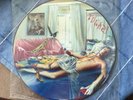
Depeche Mode - Personal Jesus 12 BONG 17 1989 UK BBC Archives Radio Press
$
95


Favourite Auctions
To save auctions to your favourites, please login
If you don't have an account, please register
Description
Depeche Mode – Personal Jesus
Label / Catalog Info:
• Label: Mute Records
• Catalog Number: 12 BONG 17
• Release Year: 1989
• Country: UK
• Speed: 45 RPM
• Format: 12” Vinyl Single
• Matrix / Runout (Side A): 12 BONG 17 A1 + etched message: “I’M NOT CRAZY ANYMORE”
• Matrix / Runout (Side B): 12 BONG 17 B1 + etched message: “WASSAMATTA?”
Track Listing:
Side A
• Personal Jesus (Holier Than Thou Approach)
Side B
• Dangerous (Sensual Mix)
• Personal Jesus (Acoustic)
Pressing Notes:
• This is an original 1989 UK 12” release.
• Both the “Holier Than Thou” mix and the etched messages in the dead wax are authentic indicators of an early UK pressing.
• The etched messages are known features of some UK pressings and add a collector’s touch.
Provenance & Rarity:
• BBC Gramophone Library Copy: This copy is ex-BBC property, with multiple stickers confirming catalog tracking (GST203656, barcode label, and library cards).
• Library provenance can enhance appeal for collectors due to institutional handling and traceable history.
• The vinyl appears in good shape with original labels intact, and the jacket includes a prominent “PLAY AT 45 RPM” sticker and original HMV price label (£3.49).
Please understand that this is an official UK archival record from the British Broadcasting Corporation and the sleeve(s) may contain archival stickers from the BBC. Some of these stickers are 'on top' of the plastic with some 'underneath' (i.e. on the sleeve itself). Some sleeves have been 'laminated' either by way of 'punching' the plastic wallet to two parts of the sleeve or by fully wrapping the plastic to the sleeve. Where sleeves are laminated stickers can be removed with the use of appropriate sticker removal fluids however it is unlikely that stickers can be removed from any sleeves that are not laminated. The sleeves as such in this collection are generally graded as VG with the records often VG+ to Ex+.
The BBC Gramophone Library: A Historic Institution in British Broadcasting
Overview
The BBC Gramophone Library was the centralized archive and distribution hub for music and spoken-word recordings used by the British Broadcasting Corporation (BBC) across its radio and television networks. Established in the 1930s and reaching its peak usage from the 1950s through the 1980s, the library served as a critical resource for programming, background music, and live broadcasts.
Primary Roles:
1. Music Programming & Licensing
• The BBC did not allow advertising, so it relied heavily on pre-licensed or internally approved music for airplay.
• The Gramophone Library held tens of thousands of LPs, singles, and 78s, carefully cataloged and labeled for legal and logistical reasons.
2. Record Circulation Across Studios
• Library copies were loaned out to BBC producers and engineers working on everything from Radio 1 pop shows to classical music programs and regional BBC radio stations across the UK.
• Many records bear checkout stickers and barcodes with issued/returned fields, tracking circulation between studios.
3. Archiving Broadcast-Ready Media
• The BBC required high-quality and clean copies for broadcasting, so many library records were early or first pressings sourced directly from record labels or distributors.
• Labels often provided the BBC with promo or advanced copies, which were then filed and made broadcast-ready.
4. Editing, Marking, and Custom Labeling
• Library staff often marked faults or added stickers (e.g., “STEREO”, “DO NOT USE SIDE B”, “OBSCENE LYRICS”) based on BBC content standards.
• Some records have cue sheets or fade/duration notes handwritten on inner sleeves for radio DJs and engineers.
5. Preservation & Disposal
• When formats shifted (vinyl to CD, then digital), the BBC began deaccessioning large portions of the library.
• Many records were sold, gifted to staff, or disposed of — though some were retained for archival and legal purposes.
Collecting Significance
Records from the BBC Gramophone Library are now highly sought after due to:
• Direct association with British radio history
• Unique, institutional provenance (often impossible to fake convincingly)
• Early pressings used during the golden age of BBC radio (1950s–1980s)
• The possibility that famous BBC DJs (e.g., John Peel, Annie Nightingale) handled or played the exact copies
Legacy
The BBC Gramophone Library remains a legendary archive in British media history, now largely digitized or merged into newer holdings. Physical copies like yours are time capsules, often tied to decades of public service broadcasting, music history, and cultural memory.
price rating