(EAGLES-Hotel California)-surreal world of dissipation-POSTER-J9-LP
A$
45
$
30


Favourite Auctions
To save auctions to your favourites, please login
If you don't have an account, please register
Description
ITEM: VINYL 12” LP 33 1/3rpm
ARTIST: EAGLES
TITLE: Hotel California
COUNTRY PRINTED: OZ
CAT No: ASYLUM, 7E 1084
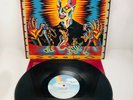
COVER: Gatefold (Grade at NEAR MINT-) very small tear back inside opening
INNER COVER: (Grade at MINT-)
INSERT: Huge 3-leaf fold-out POSTER (Grade at MINT-)
LABELS: (Grade at MINT-)
VINYL: (Grade at NEAR MINT-) light scuff S2 but does not affect sound
TRACKS:
1 -Hotel California -Felder, Frey, Henley 6:30
2 -New Kid in Town -Frey, Henley, Souther 5:03
3 -Life in the Fast Lane -Frey, Henley, Walsh 4:46
4 -Wasted Time -Frey, Henley 4:56
5 -Wasted Time (Reprise) -Frey, Henley, Norman 1:23
6 -Victim of Love -Felder, Frey, Henley, Souther 4:09
7 -Pretty Maids All in a Row -Vitale, Walsh 3:58
8 -Try and Love Again -Meisner 5:10
9 -The Last Resort -Frey, Henley 7:28
COMMENT:
Review #1: by William Ruhlmann
The Eagles took 18 months between their fourth and fifth albums, reportedly spending eight months in the studio recording Hotel California. The album was also their first to be made without Bernie Leadon, who had given the band much of its country flavor, and with rock guitarist Joe Walsh. As a result, the album marks a major leap for the Eagles from their earlier work, as well as a stylistic shift toward mainstream rock. An even more important aspect, however, is the emergence of Don Henley as the band's dominant voice, both as a singer and a lyricist. On the six songs to which he contributes, Henley sketches a thematic statement that begins by using California as a metaphor for a dark, surreal world of dissipation; comments on the ephemeral nature of success and the attraction of excess; branches out into romantic disappointment; and finally sketches a broad, pessimistic history of America that borders on nihilism. Of course, the lyrics kick in some time after one has appreciated the album's music, which marks a peak in the Eagles' playing. Early on, the group couldn't rock convincingly, but the rhythm section of Henley and Meisner has finally solidified, and the electric guitar work of Don Felder and Joe Walsh has arena-rock heft. In the early part of their career, the Eagles never seemed to get a sound big enough for their ambitions; after changes in producer and personnel, as well as a noticeable growth in creativity, Hotel California unveiled what seemed almost like a whole new band. It was a band that could be bombastic, but also one that made music worthy of the later tag of "classic rock," music appropriate for the arenas and stadiums the band was playing. The result was the Eagles' biggest-selling regular album release, and one of the most successful rock albums ever.
Review #2: by http://sfloman.com/eagles.html
Of course, it’s cheating to call a greatest hits compilation the band’s finest hour, so that designation really belongs to Hotel California, the band’s first album with new guitarist Joe Walsh (ex James Gang and at the time a notable solo performer in his own right), which went on to sell a whopping 16 million copies in the U.S. alone. The Eagles finest non-compilation album statement, Hotel California is an impressive concept piece about the pull of California and how the perils of “Life In The Fast Lane” can lead to an unfulfilling, loveless life of hedonistic decadence. Walsh’s distinctive playing gives the band a harder-edged rock presence that they had previously lacked, particularly on tracks such as “Life In The Fast Lane” and “Victim Of Love,” which rock harder than anything the band had done to date. The precautionary tale of “Life In The Fast Lane” is just about the definitive word on the sordid lifestyle of L.A.'s rich and famous, while “Victim Of Love” is another untrustworthy woman track on which Felder provides tough riffs as Walsh wails away on slide guitar. And then there’s the #1 hit title track, another guitar showcase that’s simply an all-time classic, there’s no point in even trying to deny it, from its evocative acoustic intro on through its dueling guitar climax. Never was the tag team of Walsh and Felder better utilized than on that exciting extended outro, and the song’s memorably evil lyrics are certainly haunting as well (is there anyone here who can’t sing along to every verse?). Lest there was any doubt before, on this album Don Henley asserts himself as the band’s primary lead vocalist, singing 6 of this albums 9 tracks and foreshadowing his subsequent solo success; he proves up to the task with some great performances, none more convincing than on the title track. Elsewhere, The Eagles old laid-back charms are also in evidence on songs such as the Frey-sung “New Kid In Town” (another stellar #1 hit) and Meisner’s "Try and Love Again," another unlucky at love song and a strong album track (dig its ringing guitars and airy harmonies). Less successful is Walsh’s pedestrian "Pretty Maids All in a Row," which doesn’t really seem to fit, particularly since his and Meisner’s high-pitched voices would’ve presented more successful changes of pace had they not been sequenced back-to-back. The "Wasted Time (Reprise)" isn’t exactly necessary, either, but the original "Wasted Time," a heavily orchestrated, regret-filled, soulful piano ballad, is another highlight. Rounding out the set list is “The Last Resort,” whose environmental warnings seem even more prescient today, as this epic 7+ minute ballad delivers a damn fine finale whose superb lyrics really resonate. All in all, this album has its overly slick and commercial faults, but it nevertheless is deserving of its classic status, as Walsh clearly injected some new life into the band, whose concerns seem more real and desperate this time out. As Henley himself noted: “Every band has their peak. That was ours.”
Meaning of Hotel California: by http://www.cracked.com/article_19454_5-famous-hidden-song-meanings-that-are-total-b.s..html
"Hotel California" -- It's About Satanism, Right?
Whether you know "Hotel California" as "that weird Eagles song" or "that weird devil-worshiping song" probably depends on how religious your parents were.
When "Hotel California" was released in 1976, everyone heard it but no one really knew what it meant. The lyrics talked about trying to "Kill the beast" and "Stab it with their steely knives," and included the ominous line, "You can check out anytime you like but you can never leave." Honestly, it kind of sounds like they're singing about using the reference section in a library full of giant monsters, since those are the books you can technically check out but aren't permitted to remove from the building.
That was when someone noticed something odd about the album cover, which features a picture of the band in some luxury hotel courtyard with crowds of people in the background. Above the crowd, looking out from a balcony on the upper left, is a shape whose face you can't fully see, but vaguely looks bald, goateed and threatening.
Naturally, people came to the conclusion that the figure on the balcony was none other than Anton LaVey, founder of the Church of Satan, author of The Satanic Bible and proud parent of a son that he freaking named Satan.
Now that Anton LaVey was found, the lyrics seemed to make sense: "The Beast," "You can never leave" "This could be heaven or this could be hell." "Hotel California" is a song about Anton LaVey converting people to his church of Satanism, from which they could "never leave." The "truth" about the song persists to this day, found in Internet forums, an old issue of The Milwaukee Sentinel and the nothing-if-not-reputable website Jesus Is Savior.
Actually ...
"Hotel California" has pretty much nothing to do with Satanism. The Eagles have admitted it was a way of speaking out against the greed and hedonism of the music industry in the 1970s (i.e., the drugs, money and women they themselves were drowning in). The photographer responsible for the album cover said the picture expressed "faded loss of innocence and decadence," which is pretentious-speak for "a bunch of assholes standing in a lobby."
"What about the face in the window?" you say. "I heard somewhere they didn't even know it was there. Maybe it wasn't Anton LaVey, but really ... a ghost." Unfortunately not. As Snopes points out: "The shadowy figure was a woman hired for the photo shoot."
Yep. The person mistaken for a bald, goatee-sporting antichrist was, in fact, just some lady who had nothing to do with anything and wouldn't even have been memorable were it not for the poor lighting of the photograph and the bafflingly deliberate decision to separate her from the rest of the group, presumably because she showed up late for the shoot and/or got Don Henley's name wrong.
Biography: by William Ruhlmann
With five number one singles, fourteen Top 40 hits, and four number one albums, the Eagles were among the most successful recording artists of the 1970s. At the end of the 20th century, two of those albums -- Their Greatest Hits (1971-1975) and Hotel California -- ranked among the ten best-selling albums ever, and the popularity of 2007's Long Road Out of Eden proved the Eagles' staying power in the new millenium. Though most of its members came from outside California, the group was closely identified with a country- and folk-tinged sound that initially found favor in Los Angeles during the late '60s, as championed by such bands as the Flying Burrito Brothers and Poco (both of which contributed members to the Eagles). But the band also drew upon traditional rock & roll styles and, in their later work, helped define the broadly popular rock sound that became known as classic rock. As a result, the Eagles achieved a perennial appeal among generations of music fans who continued to buy their records many years after they had split up, which helped inspire the Eagles' reunion in the mid-'90s.
VINYL GRADING SYSTEM
MINT:
RECORD: New condition with no surface marks or loss of sound quality.
COVER: New condition with no surface marks, creases or wear.
NEAR MINT:
RECORD: Barely noticeable surface mark with no loss of sound quality.
COVER: Barely noticeable surface mark/ wear.
EXCELLENT:
RECORD: Some signs of being played with extremely little if no loss of sound quality.
COVER: Slight wear or creasing.
VERY GOOD:
RECORD: Obviously been played with noticeable surface marks & the occasional light scratches but exhibits no major loss of sound quality.
COVER: Noticeable wear on cover, seam or spine.
+(PLUS)/-(MINUS):
Slightly up or down in condition as appears in the comments above.
NOTE:
Gradings are done visually unless there appears to be a questionable surface mark on the vinyl, it is then put on the turntable to check. A comment describing the outcome will appear if this is the case.
COMBINED/BULK POSTAGE SAVINGS
WITHIN AUSTRALIA
1 LP:
Use the Post Calculator or see above to find the POST COST of this item within OZ.
WANT TO ADD MORE ITEMS?
ALL AUSTRALIAN STATES=$18.95 for 2-17 LPs (or up to 5kg).
NOTE:
Double albums count as 2 LPs; triple albums count as 3 LPs etc
PAYMENT METHOD
WITHIN AUSTRALIA
Option…
Internet Bank Deposit /Money Order/Personal Cheque (waiting period 5 days till cleared) /Paypal in $AUD
GUARANTEE
We strive to provide an accurate grading to ensure a quality product.
But sometimes an error is made.
If you consider this is the case, then please contact us for the refund of your purchase.
FEEDBACK
When you get your item, please examine or test it.
If you are satisfied, then leave some positive feedback for me.
I will have already left feedback for you.
price rating