ELIAS TANENBAUM+GIACOMO MANZONI+DARIJAN BOZIC 4-LP BOX BRASS-ELECTRONIC-AVANT
$
70


Favourite Auctions
To save auctions to your favourites, please login
If you don't have an account, please register
Description
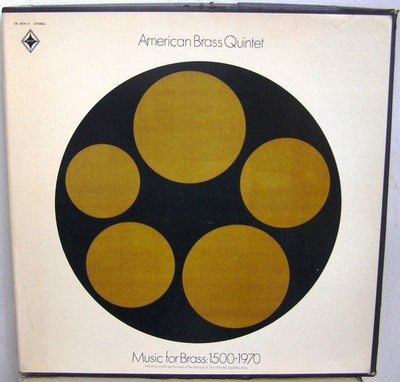
AMERICAN BRASS QUINTET
WILLIAM BERGSMA / FRANCIS POULENC / PAUL HINDEMITH / GIACOMO MANZONI / ELIAS TANENBAUM /ETC.
MUSIC FOR BRASS 1500-1970 4-LP BOXSET
Desto
w/booklet
Very rare 70's original boxset on Desto featuring a nice assortiment of tracks for brass instruments from modern composers and going back to early days of the brass. Great tracks with electronics from Darijan Bozic and Elias Tanenbaum.
Some info on the release: Bloody rare original issue, released in Usa sometime in the 70's on the great Desto label. Excellent collection of brass music performed by the American Brass Quintet presenting works from the renaissance, the baroque period to modern classical and contemporary music and even electronic-electroacoustic music. Features some exclusive only here material, like the yugoslavian's Darijan Bozic with his "Kriki" (Cries) for brass quintet, voice and tape, a very theatrical work, combining the declaming voice with electronic effects and aleatoric elements. Or "Improvisations and Patterns for brass quintet and tape" by Elias Tanenbaum, a "free form" piece of interaction between electronic tape and instruments. Also Giacomo Manzoni's "Quadruplum" (that also appears in his split release with Luigi Nono), Charles Whittenberg's "Triptych for bass", Charles Wuorinen's "Suite for Brass Quartet", plus pieces by Francis Poulenc, Robert Starer, Ingolf Dahl, Paul Hindemith and many more (look below for list).
Born in 1924 in Brooklyn, New York, Elias Tanenbaum studied trumpet at an early age and played with many jazz bands. After serving with the U.S. Army in World War II, he received a B.S. from the Juilliard School of Music in 1949, and an M.A. from Columbia University. He studied composition with Dante Fiorillo, Boguslav Martinu, Otto Luening and Wallingford Riegger. Mr. Tanenbaum composed over 100 works in all idioms. Works include music for concert, jazz, theater, television, ballet and electronic and comptuer music. His music has been performed extensively throught this country, Europe and Japan by orchestras such as the Los Angeles Philharmonic, Japan Philharmonic, Brooklyn Philharmonia, the St. Paul Chamber Orchestra, the Westchester Philharmonic and many other performing groups. Mr. Tanenbaum was the Founding Director of the Electronic Computer Music Studio and a member of the composition faculty at the Manhattan School of Music in New York City. He held that post from 1970 until his retirement. In addition, Mr. Tanenbaum was a visiting composer at the California Institute for the Arts in 1983 and a visiting lecturer at Stuttgart Conservatory in 1993.
Darijan Boži?'s music has been strongly influenced by jazz and a keen sense of musical drama. His early concertos for trumpet, trombone and saxophone and his Sonatas in cool show clearly the jazz influence (similar to that on Tippett), and his use of extended tonality and traditional forms. From 1963 he adopted new methods, including a form of serial working and free rhythmic coordination, but with no loss of melodic interest. His frequent use of speakers is well illustrated by the collage tape work Trije dnevi Ane Frank ('Three days in the life of Anne Frank'), Polineikes and, above all, Jago, a musico-dramatic characterization derived from Shakespeare. Even in chamber works such as Kriki ('Screams') and Collage sonore, speakers are included in the ensemble. Although Boži? has made only modest use of electronic sounds, he frequently uses collage rather than musique concrete tape techniques, as in the bitterly ironical but magnificent reinterpretation of the funeral rite in his Requiem of 1969.
With over 200 compositions to his credit, Charles Wuorinen is one of the most prolific contemporary American composers. Born in 1938, he studied at Columbia University, where he worked with Otto Luening, Vladimir Ussachevsky, and Jack Beeson. A major presence in American music for over four decades, Wuorinen's music is uniquely serial, and primarily 12-tone in nature. His major influences are the modernist European school, namely Schoenberg, though the influence of late Stravinsky and Babbitt are also unmistakable. Much of his music requires extreme virtuosity on the part of the performer, such as his Chamber Concertos, which typically include wide leaps, extreme dynamic contrasts, and a rapid exchange of pitches. Fractal geometry and the mathematical theories of Benoit Mandelbrot have influenced works such as Bamboula Squared and the Natural Fantasy for organ. However, Wuorinen's later music begins to demonstrate tonal relationships, though to a limited degree, such as pitch-centered openings and conclusions, octave doublings, and timbral transpositions of thematic ideas. His music also evolved to include clear rhythmic relationships -- his earlier works avoided this characteristic -- and his melodies also became more conjunct in nature. Wuorinen's music continues to evolve, with later works such as the Rhapsody for Violin and Orchestra and New York Notes containing further rhythmic clarity, more recognizable melodic structures and clearer orchestration. Clearly this is not the style of the same composer as was found in his earlier works. His most recent works include Symphony Seven, a Piano Quintet for Ursula Oppens, and a Percussion Quartet.
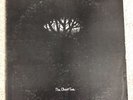
Condition: Vinyls lie in excellent- condition, they look super clean and play perfectly all along with the exception of some weird marks at the end of the Ewald track which doesn't sound and some surface noise for some spins at the beggining of the Dahl piece, while cover lies in very good shape, with splits on top and bottom , detached spine and general age wear (see picture).
Tracklist
A1 Giovanni Palestrina – Ricercar Sopra II Primo Tuono A2 Gottfried Reiche – Baroque Suite A3 John Dowland– Four Dances B1 Tielman Susato – Five Flemish Dances B2 Michael East – Desperavi; Triumphavi B3 Johann Pezel – Six Seventeenth Century Dances Quatuor En Forme De Sonatine Op.23, No.1 C1 Anton Simon – Allegro Grazioso C2 Anton Simon – Andantino Tranquillo C3 Anton Simon – Scherzando Quasi Presto C4 Anton Simon – Allegro Moderato (A La Russe) Quintet In B Flat Minor, Op.5 D1 Victor Ewald – Moderato D2 Victor Ewald – Adagio D3 Victor Ewald – Allegro Moderato D2 Alexander Glazounov – In Modo Religioso, Op.38 E1 Francis Poulenc – Sonata For Trumpet, Horn And Trombone E2 Paul Hindemith – Morgenmusik E3 William Bergsma – Suite For Brass Quartet (1945) F1 Ingolf Dahl – Music For Brass Instruments F2 Robert Starer – Five Miniatures G1 Elias Tanenbaum – Improvisations And Patterns For Brass Quintet And Tape G2 Giacomo Manzoni – Quadruplum H1 Darijan Boži? – Kriki For Brass Quintet, Voice And Tape H2 Charles Whittenberg – Triptych For Brass QuintetSHIPPING & PAYMENT
Shipping: Shipping for this 4LP boxset is 15$ airmail in Europe / 21$ for the rest of the world
Registered mail: +5$
Insurance: optional
Combined shipping: BIG discounts
Payment: Paypal
Packaging: I am a collector too and i know
price rating




![Serengeti - Kenny Dennis III [TEST PRESSING]](https://www.popsike.mobi/php/thumbnail.php?url=https://www.popsike.pics/pix/20141121/281505217399.jpg)