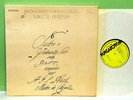
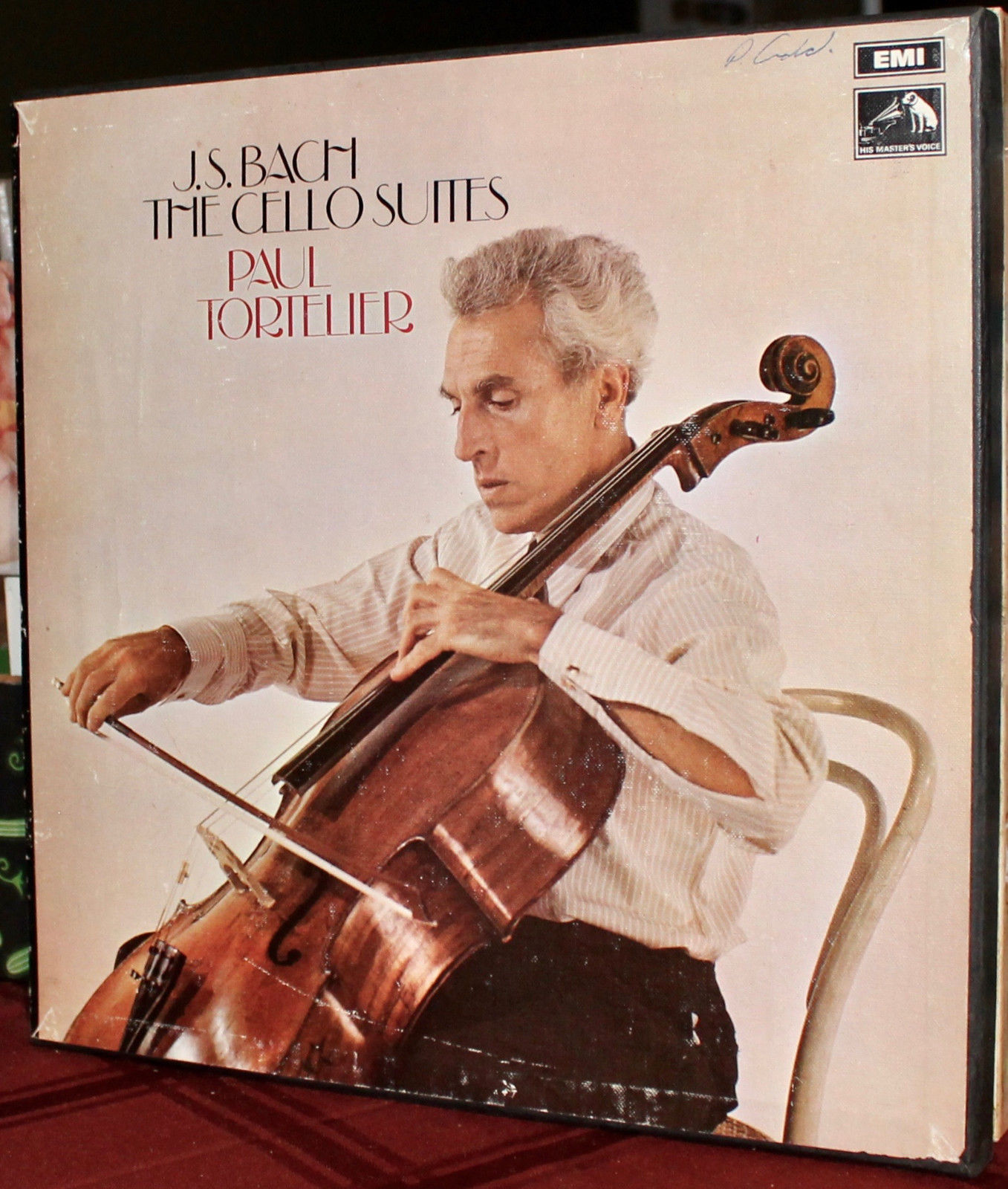
EMI 3-LPs SLS 798: JS BACH - The Solo Cello Suites - Paul TORTELIER - 1963 UK
C$
150
$
105


C$ 150
Sold For
Jan 26, 2018
Sold Date
Nov 2, 2017
Start Date
1
Number Of Bids
Canada
Country Of Seller
eBay
Sold at
Favourite Auctions
To save auctions to your favourites, please login
If you don't have an account, please register
Description
****Welcome to our listing, thanks very much for looking!
****See our own website! We have lots of out of print LPs and CDs! You can find us on the world wide web at -
hearthedifference.net
****Shipping cost is only an estimate - it depends on the actual weight and size of the package as well as the service required. We do not profit from shipping costs, so if we overcharge, we will refund the difference back to you. It's always best to wait for our invoice before paying for your item. We will combine shipping for multiple items purchased.
****Please see our other listings for more great LPs and CDs - new items added daily!
****To access our eBay store either click on the little red door at the top right section of any of our eBay listings or, click on -
http://stores.ebay.com/Hear-The-Difference
Background -
The six Cello Suites, BWV 1007 to 1012, are suites for unaccompanied cello by Johann Sebastian Bach. They are some of the most frequently performed and recognizable solo compositions ever written for cello. Bach most likely composed them during the period 1717–23, when he served as Kapellmeister in Köthen. The title given on the cover of the Anna Magdalena Bach manuscript was Suites à Violoncello Solo senza Basso (Suites for cello solo without bass).These suites for unaccompanied cello are remarkable in that they achieve the effect of implied three- to four-voice contrapuntal and polyphonic music in a single musical line. As usual in a Baroque musical suite, each movement is based around a baroque dance type; the cello suites are structured in six movements each: prelude, allemande, courante, sarabande, two minuets or two bourrées or two gavottes, and a final gigue. The Bach cello suites are considered to be among the most profound of all classical music works. Wilfrid Mellers described them in 1980 as "Monophonic music wherein a man has created a dance of God."
Due to the works' technical demands, étude-like nature, and difficulty in interpretation because of the non-annotated nature of the surviving copies, the cello suites were little known and rarely publicly performed until they were revived and recorded by Pablo Casals in the early 20th century. They have since been performed and recorded by many renowned cellists, have also been transcribed for numerous other instruments, and are considered some of Bach's greatest musical achievements.
An exact chronology of the suites (regarding both the order in which the suites were composed and whether they were composed before or after the solo violin sonatas) cannot be completely established. However, scholars generally believe that—based on a comparative analysis of the styles of the sets of works—the cello suites arose first, effectively dating the suites earlier than 1720, the year on the title page of Bach's autograph of the violin sonatas.
The suites were not widely known before the 1900s, and for a long time it was generally thought that the pieces were intended to be studies; in addition, some of the suites were written for four strings, and some for five. However, after discovering Grützmacher's edition in a thrift shop in Barcelona, Spain, at age 13, Catalan cellist Pablo Casals began studying them. Although he later performed the works publicly, it was not until 1936, when he was 60 years old, that he agreed to record the pieces, beginning with Suites Nos. 1 and 2, at Abbey Road Studios in London. By 1939, Casals became the first to record all six suites. Their popularity soared soon after, and Casals' original recording is still widely available and respected today.
The suites have since been performed and recorded by many renowned cellists including Mstislav Rostropovich, Paul Tortelier, and Yo-Yo Ma. Yo-Yo Ma won the 1985 Grammy Award for Best Instrumental Soloist Performance for his album Six Unaccompanied Cello Suites.
Paul Tortelier (21 March 1914 – 18 December 1990) was a French cellist and composer.
A consummate artist whose approach to the cello was directed toward breathing life into the music, Paul Tortelier earned the respect and affection of countless colleagues. An enduring friendship with Pablo Casals found him playing, in the words of a French critic, Apollo to Casals' Jupiter. Like Casals, Tortelier emphasized using but one finger at a time on the string to allow free vibration. Fantasy and emotional freedom marked his performances and attracted numerous young players.
Given a cello by his mother at age six, Tortelier was prompted toward a career from the beginning. His first teacher, Beatrice Bluhm, exposed young Paul to the flexible wrist and free bowing arm favored by the Franco-Belgian School. At ten, Tortelier entered the Paris Conservatoire, where his studied with Gérard Hekking, who encouraged a sense of rhythmic freedom and instilled in his pupil an abiding love for Bach. While his lessons continued, he performed in Paris cafés and cinemas; at 16, he graduated from the Conservatoire with a first prize.
After joining the Paris Radio Orchestra as assistant principal, Tortelier made a debut with Lamoureux Concert Association, all the while studying harmony with Jean Gallon at the Conservatoire. Completion of those courses brought another first prize, this time in composition. As a member of the Monte Carlo Symphony Orchestra, Tortelier played under the direction of Toscanini and Walter and performed as soloist in Richard Strauss' Don Quixote under the composer's direction.
Though his career advanced in the late 1930s, taking him to Asia and Africa, as well as North and South America, WWII curtailed his activities. After the war, he resumed his concert appearances. Impressed by efforts to establish Israeli statehood, Tortelier (a Catholic) moved his family to Mabaroth, a kibbutz only several hundred yards from the enemy border. The first Prades Festival, celebrating the 200th anniversary of Bach's death in 1950, drew an invitation from Casals to be principal cellist. From 1956 to 1969, Tortelier was a professor at the Paris Conservatoire; from 1969 to 1975, he taught at the Folkwang Hochschule in Essen, Germany. Conducting occupied more of his time in later years, as did composition (two concertos included). His book, How I Play, How I Teach, has become a standard text for performance of modern cello works.
Tortelier was born in Paris, the son of a cabinet maker with Breton roots. He was encouraged to play the cello by his father Joseph and mother Marguerite (Boura), and gifted at 12 he entered the Conservatoire de Paris. He studied the cello there with Louis Feuillard and then Gérard Hekking. He won the first prize in cello at the conservatoire when he was 16, playing the Elgar cello concerto, and then he studied harmony under Jean Gallon. His debut was with the Orchestre Lamoureux in 1931 at the age of 17. He performed Lalo's Cello Concerto.
In 1935 Tortelier joined the Monte-Carlo Philharmonic Orchestra as first cellist and played with them until 1937. He gave performances under Bruno Walter and Arturo Toscanini, and he also played the solo part in Richard Strauss' Don Quixote under the composer. This is a piece which became closely associated with Tortelier, as he gave many performances and recorded it.
In 1937 he joined the Boston Symphony Orchestra under Serge Koussevitsky, performing as first cellist through 1940. In 1938 he began a solo career at Boston's Town Hall, accompanied by Leonard Shure. He was first cellist of the Orchestre de la Société des Concerts du Conservatoire, Paris, 1946–47. In 1947 he gave his British debut under Beecham, again performing Don Quixote at the Festival of Richard Strauss in London. "My boy", Beecham said, "you will be successful in England because you have temperament". In 1950 Tortelier was selected by Pablo Casals to play as the principal cellist in the Prades Festival Orchestra. Tortelier believed that of all the cellists, it was Casals who influenced him the most. A French critic wrote of him: "If Casals is Jupiter, then Tortelier is Apollo." Tortelier performed for the Peabody Mason Concert series in Boston in 1952.
He was a music professor at the Conservatoire de Paris (1956–69); Folkwang Hochschule in Essen (1969–1975); and the Conservatoire National de Region, Nice (1978–80). He was also an honorary professor at the Central Conservatoire in Beijing, China. Despite being French, he advised his students to avoid French music and concentrate on Beethoven and Mozart - music the public more likely wanted to hear.
Although he was a Catholic, Tortelier was inspired by the ideals of the founders of the newly formed state of Israel in 1948, and in the years 1955–1956 spent some time living with his wife and two children in the kibbutz Maabarot, near Netanya.
His compositions include a concerto for two cellos and orchestra (1950), a solo cello suite in D, and two sonatas for cello and piano. He also wrote a set of variations for cello and orchestra ( 'May Music Save Peace' ). He also wrote a symphony, the Israel Symphony, after his experience of living in the kibbutz. His edition of the Bach Cello Suites was published by Galliard in 1966.
He taught Jacqueline du Pré when she briefly attended his classes at the Paris Conservatoire, though he was not her main teacher (that was William Pleeth). Other students included Arto Noras, Nathan Waks and Raphaël Sommer. In the 1970s he gave a series of master classes which were recorded and broadcast on TV by the BBC, which demonstrate his very dynamic style of playing.
Interests included bicycling and playing the flute. Besides performing on the cello, he made appearances as a conductor when he grew older (similar to Mstislav Rostropovich). Although it is sometimes mistakenly thought to be Rostropovich, Tortelier is the inventor of the angled cello spike, enabling the instrument to lie more horizontally than vertically.
Paul Tortelier was married twice. His first marriage, to Madeleine Gaston, ended in divorce in 1944. His second marriage was to Maud Monique Martin (also a cellist). His son, Yan Pascal Tortelier, is an internationally known conductor, and his daughter Maria de la Pau is a pianist. He died of a heart attack at the age of 76 in the domaine of Villarceaux, Yvelines, near Paris.
Tortelier withdrew his children from formal education so that they could concentrate on music. He was asked about this during an interview with Huw Wheldon on British television, and when Wheldon asked if there were not authorities in France that make you send your children to school, he replied, "I don't want to know anything about any authorities. I am a soloist and they will be soloists." Wheldon queried, "but what happens if they don't become soloists?" and, in some surprise, Tortelier said, "Well, if you start thinking about what will happen if you don't succeed, you won't."
How many recordings of Bach's Cello Suites does anyone need? If one has the magisterial Casals recording and the exquisite Fournier recording and the robust Rostropovich recordings and the sturdy Schiff recordings and the pretty Ma and the rough Bylsma recordings, does one really need another recording, no matter how good? That is the question. And the answer, of course, is yes, provided the recording has something to add to what one already knows of the Suites. In the case of Paul Tortelier's recording of the Suites, the answer is yes, indubitably, yes. More than any other performance, Tortelier brings out the beauty of the music, the achingly beautiful melodies, the sensuously beautiful harmonies, and the thrillingly beautiful rhythms. Although one might reasonably prefer the tone of rough-hewn Casals or the graceful Fournier or the burly Rostropovich, if one is looking for a recording of the Suites with beauty to warm the heart, Tortelier's are the ones to hear. EMI's sound was clear and intimate in its day and this mastering is lovely. - James Leonard
Tortelier’s way with Bach will not please everyone, especially the authenticists. He plays a modern instrument and his style is full of Romantic touches, lingering lovingly over phrases where others would scamper on, and deploying many a guilty glissando where I suspect it wasn’t written. Nevertheless, I warmed to his interpretation instantly, and, he is warmly recommendable.
The resonant acoustic of the Church helps to flesh out Tortelier’s Romantic vision of the suites: the echo is judged to precision so as to provide a warm bloom around the sound. His overall vision is expansive: just compare his timings to other releases, such as those of Isserlis or Suzuki. He is noticeably more leisurely in his pacing, but I loved it. He is particularly at home in the Sarabande movement of each work: the slow, stately dance is perfectly suited to his vision and in each case he relaxes into the broad pacing, allowing the melody to unfold in blissful stillness. Some may wish for a quicker tempo to the Gigues and Bourées, but I was totally convinced by his playing.
He is particularly skilled at investing each suite with a character of its own: Suite No. 5, for example, is full of careful, almost gloomy introspection, particularly in the Prelude which seems almost to fold in upon itself. The other minor suite, however, (No. 2) is strident and dramatic, with virtuoso flourishes used to underline the effects: just listen to the incredible double-stopping in the first Minuet. After this Suite No 3 bursts onto the scene with extrovert boldness – there will be no complaints about lively pacing at the end of this suite – while No. 6 is gentle and graceful.
Tortelier’s masterful technique is on full display for all to see here: phrasing, pacing and flourishes are all the clear product of a lifetime’s experience, not to mention practice! His thoughtful, old-school vision is still full of integrity and you should have him alongside any other version you may have. - Simon Thompson
In a nutshell, I liked Tortelier immensely but didn't care for Starker at all. I wrote various rough drafts, too many of them sarcastic. The thing is, there is not really a lot more to say, but I suppose you'd like a reason.
At the end of the interview with Dan Rather, Stokowski says, "Emotion, life… or lifeless." That is exactly what I feel as I listen to these two recordings. Tortelier invests every note with emotion. It is not like the emotion you hear from Casals or Rostropovich. Their playing has an earthiness to it, an intensity that is awesome. Tortelier is more aristocratic for lack of a better term. His sound is lush and warm with air around the music. I must have repeated listening a dozen times to the Prelude to Suite #3.
When I turned to Starker it was something else, completely unlike Tortelier, Casals or Rostropovich. I read a comment in the Penguin Guide that referred to Starker's "intellectual strength". I think that is the problem here. There is no doubt about his command of the music but he seems to stay on the surface. It is 'lifeless".
That's all folks. - Robert Stumpf II
‘In this excellent recording, Tortelier is on splendid form, drawing ravishing sounds from his instrument with sure intonation. This is a fine achievement by Tortelier, who here reaches a new high in his playing.’ --(Gramophone)
-
LPs made by EMI (His Master's Voice) Records, in the UK / England / Great Britain
-
LPs released in 1963
-
LPs are recorded in STEREO
-
Record Catalog Number: SLS 798
-
Record Labels are primarily GREEN with SILVER lettering, and has the "Postage Stamp Nipper" on all the record labels.
J.S. Bach // Paul Tortelier
J.S. Bach: The Cello Suites
Tracks -
Suite No.1 In G Major For Unaccompanied Violoncello (B.W.V. 1007)A1 Prelude
A2 Allemande
A3 Courante
A4 Sarabande
A5 Menuets I And II
A6 Gigue
Suite No.2 In D Minor For Unaccompanied Violoncello (B.W.V. 1008)
B1 Prelude
B2 Allemande
B3 Courante
B4 Sarabande
B5 Menuets I And II
B6 Gigue
Suite No.3 In C Major For Unaccompanied Violoncello (B.W.V. 1009)
C1 Prelude
C2 Allemande
C3 Courante
C4 Sarabande
C5 Bourees I And II
C6 Gigue
Suite No.4 In E Flat Major For Unaccompanied Violoncello (B.W.V. 1010)
D1 Prelude
D2 Allemande
D3 Courante
D4 Sarabande
D5 Bourees I And II
D6 Gigue
Suite No.5 In C Minor For Unaccompanied Violoncello (B.W.V. 1011)
E1 Prelude
E2 Allemande
E3 Courante
E4 Sarabande
E5 Gavottes I And II
E6 Gigue
Suite No.6 In D Major For Unaccompanied Violoncello (B.W.V. 1012
F1 Prelude
F2 Allemande
F3 Courante
F4 Sarabande
F5 Gavottes I And II
F6 Gigue
Performers / Credits -
• Cello – Paul Tortelier
• Composed By – J.S. Bach
CONDITION Details:
The 3-LP box is in near mint minus condition! The box has NO splits or crushed corners! The corners and seams are solid with just some light shelf wear evident. The colors on the box are sharp and clean (see pictures with this listing as they are of the actual item).
The set comes complete with a 12-page paper insert/libretto.
The 3-LPs are in near mint minus condition! We found that the vinyl looked superb on this vintage LP set. There are no significant marks and the LPs retain much of the original gloss and sheen - obviously well taken care of! They do have a bit of dust and perhaps a finger print or two on them so they should be cleaned before playing. There are NO serious spindle marks on the record labels either. Just beautifully made vinyl! That said, acquiring a vintage LP like this is for the performance and rarity of the LP, not necessarily for the sound quality. A Short Note About LP GRADING -- Mint = Only used for sealed items.
- Near Mint = Virtually flawless in every way.
- Near Mint Minus = Item has some minor imperfections, some audible.
- Excellent = Item obviously played and enjoyed with some noise.
- Very Good Plus = Many more imperfections which are noticeable and obtrusive.
For best results, always properly clean your LPs before playing them.
The LP is an audiophile quality pressing (any collector of fine MFSL, half speeds, direct to discs, Japanese/UK pressings etc., can attest to the difference a quality pressing can make to an audio system).
Don't let this rarity slip by!!!