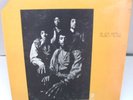
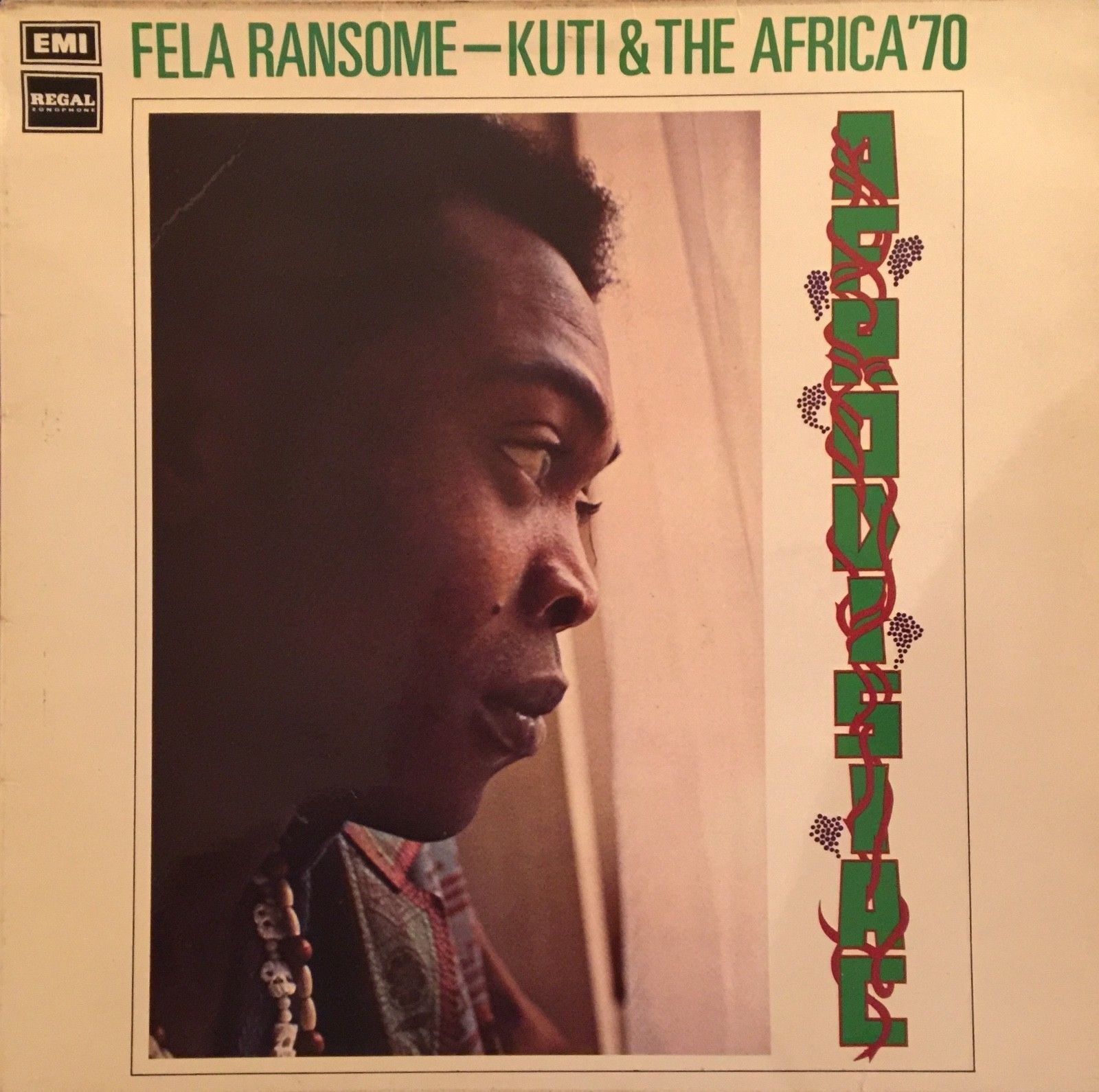
FELA RANSOME - KUTI & THE AFRICA '70 -'AFRODISIAC" UK REGAL ZONOPHONE SLRZ 1034
£
77
$
102


Favourite Auctions
To save auctions to your favourites, please login
If you don't have an account, please register
Description
DISCOGS:
Fela Ransome-Kuti* & The Africa '70* ?? Afrodisiac
Label: Regal Zonophone ?? SLRZ 1034, EMI ?? 1E 062-81290 Format: Vinyl, LP, AlbumCountry: UK Released: 1973 Genre: Jazz, Funk / Soul, Folk, World, & Country Style: Afrobeat
Tracklist
A1 Alu Jon Jonki Jon A2 Chop And Quench B1 Eko Ile B2 Je'Nwi Temi (Don't Gag Me)Companies, etc.
- Phonographic Copyright (p) ? EMI Nigeria Ltd.
- Recorded At ? EMI Studios
- Printed By ? Garrod & Lofthouse Ltd.
Credits
- Baritone Saxophone ? Lekan Animashaun
- Bass Guitar ? Maurice Ekpo
- Composed By, Written-By ? Fela Ransome-Kuti*
- Congas ? Akwesi Korranting, Friday Jumbo, Henry Koffi
- Drums ? Tony Allen
- Engineer ? John Kurlander, Tony Clark
- Percussion [Shekere] ? Isaac Olaleye
- Percussion [Sticks] ? Tony Abayomi
- Producer ? Jeff Jarratt
- Rhythm Guitar ? Peter Animashaun
- Tenor Saxophone ? Igo Chiko*
- Trumpet [Solo] ? Eddie Faychum, Tunde Williams
Barcode and Other Identifiers
- Matrix / Runout (A-side): YCARX 103
- Matrix / Runout (B-side): YCARX 104
The musical style of Felá is called Afrobeat, a style he largely created, which is a complex fusion of jazz, funk, Ghanaian/Nigerian highlife, psychedelic rock and traditional West African chants and rhythms. Afrobeat also borrows heavily from the native "tinker pan".[27] The importance of the input of Tony Allen (Fela's drummer of twenty years) in the creation of Afrobeat cannot be overstated. Fela once famously stated that "without Tony Allen, there would be no Afrobeat".
Afrobeat is characterized by a fairly large band with many instruments, vocals and a musical structure featuring jazzy, funky horn sections. A riff-based "endless groove" is used, in which a base rhythm of drums, shekere, muted West African-style guitar and melodic bass guitar riffs are repeated throughout the song. Commonly, interlocking melodic riffs and rhythms are introduced one by one, building the groove bit-by-bit and layer-by-layer. The horn section then becomes prominent, introducing other riffs and main melodic themes.
Fela's band was notable for featuring two baritone saxophones, whereas most groups were using only one of this instrument. This is a common technique in African and African-influenced musical styles and can be seen in funk and hip hop. Fela's bands at times even performed with two bassists at the same time both playing interlocking melodies and rhythms. There were always two or more guitarists. The electric West African style guitar in Afrobeat bands are paramount, but are used to give basic structure, playing a repeating chordal/melodic statement, riff or groove.
Some elements often present in Fela's music are the call-and-response within the chorus and figurative but simple lyrics. Fela's songs were also very long, at least 10?15 minutes in length, and many reached 20 or even 30 minutes, while some unreleased tracks would last up to 45 minutes when performed live. This was one of many reasons that his music never reached a substantial degree of popularity outside Africa. His LP records frequently had one 30-minute track per side. Typically there is an instrumental "introduction" jam part of the song, perhaps 10?15 minutes long, before Fela starts singing the "main" part of the song, featuring his lyrics and singing, in which the song continues for another 10?15 minutes. Therefore, on some recordings one may see his songs divided into two parts, Part 1 (instrumental) followed by the rest, Part 2.
His songs were mostly sung in Nigerian pidgin English, although he also performed a few songs in the Yoruba language. Fela's main instruments were the saxophone and the keyboards, but he also played the trumpet, electric guitar, and took the occasional drum solo. Fela refused to perform songs again after he had already recorded them, which also hindered his popularity outside Africa.
Fela was known for his showmanship, and his concerts were often quite outlandish and wild. He referred to his stage act as the "Underground" Spiritual Game. Fela attempted making a movie but lost all the materials to the fire that was set to his house by the military government in power. Kuti thought that art, and thus his own music, should have political meaning.[16]
It is of note that as Fela's musical career developed, so too did his political influence, not only in his home country of Nigeria, not just throughout Africa, but throughout the world. As his political influence grew, the religious aspect of his musical approach grew. Fela was a part of an Afro-Centric consciousness movement that was founded on and delivered through his music. Fela, in an interview found in Hank Bordowitz's Noise of the World states: "Music is supposed to have an effect. If you're playing music and people don't feel something, you're not doing shit. That's what African music is about. When you hear something, you must move. I want to move people to dance, but also to think. Music wants to dictate a better life, against a bad life. When you're listening to something that depicts having a better life, and you're not having a better life, it must have an effect on you."[28]
West Africa has been a cultural crossroad for musical development. The most widespread and influential music was guitar-based genres including "palmwine" music, which swept the region during the 1920s and 1930s. Palmwine was most often heard at informal gatherings among the urban lower classes. The musicians would accompany themselves with guitars, beer bottles for percussion or kerosene cans. The singers were often fairly political and touched on contemporary issues. The other popular genre was "highlife," which was more associated with the upper classes and social elite. Performed at important events such as weddings, funerals, and holidays, highlife ensembles combined European band instruments and harmonic structures with distinctly African practices such as praise singing. Highlife?s appeal was broadened by its origins in Ghana, the first African nation to gain independence in 1957. Under the leadership of the prime minister, Kwame Nkrumah, Ghana?s political and cultural influence was strong throughout the region during the postcolonial period.
With a population of 150 million people, Nigeria was the most populous country in sub-Saharan Africa, gaining its independence in 1960.[29] Nigeria?s largest city, Lagos, while dominated by the Yoruba people, is in many ways a postmodern collage of different ethnicities, nationalities, and cultures. The city?s origins lie in the illicit slave trade. Built on a sandy island, its many creeks afforded hiding places for slave traders after the French (1791) and British (1807) outlawed the slave trade. Lagos became an important incubator for urban popular musics as the Kru mariners, as well as Ghanaians, Cameroonians, and others brought palm wine and highlife, which blended with Yoruba traditions, especially jújù.
As in highlife, jújù groups typically play for important social functions, often hired by the social and economic elite. Here they are expected to perform the traditional role of offering praises to their hosts both vocally and articulated by the sonically prominent talking drum or dundun. The social status of musicians as beggars is reinforced by the practice of "spraying" in which the hosts and their guests reward the musicians by pressing money to their foreheads. In the 1930s, as the "rhumba" craze (actually Cuban son montuno) swept much of the United States and Europe, highlife, palmwine, and jújù began to assimilate Caribbean rhythms, percussion instruments, and harmonic and formal structures. Calypso and other genres from English-speaking islands also became part of the mix. Latin and Caribbean influence in West Africa came not only through the African colonies? and Caribbean colonies? common tether to the European powers (particularly London), but through the important communities of repatriated former slaves and their descendants.
Lagos? importance as a center for music grew as Decca, EMI, and other record companies established recording studios in the city as they expanded their operations in Africa (Veal, 2000, 79). In the years after World War II the modern sound of jújù featuring electric instruments, especially guitars, was popularized by such artists as Tunde Nightingale, I. K. Dairo, Ebenezer Obey, and King Sunny Adé. The 1960s brought an influx of American soul music such as Otis Redding, Wilson Pickett, James Brown and others. The postcolonial market was ripe for a new broadly popular music, one that appealed to different ethnicities and social classes, that internally was emblematic of African-ness but presented a modern face to the world. As an ambitious young musician, Fela Anikulapo Ransome-Kuti was determined to create a genre to satisfy this demand. But his route to this innovation first led him to two important international black Atlantic destinations: London and the United States.
price rating