GIACINTO SCELSI+COSTIN MIEREANU ITALIAN PRIVATE 2-LP AVANT-GARDE-ELECTRONIC-RARE
$
135



Favourite Auctions
To save auctions to your favourites, please login
If you don't have an account, please register
Description
GIACINTO SCELSI / COSTIN MIEREANU / NICCOLO CASTIGLIONI / DANIEL TOSI / ETC.
9o FESTIVAL INTERNAZIONALE DI MUSICA CONTEMPORANEA ANTIDOGMA 2-LP
Icons Antidogma Records
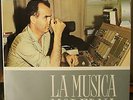
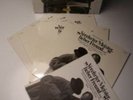
Gatefold cover
Very rare non-commercial limited edition press, documentary live recordings from the International Festival of Contemporary Music "Antidogma" in Turin, Italy. Featured composers include Giacinto Scelsi, Costin Miereanu, James Dillon, etc.
Some info on the release: Bloody rare limited edition issue, released in Italy sometime in the 80's as a special issue of the International Contemporary Music Festival Antidogma. Non-commercial release, features live performances exclusive to this record with pieces from Giacinto Scelsi ("Rotative", "Okanagon"), Costin Miereanu ("Ombres Lumineuses"), James Dillon ("Sgothan"), Enrico Correggia ("Samek-Shin"), Daniel Tosi, Niccolo Castiglioni, Aurel Stroe, Bernard Cavanna, Giuseppe Giuliano. Performers include Daniel Kientzy, Pierre-Yves Artaud, Ensemble Antidogma, etc. Abstract pieces close to the sounds of Giacinto Scelsi.
Here's a short bio of Scelsi from the web: "Born in the village of Pitelli near La Spezia, Scelsi spent most of his time in his mother's old castle where he received education from a private tutor who taught him Latin, chess and fencing. In Vienna, as a disciple of Arnold Schönberg, he became the first adept of dodecaphony in Italy, although he did not continue to use this composition system. In the 1920s, Scelsi made friends with intellectuals like Jean Cocteau and Virginia Woolf, and travelled abroad extensively. In 1927, in Egypt, he first came into contact with non-European music. His first composition was Chemin du coeur (1929). Then followed Rotativa, first conducted by Pierre Monteux at Salle Pleyel, Paris, on December 20, 1931. In 1937, he organised a series of concerts of contemporary music, introducing the music of (among others) Hindemith, Schönberg, Stravinsky, Shostakovitch, and Prokofiev to an Italian audience for the first time. In 1940, when Italy entered the war, Scelsi was in Switzerland, where he remained until the end of the conflict, composing and improving his conception of music. He married Dorothy Kate Ramsden, a divorced Englishwoman (whose daughter from her previous marriage was Katie Boyle). Back in Rome after the war, his wife left him (eventually inspiring Elegia per Thy), and he underwent a profound psychic crisis that eventually led him to the discovery of Eastern spirituality and also to a radical transformation of his view of music, his so called second period. He rejected the notions of composition and author in favour of sheer improvisation. These improvisations, recorded on tape, were later transcribed by collaborators under his guidance, then orchestrated and complemented by the composer's meticulous performance instructions, or adjusted from time to time in close collaboration with the performers. Scelsi came to conceive of artistic creation as a means of communicating a higher, transcendent reality to the listener. From this point of view, the artist is considered a mere intermediary. It is for this reason that Scelsi never allowed his image to be shown in connection with his music; he preferred instead to identify himself by a line under a circle, a symbol of Eastern provenance. Some photographs of Scelsi have emerged since his death. From the late 1970s he met several leading interpreters who have promoted his music all over the world and gradually opened the gates to wider audiences, such as the Arditti String Quartet, the cellist Frances-Marie Uitti, the pianists Yvar Mikhashoff and Marianne Schroeder, and the singer Michiko Hirayama. Scelsi was a friend and a mentor to Alvin Curran and other expatriate American composers such as Frederic Rzewski who lived in Rome during the 1960s (Curran, 2003, in NewMusicBox). Scelsi also collaborated with other American composers including John Cage, Morton Feldman, and Earle Brown who visited him in Rome. Alvin Curran recalled that: "Scelsi ... came to all my concerts in Rome even right up to the very last one I gave just a few days before he died. This was in the summer time, and he was such a nut about being outdoors. He was there in a fur coat and a fur hat. It was an outdoor concert. He waved from a distance, beautiful sparking eyes and smile that he always had, and that's the last time I saw him" (Ross, 2005)."
The composers on this album belong to the great avant-garde/experimental composers "wave" that appeared in Europe in the 60's/70's/80's with main representators composers like Hans Werner Henze, Pierre Boulez, György Kurtág, Wolfgang Rihm, Helmut Lachenmann and Salvatore Sciarrino, Heinz Holliger, Brian Ferneyhough, and Nicolaus A. Huber, Karlheinz Stockhausen, György Ligeti and Mauricio Kagel, Bruno Maderna, Henri Pousseur or more widely Bernd Alois Zimmermann, John Cage, Toru Takemitsu, Bruno Maderna, Jani Christou, Iannis Xenakis and of course Pendercki.
Here you can listen to Giacinto Scelsi's "Rotativa", then Bernard Cavanna's "Goutte d'or blues" and Niccolo Castiglioni's "Daleth":
Giacinto Scelsi - Rotativa - YouTube
Video will open in a new window
[isdntekvideo]Bernard Cavanna - Goutte d'or blues - YouTube
Video will open in a new window
[isdntekvideo]Niccolò Castiglioni: Daleth (1979) - YouTube
Video will open in a new window
[isdntekvideo]Condition: Vinyls lie in mint- condition, they look super clean with the exception of some light "hairlines" and play nicely all along with some occasional surface noise, while cover lies in excellent- condition with light ring and age wear.
Tracklist
A1 Costin Miereanu – Ombres Lumineuses Conductor – Daniel TosiSynthesizer – Dora Filippone, Fabio Luz, Marinella Tarenghi
Percussion – Alberto Bosio, Fulvio Trudu
Cello – Marco Robino
Violin – Stefano Coles
Clarinet – Sergio Del Mastro
Ensemble – Ensemble Antidogma
Cornet – Claudio Gazzola 12:38 A2 Daniel Tosi – Multitude Quartett Vibraphone – Maurizio Ben Omar
Percussion – Alberto Bosio, Fulvio Trudu
Clarinet – Ciro Scarponi
Ensemble – Ensemble Antidogma
Conductor – Daniel Tosi 9:56 B1 Giacinto Scelsi – Okanagon Double Bass – Davide Ghio
Percussion [Tam-tam] – Maurizio Ben Omar
Ensemble – Ensemble Antidogma
Conductor – Daniel Tosi
Harp – Sylvie Beltrando 8:53 B2 Enrico Correggia – Mohn Und Gedaechtnis Guitar – Dora Filippone 6:03 B3 Giacinto Scelsi – Rotative Piano – Fabio Luz, Marinella Tarenghi 7:12 C1 James Dillon – Sgothan Flute – Pierre-Yves Artaud 10:45 C2 Enrico Correggia – Samek
Clarinet – Ciro Scarponi
Piano – Massimiliano Damerini
Piano – Massimiliano Damerini 4:20 C4 Niccolò Castiglioni – Daleth Clarinet – Ciro Scarponi
Piano – Massimiliano Damerini 5:54 D1 Aurel Stroe – La Cité Ouverte Saxophone – Daniel Kientzy 8:44 D2 Bernard Cavanna – Goutte D'Or Saxophone – Daniel Kientzy 6:37 D3 Giuseppe Giuliano – Tempi Della Mente Saxophone – Daniel Kientzy 8:22
SHIPPING & PAYMENT
Shipping: Shipping for this double LP is 16$ airmail in Europe / the rest of the world (without tracking number) -for tracking number = registered mail see below +3$-.
Registered mail: +3$
Insurance: optional
Combined shipping: BIG discounts
Payment: Paypal
Packaging: I am a collector too and i know
price rating