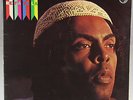
GILBERTO GIL S/T LP 1969 PHILIPS BRAZIL ORIG TROPICALIA PSYCH WILSON DUPRAT RARE
$
55


Favourite Auctions
To save auctions to your favourites, please login
If you don't have an account, please register
Description
GILBERTO GIL S/T
PHILIPS 1969
ARRANGED BY ROGERIO DUPRAT DRUMS - WILSON DAS NEVES
ORIGINAL LP
PSYCH TROPICALIA
MONO PHILPS 33rpm
R765.087L MADE IN BRAZIL
CONDITION:
COVER: VG (TEARS&TAPE]
RECORD: VG+
SEE PHOTOS FOR DETAIL.
Gil was born in Salvador, an industrial city in the northeast of Brazil, though he spent much of his childhood in nearby Ituaçu. Ituaçu was a small town of fewer than a thousand, located in thesertão, or countryside, of Bahia.[1] His father, José Gil Moreira, was a doctor; his mother, Claudina Passos Gil Moreira, an elementary school teacher.[1][2] As a young boy, he attended a Marist Brothers school.[3] Gil remained in Ituaçu until he was nine years old, returning to Salvador for secondary school.
Gil's interest in music was precocious: "When I was only two or two and a half," he recalled, "I told my mother I was going to become a musician or a president of my country."[4] He grew up listening to the forró music of his native northeast,[2] and took an interest in the street performers of Salvador.[5] Early on, he began to play the drums and the trumpet, through listening to Bob Nelson on the radio.[6] Gil's mother was the "chief supporter" in his musical ambitions; she bought him an accordion and, when he was ten years old, sent him to music school in Salvador which he attended for four years.[1][4] As an accordionist, Gil first played classical music, but grew more interested in the folk and popular music of Brazil.[1] He was particularly influenced by singer and accordion player Luiz Gonzaga; he began to sing and play the accordion in an emulation of Gonzaga's recordings.[7] Gil has noted that he grew to identify with Gonzaga "because he sang about the world around [him], the world that [he] encountered."[8]
During his years in Salvador, Gil also encountered the music of songwriter Dorival Caymmi, who he says represented to him the "beach-oriented" samba music of Salvador.[8] Gonzaga and Caymmi were Gil's formative influences.[1] While in Salvador, Gil was introduced to many other styles of music, including American big band jazz and tango.[8] In 1950 Gil moved back to Salvador with his family. It was there, while still in high school, that he joined his first band, Os Desafinados (The Out of Tunes), in which he played accordion and vibraphone and sang.[1] Os Desafinados was influenced by American rock and roll musicians like Elvis Presley, as well as singing groups from Rio de Janeiro.[1] The band was active for two to three years. Soon afterwards, inspired by Brazilian star João Gilberto, he settled on the guitar as his primary instrument and began to play bossa nova.[5]
Musical career (1963–present)[edit]
Gil met guitarist and singer Caetano Veloso at the Universidade Federal da Bahia (Federal University of Bahia) in 1963. The two immediately began collaborating and performing together, releasing a single and EP soon afterwards.[2] Along with Maria Bethânia (Veloso's sister), Gal Costa, and Tom Zé, Gil and Veloso performed bossa nova and traditional Brazilian songs at the Vila Velha Theatre's opening night in July 1964, a show entitled Nós, por Exemplo (Us, for Example).[6] Gil and the group continued to perform at the venue and he eventually became a musical director of the concert series.[9] Gil collaborated again with members of this collective on the landmark 1968 album Tropicália: ou Panis et Circenses, whose style was influenced by The Beatles'Sgt. Pepper's Lonely Hearts Club Band, an album Gil listened to constantly.[10] Gil describes Tropicália: ou Panis et Circenses as the birth of the tropicália movement.[1] As Gil describes it, tropicália (or Tropicalismo) was a conflation of musical and cultural developments that had occurred in Brazil during the 1950s and 1960s—primarily bossa nova and the Jovem Guarda (Young Wave) collective—with rock and roll music from the United States and Europe, a movement deemed threatening by the Brazilian government of the time.[11]
Early on in the 1960s, Gil earned income primarily from selling bananas in a shopping mall and composing jingles for television advertisements;[5] he was also briefly employed by the Brazilian division of Unilever, Gessy-Lever.[6] He moved to São Paulo in 1965 and had a hit single when his song "Louvação" (which later appeared on the album of the same name) was released by Elis Regina. However, his first hit as a solo artist was the 1969 song "Aquele Abraço".[5] Gil also performed in several television programs throughout the 1960s, which often included other "tropicalistas", members of the Tropicalismo movement.[6] One of these programs, Divino Maravilhoso, which featured Veloso, gained attention from government television censors after it aired a satirical version of the national anthem in December 1968.[12]
In February 1969 Gil and Veloso were arrested by the Brazilian military government, brought from São Paulo to Rio de Janeiro, and spent three months in prison and another four under house arrest,[1][11] before being freed on the condition that they leave the country. Veloso was the first to be arrested; the police moved to Gil's home soon afterward. Veloso had directed his then-wife Andréa Gadelha to warn Gil about the possibility of arrest, but Gil was eventually brought into the police van along with Veloso.[13] They were given no reason or charge for their arrest.[1] Gil believes that the government felt his actions "represent[ed] a threat [to them], something new, something that can't quite be understood, something that doesn't fit into any of the clear compartments of existing cultural practices, and that won't do. That is dangerous."[14] During his prison sentence, Gil began to meditate, follow a macrobiotic diet, and read about Eastern philosophy.[2] He composed four songs during his imprisonment, among them "Cérebro Electrônico" (Electronic Brain), which first appeared on his 1969 album Gilberto Gil 1969, and later on his 2006 album Gil Luminoso.[15] Thereafter, Gil and Veloso were exiled to London, England after being offered to leave Brazil.[16] The two played a last Brazilian concert together in Salvador in July 1969, then left to Portugal, Paris, and finally London.[1] He and Veloso took a house in Chelsea, sharing it with their manager and wives.[17] Gil was involved in the organisation of the 1971Glastonbury Free Festival[17] and was exposed to reggae while living in London; he recalls listening to Bob Marley (whose songs he later covered), Jimmy Cliff, and Burning Spear.[1] He was heavily influenced by and involved with the city's rock scene as well, performing with Yes, Pink Floyd, and the Incredible String Band.[1][5] However, he also performed solo, recording Gilberto Gil (Nêga) while in London. In addition to involvement in the reggae and rock scenes, Gil attended performances by jazz artists, including Miles Davis and Sun Ra.[1]
When he went back to Bahia in 1972, Gil focused on his musical career and environmental advocacy work.[18] He released Expresso 2222 the same year, from which two popular singles were released. Gil toured the United States and recorded an English-language album as well, continuing to release a steady stream of albums throughout the 1970s, including Realce and Refazenda. In the early 1970s Gil participated in a resurgence of the Afro-Brazilian afoxé tradition inCarnaval, joining the Filhos de Gandhi (Sons of Gandhi) performance group,[19] which only allowed black Brazilians to join.[20] Gil also recorded a song titled "Patuscada de Gandhi" written about the Filhos de Gandhi that appeared on his 1977 album Refavela. Greater attention was paid to afoxé groups in Carnaval because of the publicity that Gil had provided to them through his involvement; the groups increased in size as well.[21] In the late 1970s he left Brazil for Africa and visited Senegal, Côte d'Ivoire, and Nigeria. He also worked with Jimmy Cliff and released a cover of "No Woman, No Cry" with him in 1980, a number one hit that introduced reggae to Brazil.[5]
In 1996, Gil contributed "Refazenda" to the AIDS-Benefit Album Red Hot + Rio produced by the Red Hot Organization.
In 1998 the live version of his album Quanta won Gil the Grammy Award for Best World Music Album. In 2005 he won the Grammy Award for Best Contemporary World Music Album forEletracústico. In May 2005 he was awarded the Polar Music Prize by Carl XVI Gustaf of Sweden in Stockholm,[22] the prize's first Latin American recipient. On October 16 of the same year he received the Légion d'honneur from the French government, coinciding with the Année du Brésil en France (Brazil's Year in France).[23]
In 2010 he released the album Fé Na Festa, a record devoted to forró, a style of music from Brazil's northeast. His tour to promote this album received some negative feedback from fans who were expecting to hear a set featuring his hits.[24] In 2013, Gilberto Gil plays his own role as a singer and promoter of cultural diversity in a long feature documentary shot around the southern hemisphere by Swiss filmmaker Pierre-Yves Borgeaud, Viramundo: a musical journey with Gilberto Gil, distributed worldwide. The film also inaugurates the T.I.D.E. experiment for pan-European and multi-support releases.
USA PRIORITY MAIL--- $9.00 extra record $3.00
CANADA-- $9.00 extra record $3.50
WORLD WIDE--- $20.00 extra record $5.00
INSURANCE RECOMMENDED
PLEASE NOTE: WE'VE BEEN HAVING PROBLEMS SHIPPING ITEMS TO ITALY. TO ENSURE THAT YOU RECEIVE YOUR RECORDS SAFELY, IF YOU LIVE IN ITALY WE MUST INSIST THAT YOU PAY FOR SHIPPING INSURANCE.
OUR FINE PRINT:
ALL PICTURES HERE ARE ORIGINAL FROM THIS ITEM.
UNLESS OTHERWISE NOTED, OUR RECORDS ARE VISUALLY GRADED. PLEASE CONTACT US WITH ANY QUESTIONS.
ALL OF OUR RECORDS ARE CAREFULLY PACKED IN STURDY CARDBOARD MAILERS. CHECK OUR FEEDBACK - IT IS 100% POSITIVE.
WE ALSO OFFER A 100% MONEY BACK GUARANTEE. IF THERE IS ANY PROBLEM WITH ONE OF OUR RECORDS, SEND US A MESSAGE AND WE WILL ISSUE A REFUND AS SOON AS THE RECORD IS RETURNED.
WE ACCEPT PAYPAL ONLY!
PAYMENT IS EXPECTED WITHIN 7 DAYS OF AUCTION'S END OR WE WILL RELIST THE ITEM AND FILE AN UNPAID ITEM CASE WITH EBAY.
PLEASE MESSAGE US WITH ANY QUESTIONS, AND GOOD LUCK!!
price rating