Gil Scott Heron Lp The Revolution Will Not Be Televised (Plus Original Cassette)
$
50

Favourite Auctions
To save auctions to your favourites, please login
If you don't have an account, please register
Description
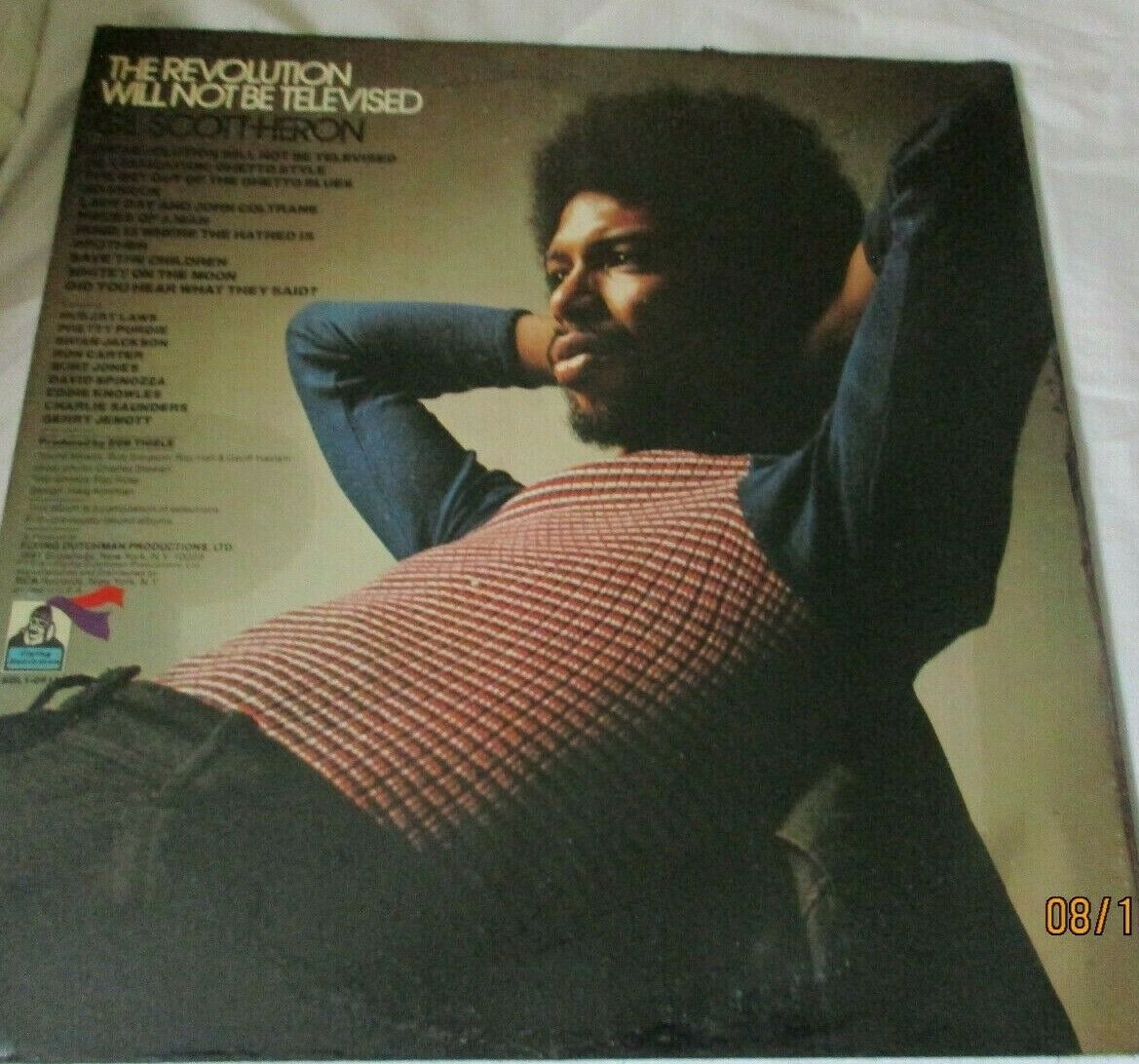
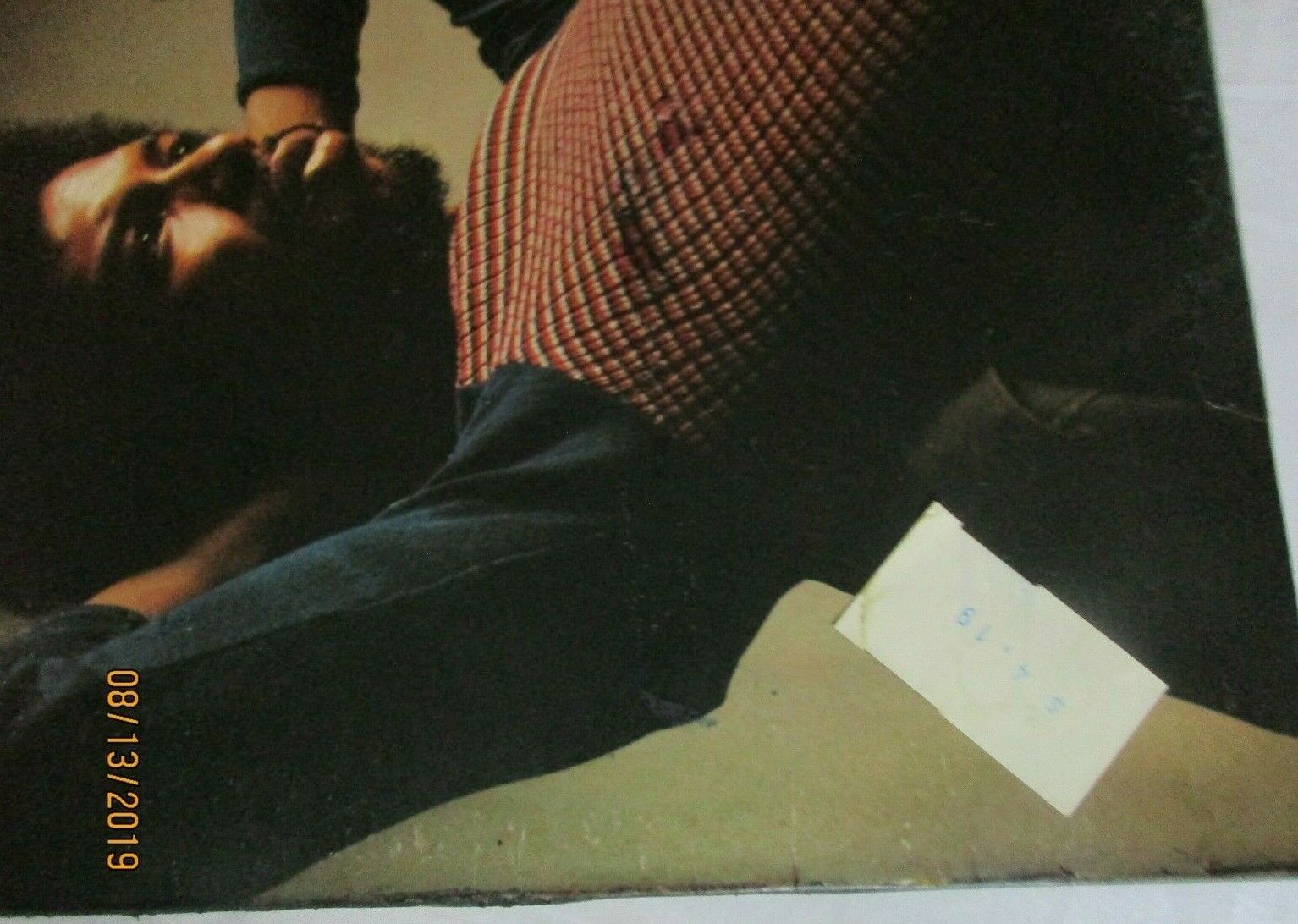
Great PROMO copy of the RARE Gil Scott Heron, "THE REVOLUTION WILL NOT BE TELEVISED"...Original Flying Dutchman Label...Classic Gil Scott Heron PROMO STAMP on Back Cover top left...Buyer to pay $5.00 s/h Thanks for looking...Plays Extraordinary Well We grade the record as a VG++/NM....1974 ORIGINAL COPY of Gil-Scott Heron Lp "The Revolution will not be televised" The Record is VG++/Nm The Cover shows seam wear and some coloring on LP jacket...Spine shows some coloring as well ..We would grade the Gatefold Cover a VG and the Record VG++/NM..ALSO included in the Package is a 1988 BMG Original Cassette copy of the Same Rare Lp...Almost Impossible to find !!.check photo's closely..any additional questions Please ask! Plays Extraordinary Well!!>>>>>RARE PROMO COPY....Rare Gatefold~~Price sticker $4.19 on lower front left
The Revolution Will Not Be Televised (album)plus Original 1988 BMG Cassette of the same LP~~Gil Scott Heron
Jump to navigationJump to search The Revolution Will Not Be Televised Compilation album by Gil Scott-Heron Released 1974 Recorded 1970–72 Genre Jazz, funk, R&B, proto-rap, spoken word Length 33:01 Label Flying Dutchman Producer Bob Thiele Gil Scott-Heron chronology Free Will(1972) The Revolution Will Not Be Televised
(1974) Winter in America
(1974) Alternative cover 1988 reissue cover
The Revolution Will Not Be Televised is a compilation album by American singer and songwriter Gil Scott-Heron. It was released in 1974 by Flying Dutchman Records and titled after Scott-Heron's 1971 song of the same name.
Recordings
The album features recordings previously featured on Scott-Heron's first three records for Flying Dutchman—Small Talk at 125th and Lenox (1970), Pieces of a Man (1971), and Free Will (1972),which were produced by jazz producer Bob Thiele. The music compiled incorporates funk, jazz, and proto-rap styles.
Release and reception
Professional ratings Review scores Source Rating AllMusic [3] Christgau's Record Guide B+[5] Encyclopedia of Popular Music [4] Los Angeles Daily News A[6]The Revolution Will Not Be Televised was released in 1974 and charted on Billboard's Top Jazz Albums. It peaked at number 21 on October 12 of that year after spending five weeks on the chart. In a contemporary review, Ebony magazine's Phyl Garland called the album "mind-blowing" and said Scott-Heron "does not merely posture and pacify, but presses one to consider the uncomfortable truths of contemporary blackness.
Since then, The Revolution Will Not Be Televised has received positive reviews from publications such as The Washington Postand Los Angeles Daily News] which said "the roots of rap run deep through this superb retrospective". Village Voice critic Robert Christgau said the compilation abandons the homophobia that plagued Scott-Heron's 1970 debut Small Talk at 125th and Lenox in favor of songs that show artistic progress, including agitprop that sounds less arrogant but still committed and improved singing that reveals his compassion. In To the Break of Dawn: A Freestyle on the Hip Hop Aesthetic (2007), William Jelani Cobb said of its significance in hip hop music:
While The Last Poets and This Is Madness pre-dated the beginnings of hip hop, Gil Scott-Heron's 1974 album The Revolution Will Not Be Televised was released as the art form took its first breaths of South Bronx air. Primarily a jazz album, Revolution's claim to the hip hop pantheon was anchored in a title track that found Scott-Heron delivering verse over a hypnotic, funk-indebted bassline—an approach that was so distinct at that point as to warrant classic status.
In the Encyclopedia of Popular Music (2002), writer Colin Larkin praised Scott-Heron's anger and passion in his spoken-word performances on "No Knock" and the title track. AllMusic's Alex Henderson recommended the album's "innovative R&B and spoken poetry" to listeners interested in "exploring his artistry for the first time"
Track listing
Side one No. Title Writer(s) Length 1. "The Revolution Will Not Be Televised" Gil Scott-Heron 3:03 2. "Sex Education: Ghetto Style" Scott-Heron, Brian Jackson 0:48 3. "The Get Out of the Ghetto Blues" Scott-Heron, Jackson 4:59 4. "No Knock" Scott-Heron 1:27 5. "Lady Day and John Coltrane" Scott-Heron 3:32 6. "Pieces of a Man" Scott-Heron, Jackson 4:59 Side two No. Title Writer(s) Length 1. "Home Is Where the Hatred Is" Scott-Heron 3:18 2. "Brother" Scott-Heron 1:42 3. "Save the Children" Scott-Heron 4:22 4. "Whitey on the Moon" Scott-Heron 1:26 5. "Did You Hear What They Said?" Scott-Heron 3:25Personnel
Musicians
- Ron Carter – bass
- Brian Jackson – piano
- Jerry Jemmott – bass
- Burt Jones – guitar
- Eddie Knowles – percussion
- Hubert Laws – alto saxophone, flute
- Pretty Purdie – drums
- Charlie Saunders – percussion
- Gil Scott-Heron – piano, vocals, songwriter
- David Spinozza – guitar
Production
- Carmine Coppola – reissue artwork
- Joe Lopes – remastering
- Bob Simpson – engineer
- Stephen Sulke – engineer
- Bob Thiele – producer, remastering
price rating


