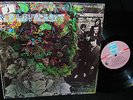
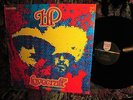
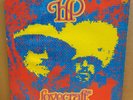
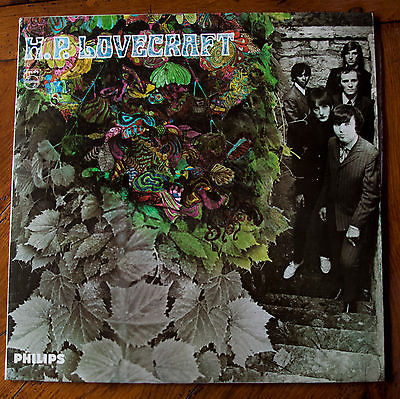
HP Lovecraft - HP Lovecraft Vinyl Album (1967) Philips Records BL7830 Mono
£
45
$
60


Favourite Auctions
To save auctions to your favourites, please login
If you don't have an account, please register
Description
This auction is for a copy of one of my favourite albums from the 1960s, HP Lovecraft. This is the mono pressing and sleeve and vinyl are both in very good condition.
H. P. Lovecraft is the debut album by the American psychedelic rock band H. P. Lovecraft and was released in October 1967 by Philips Records.[1][2] It blended psychedelic and folk rock influences and was marked by the haunting, eerie ambiance of the band's music, which itself was often inspired by the literary works of horror writer H. P. Lovecraft, after whom the band had named themselves. Although most of the album comprises interpretations of traditional and contemporary folk songs, it also features the self-penned compositions "That's How Much I Love You, Baby (More or Less)", "The Time Machine", and arguably the band's best known song, "The White Ship".
Track listing
Side 1
- "Wayfaring Stranger" (traditional, arranged by George Edwards) – 2:35
- "Let's Get Together" (Chet Powers) – 4:35
- "I've Been Wrong Before" (Randy Newman) – 2:46
- "The Drifter" (Travis Edmonson) – 4:11
- "That's The Bag I'm In" (Fred Neil) – 1:46
Side 2
- "The White Ship" (George Edwards, Dave Michaels, Tony Cavallari) – 6:33
- "Country Boy & Bleeker Street" (Fred Neil) – 2:35
- "The Time Machine" (George Edwards, Dave Michaels) – 2:05
- "That's How Much I Love You, Baby (More or Less)" (George Edwards, Dave Michaels, Tony Cavallari) – 3:55
- "Gloria Patria" (traditional, arranged by George Edwards, Dave Michaels) – 0:27
Personnel
- George Edwards – vocals, acoustic guitar, electric guitar, guitarrón, bass
- Dave Michaels – vocals, organ, piano, harpsichord, clarinet, recorder
- Jerry McGeorge – bass, vocals
- Tony Cavallari – lead guitar, vocals
- Michael Tegza – drums, percussion, timpani, vocals
This is an original pressing that has been in my collection since the late sixties.