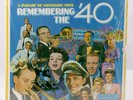
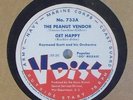
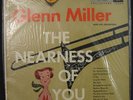
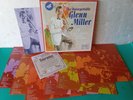
Harry James Columbia Records VG+ RARE Columbia Set of 4 Orig 78s Memphis In June
$
29


Favourite Auctions
To save auctions to your favourites, please login
If you don't have an account, please register
Description
Vinyl: VG+ Play Tested. Sounds Great! Columbia Labels are Clean. These are the Original 1940s Pressings!
Cover: VG+ (see photos)
Goldmine Standards. I play test every album that I sell on eBay as I have found you can't rate an LP accurately by just visually inspecting an album.
See Biography Below!
U.S. Shipping: $5 Media Mail. Additional LP's .50 (double albums count for 2LP's). I will only ship to Italy by Registered Mail. Rest of World, ask for cost of shipping before bidding. I only pass on to you my cost to get it to you. Similarly, upgrades and insurance can be added on at Buyers' expense. Feel free to ask any questions and happy shopping!
Once you're satisfied with your purchase, please leave positive feedback and I will do the same for you. If you're unsatisfied, please let me know so we can resolve it. Take a look at my previous feedback and bid with confidence. Check my other items this week, check back often & add me to favorite seller list as I will be adding more Rare items in the coming weeks! Thanks!
Artist Biography by William Ruhlmann
Harry James was one of the most outstanding instrumentalists of the swing era, employing a bravura playing style that made his trumpet work instantly identifiable. He was also one of the most popular bandleaders of the first half of the 1940s, and he continued to lead his band until just before his death, 40 years later. James was the child of circus performers. His father, Everette Robert James, was the bandleader and trumpet player in the orchestra for the Mighty Haag Circus, and his mother, Maybelle Stewart Clark James, was an aerialist. Growing up in the circus, James became a performer himself as early as the age of four, when he began working as a contortionist. He soon turned to music, however, first playing the snare drum in the band from about the age of six and taking trumpet lessons from his father. At 12, he took over leadership of the second band in the Christy Brothers Circus, for which his family was then working. He attended grade school in Beaumont, Texas, where the circus spent the winter, and when he was 14 he won a state music contest as a trumpeter.
That inspired him to turn professional and begin playing in local bands. James' first job with a national band came in 1935 when he was hired by Ben Pollack. In May 1935, he married singer Louise Tobin, with whom he had two children and from whom he was divorced in June 1943. He made his first recordings as a member of the Pollack band in September 1936. Not long after, he was tapped by Benny Goodman, then leading one of the country's most popular bands, and he began working for Goodman by the end of 1936. He rapidly gained notice in the Goodman band, and by December 1937 he had begun to make recordings under his own name for Brunswick Records (later absorbed by Columbia Records).
In early 1939, he left Goodman and launched his own orchestra, premiering it in Philadelphia in February. That spring, he heard the then-unknown Frank Sinatra on a radio broadcast and hired him. The band struggled, however, and when the more successful bandleader Tommy Dorsey made Sinatra an offer at the end of 1939, James did not stand in his way. Around the same time, he was dropped by Columbia and switched to the tiny Varsity Records label. After two years of difficulties in maintaining his band, James changed musical direction in early 1941. He added strings and turned to a sweeter, more melodic style, meanwhile re-signing to Columbia Records. The results were not long in coming. In April 1941, he first reached the Top Ten with the self-written instrumental "Music Makers." (His band was sometimes billed as Harry James and His Music Makers.) A second Top Ten hit, "Lament to Love," featuring Dick Haymes on vocals, followed in August, and late in the year James reached the Top Five with an instrumental treatment of the 1913 song "You Made Me Love You (I Didn't Want to Do It)." This was the record that established him as a star. But with its sweet style and what was frequently described as James' "schmaltzy" trumpet playing, it was also, according to jazz critic Dan Morgenstern (as quoted in the 1999 biography Trumpet Blues: The Life of Harry James by Peter J. Levinson), "the record that the jazz critics never forgave Harry for recording."
James was second only to Glenn Miller as the most successful recording artist of 1942. During the year, seven of his recordings peaked in the Top Ten: the Top Five "I Don't Want to Walk Without You," with vocals by Helen Forrest; the number one instrumental "Sleepy Lagoon"; the Top Five "One Dozen Roses," with vocals by Jimmy Saunders; the Top Five instrumental "Strictly Instrumental"; "He's My Guy"; the Top Five "Mister Five by Five"; and "Manhattan Serenade," the last three with vocals by Helen Forrest. In September, when Miller went into the armed forces and gave up his radio show, Chesterfield Time, he handed it over to James, a symbolic transference of the title of top bandleader in the country. (James was ineligible for military service due to a back injury.) Meanwhile, wartime travel restrictions and the recording ban called by the musicians union, which took effect in August 1942, had limited James' touring and recording activities, but another avenue had opened up. He began appearing in movies, starting with Syncopation in May 1942 and continuing with Private Buckaroo in June and Springtime in the Rockies in November. His next hit, "I Had the Craziest Dream," with vocals by Helen Forrest, was featured in Springtime in the Rockies; it hit number one in February 1943. The movie is also memorable for having starred Betty Grable, whom James married in July 1943; they had two children and divorced in October 1965.
"I Had the Craziest Dream" was succeeded at number one in March 1943 by another James record with a Helen Forrest vocal, "I've Heard That Song Before." "Velvet Moon," an instrumental, followed and did almost as well, but with that Columbia's stockpile of James recordings made just before the start of the recording ban was almost exhausted. The label went into its vaults and began reissuing older James recordings. Frank Sinatra had recently emerged as a solo star, and in the spring of 1943, Columbia reissued "All or Nothing at All," a song he had recorded as James' vocalist in 1939; the song reached the Top Five. Next, Columbia released "I Heard You Cried Last Night," a year-old recording with a Helen Forrest vocal; it too reached the Top Five. Once again, James ranked as the second most successful recording artist of the year, just behind Bing Crosby.
Meanwhile, James was based in New York, doing his three-times-a-week radio show and appearing at major venues such as the Paramount Theatre and on the Astor Hotel Roof. He also appeared in the June 1943 film release Best Foot Forward. Decca Records settled with the musicians' union in 1943, which gave its recording stars an advantage, but while Bing Crosby, the Andrews Sisters, and Jimmy Dorsey (all on Decca) were the top recording artists of 1944, James came in fourth without ever stepping into a recording studio. His instrumental "Cherry," recorded in 1942, became a Top Five hit early in the year; "I'll Get By (As Long as I Have You)," recorded in 1941 with Dick Haymes on vocals, hit number one in June; and he had eight other chart records during the year. He also continued with his radio show through March and had two films, Two Girls and a Sailor and Bathing Beauty, in release in June. The two remaining major labels, Columbia and RCA Victor, came to terms with the musicians' union in November 1944, freeing James to return to the recording studio. This resulted in seven Top Ten hits in 1945: the number one "I'm Beginning to See the Light"; "I Don't Care Who Knows It"; "If I Loved You"; "11:60 P.M."; the Top Five "I'll Buy That Dream"; "It's Been a Long, Long Time"; and "Waitin' for the Train to Come In." "If I Loved You" had vocals by Buddy DiVito; all the rest had vocals by Kitty Kallen. That was enough to make himprice rating