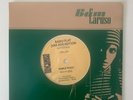
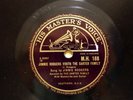
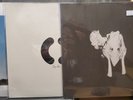
Hot Jazz NOBLE SISSLE & EUBIE BLAKE Red White & Blues 22' EMERSON 78 rpm record
$
65


Favourite Auctions
To save auctions to your favourites, please login
If you don't have an account, please register
Description
STOCK UP YOUR RECORD COLLECTION FROM MY PERSONAL 40 YEAR COLLECTION http://stores.ebay.com/WAVESTUDIO-RECORDS?_rdc=1 78 RPM VICTROLA GRAMOPHONE 45 RPM JUKE BOX 33 1/3 LP VINYL DISCS GREAT ADDITION FOR YOUR CLASSIC VICTROLA RECORD COLLECTION
"HARD COPY TO FIND" NOBLE SISSLE & EUBIE BLAKE
I'VE GOT THE RED , WHITE AND BLUES
B/W I'M A DOGGONE STRUTTIN' FOOL
EMERSON 10484
PLAYS IN VG + TO EXCELLENT CONDITION
VERY LIGHT BACKGROUND NOISE PRESENT COMMON ON THESE RECORDS
COMPANY SLEEVE / FAIR
PLAY GRADED ON A NEWCOMB EDT30 MV TURNTABLE ( Not For Sale ) WITH A 2.5 MIL NEEDLE NO SKIPS / NO WARPS ORIGINAL PRESSING
This side was recorded in Chicago on June 10th 1929 by "Ruben Reeves and his River Boys" featuring Ruben Reeves trumpet & leader, Gerald Reeves trombone, Omer Simeon clarinet & alto sax, Jimmy Prince piano, Cecil White guitar & banjo, and Jasper Taylor drums.
*"Parson Blues" was composed by Ruben Reeves. - See more at: http://www.20sjazz.com/videos/hot-jazz/parson-blues.html#sthash.FzR4LnlD.dpuf
" THIS PRICE INCLUDES FREE US MEDIA SHIPPING "
78's ARE DOUBLE BOXED
THESE OLD RECORDS REQUIRE THE PROPER TYPE OF EQUIPMENT FOR THE BEST RESULTS THESE RECORDS ARE FOR VICTROLA OR GRAMOPHONE USE & GRADED FOR THOSE MACHINES PHOTOS OF THE ACTUAL CONDITION OF THE RECORD PLEASE VIEW PHOTOS
Noble Sissle and Eubie Blake
Eubie Blake was born James Hubert Blake in Baltimore, Maryland, on February 7, 1887. He played the organ at six years old, got his first job playing in a brothel at 15, and made his professional stage debut in a Pennsylvania medicine show at the age of 18.
In 1905, Blake moved to New York City, where he decided to try to publish his first song, "Sounds of Africa." He asked the influential but fiery Will Marion Cook to accompany him to the publisher, and his song was accepted for $100. However, when Kurt Schindler, the arranger who was going to score it, asked why Blake changed keys without modulation, Blake related: "Cook flared up and said, `What right have you to question my protege? How long have you been a Negro?' `I'm only asking a question,' Schindler said. `Well you have no right to ask it. We write differently from other people.' `Good day, gentlemen,' said Schindler, and all bets were off." The song, renamed Charleston Rag, was not published until 1917.
Blake went home to Baltimore where he played in local establishments, performing with and learning from such great African-American pianists as "Willie the Lion" Smith, C. Luckeyeth Roberts, and James P. Johnson. In 1910, he married Avis Lee, an accomplished classical pianist. Four years later, he published his first song, Chevy Chase.
Noble Sissle was born in Indianapolis, Indiana, on July 10, 1889. His early interest in music came from his father, a minister and organist. The Sissles moved to Cleveland when Noble was 17, and in 1908, before graduating from high school, he joined a male quartet for a four-week run of the Midwest vaudeville circuit. After graduating, he joined a gospel quartet for a tour on the same circuit.
Riding the wave of new interest in black entertainers brought on by the success of James Reese Europe, Sissle was asked to organize his own orchestra, which he led at Indianapolis's Severin Hotel. In 1915, he left the city for Baltimore.
Sissle and Blake became songwriting partners in 1915 after they met as members of Joe Porter's Serenaders. Their first song was It's All Your Fault. They got some help in writing it from their friend Eddie Nelson and decided to try it out on Sophie Tucker, who was known to be interested in promoting black songwriters. Tucker liked the song so much that she had arrangements made and used it in her act the night after she heard it. It's All Your Fault was published in Baltimore, and the partners made $200.
For a while, Sissle and Blake performed separately. In 1916, Sissle was invited to work for James Reese Europe in his Clef Club, and within three or four months, he was leading his own group within the organization. The summer of that year, Blake rejoined him.
When war broke out in 1917, Sissle enlisted with Europe and helped him recruit members for the military band he was forming. Blake, too old for military service at 35, stayed stateside, putting music to songs they sent back. When the armistice was signed, Europe and Sissle returned, and the three hoped to work together to bring African-American theatrical shows back to Broadway. It all came to an abrupt end when Europe was killed by a band member
After Europe's death, Sissle and Blake were encouraged by his manager and the backers of the band to enter the white vaudeville circuit. There were very few black performers besides Sissle and Blake on what was known as the Keith circuit, and never more than one act at the same venue because only one African-American act was included in each show. Sissle and Blake, who billed themselves as "The Dixie Duo," were eventually highly successful. Patterned after their Clef Club presentations, their act was preformed without blackface and with an on-stage piano as their only prop. Their many hit songs in vaudeville included Gee, I'm Glad I'm From Dixie, their opening number.
Sissle and Blake met the men with whom they were to make history at a NAACP benefit in Philadelphia in 1920. Flournoy E. Miller and Aubrey Lyles were veterans in black show business who had written and starred in productions since 1910. Miller believed that the only way African-American performers would make it back into white theaters with any dignity was through musical comedy, and after Sissle and Blake's performance, he and Lyles approach the pair to ask if they would be interested in teaming together for such a production. Sissle and Blake, who saw this as a way to achieve Europe's dream as well as their own, agreed. So the four men put together their resources and set about to write, direct, manage and star in their own musical comedy
Shuffle Along was patterned after the African-American shows presented during the first few years of the century, and when a casting call was issued, a number of performers from those early shows turned out. The partners found a backer, and after a shaky road show tour, Shuffle Along opened in New York on May 23, 1921
Though many barriers to the free expression of African-American creativity had been broken down by this time, a very important taboo remained: romantic love between black characters was never shown on stage. According to James Weldon Johnson, who had confronted the same problem at the turn of the century, "If anything approaching a love duet was introduced in a musical comedy, it had to be broadly burlesqued. The reason behind this...lay in the belief that a love scene between two Negroes could not strike a white audience except as ridiculous."
When the romantic song Love Will Find A Way premiered, Blake was on stage playing piano for the actors, but his partners were at the stage door ready to flee if the theater erupted in violence. Instead, the song ended to great applause, and another wall came tumbling down.
Another ground-breaking aspect of Shuffle Along lay in the seating arrangements for its performances: for the first time, blacks sat in sections previously reserved for whites only. Nevertheless, there were still separate sections for the two races, the balcony section, often referred to as "Nigger Heaven," was still for blacks only, and some artistic concessions were still made to the racist assumptions of the time. Band members memorized the score and performed without sheet music because, as Blake explained, "people didn't believe that black people could read music--they wanted to think that our ability was just natural talent."
Summary of Our Selling Policies
BY PLACING A BID, BUYER AGREES TO THE TERMS LISTED BELOW
Record Grading
- SEALED – New, never opened
- MINT – Little signs of use
- EXCELLENT – Light scuffs and scratches
- VG – Medium scuffs and scratches
- GOOD – Playable condition
- POOR – Good for a filler
All records visually graded unless stated in the description.
Payment
PayPal is preferred!
Payment is due within 10 days of purchase.U.S. Shipping
FREE MEDIA SHIPPING CONTINENTAL U.S.
Box Sets as listed in auction
Alaska, Hawaii and US territories, contact seller for shipping cost
Shipping material costs are included.
International Shipping
Below prices are for one record and may vary based on destination and weightBox Sets as listed in auction
LP & 10" 78 INTERNATIONAL 16.00 CANADA 8.00 12" 78 INTERNATIONAL 18.00 CANADA 10.00 45 RPM INTERNATIONAL 11.00 CANADA 7.00 CD INTERNATIONAL 8.00 CANADA 5.00 International Buyers: Please Note: International shipping by first class international Larger orders or other forms of shipping service will be charged cost plus materials fee International surface shipping is no longer available. Import duties, taxes and charges are not included in the item price or shipping charges. These charges are the buyer’s responsibility.Delivery
Items are normally shipped within 24 hours of cleared payment.
International shipping is normally 5 to 7 days to most locations.
Refunds & Returns
If an item is found not to be as described in the auction, contact us within 5 days of receipt.
Item must be returned within 10 days of receipt. Buyer is responsible for return shipping cost.
Refund will be issued through PayPal after receipt of returned item.
No refund will be issued for items damaged during shipping using above shipping method.
Contact Me through eBay
We normally respond to email within 24 hours.eBay’s Feedback Policy
If for any reason you do not feel you received 5 star service, please contact us so we can try and resolve the issue and achieve the 5 star standard which we strive for. Positive feedback is reciprocated.INTERNATIONAL SHIPPING COST CHANGE
EFFECTIVE JANUARY 1, 2016
CORRECTED COST REFLECTED ON INVOICE