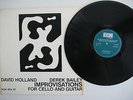
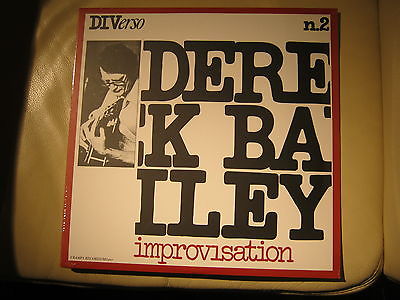
Improvisation DIVerso n.2 von Derek Bailey - LP Avantgarde
€
18
$
21


Favourite Auctions
To save auctions to your favourites, please login
If you don't have an account, please register
Description
Ich löse meine LP Sammlung auf (unsere Familienplanung lässt mein Hobby leider nicht mehr in dem Maße zu, wie dies früher für mich noch möglich war) .
Daher biete ich an:
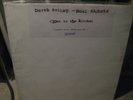
Improvisation DIVerso n.2
von
Derek Bailey
LP
reissue
Cramps records
MiruMir
MIR100201 Europe 2012
Noch original verschweißte LP. Ich habe sie gekauft, aber dann doch nicht gehört und nicht geöffnet.
Deshalb Neuzustand!
Jazz LP aus privater Sammlung !
File under: Modern Jazz / Avantgarde
Keine Garantie / Gewährleistung / Rücknahme nach EU-Recht, da es sich hier um einen Verkauf aus Privatbesitz handelt.
Versand: 3,90 (innerhalb Deutschlands). Das Porto sparen bei weiteren LPs aus meiner Sammlung bietet sich an und freut mich natürlich...
Die LP bekommt noch eine extra Schutzhülle aus Kunststoff und wird gut verpackt für den Versand.
Abholung ist natürlich auch möglich.
------------------------------------------------------------------------------------------------------------------------------------------------------------------------------------------------------------------------------------------------------------------------------------------------------------
Weltweiter Versand möglich, Versandkosten bitte anfragen!
Paypal possible, too!
Info aus dem Netz:
Listening to Derek Bailey for the first time can be a disorienting--his style is thoroughly and often brutally atonal, arrhythmic and usually very nonrepetitive. It's also most assuredly the type of music that sounds like an irritating mess if the volume is low and you're only half paying attention. Crank it up so your surrounded by Bailey's sound world and focus on what he's doing and an exciting (if somewhat cold) sense of adventure-in-logic dominates every move the guitarist makes.
While Keith Rowe is responsible for making equally influential advances in the guitar free improvisation realm, Bailey's music sounds much more like a conventional guitar played to an exponentially "out" degree; in fact, his amplification is so clean it's almost difficult to discern that he's playing an electric guitar on this album. Though he almost exclusively flatpicks, Bailey's style relies heavily on harmonics, muting and exploiting the instrument's natural sustain and decay. This can be easily heard on "M4" and to even greater depth on "M8," where Bailey's harmonics and string bends pit two strings against one another on nearly the same note, deftly controlling the oscillation between the two notes as they eerily decay into space. At other points Bailey embarks on furious runs across bizarre intervals, sporadically halting to interject with brief spurts of silence or allowing a note to ring before again changing direction completely with some explosively percussive cluster chords ("M10").
One of the things I love most about Bailey's style is how fluidly he moves from one idea to the next; though there really isn't any melody to his playing, it's usually easy to discern what is fascinating him at any given moment, and the thrill of his free improvisation is in the headlong rush into whatever the next idea might be. Sometimes the difference lies in the textural discrepancy between harmonics, standard string plucking and jabbing chords ("M13"), and at other points it might be a digression into exploring the percussive potential of the instrument with skittering string scrapes ("M14") or interjecting taps on the guitar top between the string's tonal sounds. Finally, and perhaps most subtly, Bailey uses a two-amplifier setup and volume/swell pedals to dynamically pan the output of his guitar, which adds a richness and mobility to his fretboard wandering (especially noticeable on "M5"). While not quite as finely controllable as Fred Frith's dual pickup/output experiments, it's easy to see that Frith's guitar solos owe a sizable debt to the pioneering done by Bailey.
While he's got more epic albums (Aida is often regarded as his best), I think Improvisation is just as strong and is probably a better introduction to Bailey's challenging style because the track lengths are short and can be more easily focused on and digested. Though my interest in Bailey has been tempered by the realization that his style became formalized mid-70's and didn't develop much further, revisiting his best works reminds me that 1) his style is so radically different from those who came before him that he didn't really need to reinvent himself to maintain his validity and 2) his style is so all-over-the-place that there isn't a whole lot more he could do to develop it further. Bailey's playing is an inescapable golden standard for atonal guitar as well as an audacious challenge to all followers to conjure something else new and exciting from those six strings.
price rating






![Infest the Rats Nest (live) by King Gizzard [Fuzz Club Official Bootleg] (Vinyl)](https://www.popsike.mobi/php/thumbnail.php?url=https://www.popsike.pics/pix/20220605/255568391429.jpg)