Itzhak Perlman, Dvo?ák* / Smetana*, Samuel Sanders - Sonatina Op. 100 / 4 Ro...
£
20
$
27



Favourite Auctions
To save auctions to your favourites, please login
If you don't have an account, please register
Description
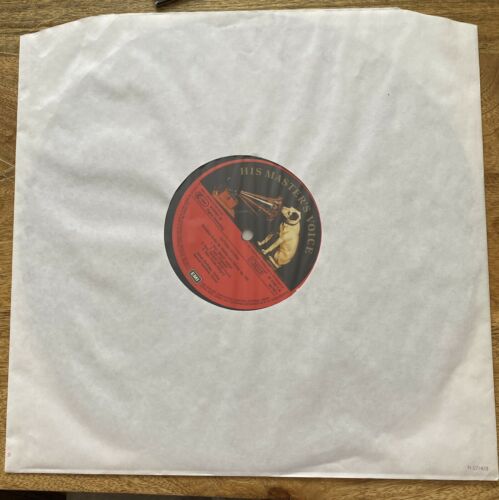
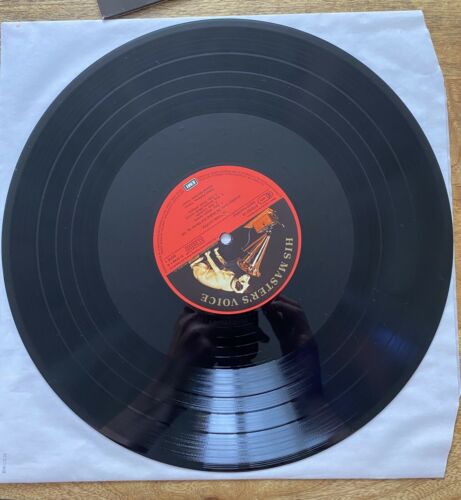
Itzhak Perlman, Dvo?ák* / Smetana*, Samuel Sanders - Sonatina Op. 100 / 4 Ro.... Condition is "Used". Dispatched with Royal Mail 2nd Class.
Sleeve is in very good condition, record is in its original dust jacket and is in what appears to be immaculate condition.
Information from the rear of the sleeve:
“Dvorak: Sonatina in G. major, Op 100
It is very evident that the family always remained a central factor in Dvorak’s life. He always liked to be surrounded by his wife and six children whenever the anniversary of his wedding came round. Furthermore, his hesitation over accepting Mrs. Thurber’s invitation to become the director of her National Conservatory of Music of America was in part due to his reluctance to face separation from his loved ones. Since, however, separation was unavoidable, he arranged for them all to spend the summer months of 1893 with him at the Czech colony of Spillville, in Iowa, which proved to be far and away the happiest period that he spent in America. As he had almost reached his hundredth opus, he decided to allot that auspicious jubilee number to an undemanding work, which he wrote especially for his 15-year old daughter Otilka and 10-year old son Tonik. He dedicated his Sonatina, which he composed between 19 November and 3 December 1893, to all six children. The Larghetto recalls Dvorak’s visit St. Paul, Minnesota, that summer. He was deeply impressed by the Minnehaha Falls, which inspired the melody on which this movement is based. At that time, for lack of a sketch book, he was obliged to write down the theme on his starched cuff. The title ‘Indian Lament’ sometimes applied to this movement, but is unauthorised.
Dvorak coloured the Sonatina with rather more than usual what may, for convenience, be called ‘American features’ - themes formed from the notes of primitive pentatonic scales, and the tendency of avoid the commonest type of cadence, while leaving himself free to abandon such limitations as the sprit moved him. In fact he enriches the work by selecting the unexpected key of E. minor for the second theme of the first movement, introduces some telling chromatic harmony near the end of the Larghetto, and in the finale, at a crucial point, enraptures us with a hushed, soaring melody in E major. For the most part this is a gay and spirited work, written basically on classical lines in major keys. But as we have come to expect from Dvorak, dark shadows are cast at times, serving to place the prevailing good humour in clearer perspective. Not only Dvorak’s children but also the composer himself must have been very happy about his newest work.
Dvorak: Romantic Pieces, Op. 75
On 18 January 1887, Dvorak had some news, which he thought would be of interest to Simrock, his publisher. ‘Just Imagine’, he said, ‘I am writing small “bagatelles” for two violins and viola. I enjoy the work as much as when I write a big “Symphony” - but what do you say to this? They are intended mainly for amateurs, but didn’t Beethoven and Schumann sometimes express themselves with quite modest means - and how? Having heard his mother-in-law’s lodger, Josef Kruis, a chemistry student, playing violin duets with Jan Pelikan, his teacher, Dvorak thought it would be fun to write something for them in which he too could join. But the little string trio that he wrote proved to be too difficult for Kruis. So he composed a new and easier Terzetto for them, and turned the original work into the four Romantic Pieces for violin and piano recorded here.
Smetana: Z domoviny (From The Homeland)
Smetana, who had been composing polkas from a very early age, became in this maturity a consummate exponent of other Czech dances in addition to the polka. As the man who created what we know as the Czech musical style, he was well aware that it would be wrong to place too much reliance on Czech folk song and dance to ensure that what he wrote would be genuinely Czech. Thoughts of his fatherland conjured up feelings of love, joy, melancholy, disappointment and sorrow, of heroism, bravery and nobility, of both hope and despair. In fact there were far more moods and emotions than could be encompassed within a single work.
Z domoviny (From the Homeland) is almost the only work Smetana composed for violin and piano. He wrote it in 1880, when he was completely deaf, for Prince Alexander von Thurn-Taxis, a keen and gifted violinist, whose father owned the hunting lodge at Jabkenice where Smetana was living. He is believed to have attempted to have this work published abroad, which, had he succeeded, would have eased his situation, for he was living on a pittance.
In the first of these interlinked pieces, the yearning, dropping phrases give way finally to a confident, rising three-note figure, which is presently transformed into a folk-like dance. From another angle minor and major keys may be seen vying for supremacy, until finally peace reigns in the key of A major. The bravura introduction to the second piece and the Moderato that follows it each commence with the already familiar three-note figure. After a while an exhilarating dance in duple time springs to life, and the second part of this again starts with the same rising figure.
John Clapham 1985”
price rating