JOANNA DEAN-FORM Records-OFFER-Doo Wop--Hear
$
250


Favourite Auctions
To save auctions to your favourites, please login
If you don't have an account, please register
Description
letterformn Store
You are viewing
JOANNA DEAN
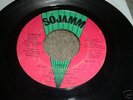
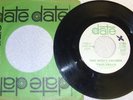
A) Everything To Me, My Love
B) Same song, but only with instruments and back up vocals, like a karaoke version.
The instrumental side is credited to TOMASSA GIOVANI.
FORM RECORDS 101
I've described the genre as Classic R&B, but it has a Doo Wop sound to it as well.
I don't know the year, (though I've been told that it was released in 1959, which sounds about right) I have not confirmed this. I've searched high and low and could not find the title. I did find some history on the composer/ producer, (read more below).
This one is a Mystery.
I FOUND OUT MORE....(part of an article)
George Motola is the composer of this song, the L.A. Producer who help destroy Domino records chance at being a major label.
Renamed the Slades, Don Burch, Tommy Kaspar and John Goeke, augmented by bassist Bobby Doyle (who would later give Kenny Rogers his first gig), were poised for a national breakout in 1958 with "You Cheated." Initial pressings on Domino had sold more than 10,000 copies just in Texas, so several larger labels were circling for the rights. Hollywood-based Dot Records, which was doing well with Pat Boone, emerged at the top of a bidding war, but the Domino owners instead decided to release "You Cheated" on their own. They struck a deal with a Los Angeles "one-stop" to press and distribute the 45s.
"That decision led to the demise of Domino," says Ray Campi, a rockabilly singer signed to Domino in 1958. It turned out that the one-stop had oversold its distribution capabilities, so while copies of "You Cheated" by the Slades were sitting in a warehouse, L.A. producer George Motola assembled a group of black singers, including Jesse Belvin and Johnny "Guitar" Watson, to copy the tune note for note. To add to the confusion, the group was called the Shields. The cover version, distributed by Dot, beat the original to the charts, landing at No. 12 on Billboard. The Slades version stalled at No. 42.
Since Domino owned the publishing of the song, the company made money off the Shields, but the missed opportunity to break out its top act was demoralizing, says Joyce Webb, who sang backup on "You Cheated" and released several catchy singles under her own name on Domino.
http://www.austin360.com/music/little-indie-label-domino-laid-down-austin-sounds-727378.html
Condition:
Vinyl Sides A/B...............................VG++/VG++ (almost near mint)
Picture sleeve...................................N/A
Cleaned Y/N....................................YES (it was already clean)
Insurance included Y/N...................YES
Domestic Shipping: LPs $2 for each additional. 45s $1 for each additional.
International Shipping: (please wait for invoice) I charge for actual cost plus $2 for material and special handling effort involved.
I clean my records by hand with an alcohol and purified water solution (if needed), and a clean soft cotton cloth (can be very time consuming). Then I remove static electricity and microscopic dust with a carbon fiber record cleaning brush.
GRADING
I use the Goldmine Grading Guide, it is considered to be the standard for record collectors worldwide. I will do my best to observe these guidelines. I have played most of my records, but will only state that they have been visually graded, unless stated otherwise.
-------------------------------------------------------------------
Mint | Near Mint | Very Good Plus | Very Good | Good/Good Plus | Poor/Fair
Mint [M]: Absolutely perfect in every way - certainly never played, possibly even still sealed. (More on still sealed below). Should be used sparingly as a grade, if at all.
Near Mint [NM or M-]: A nearly perfect record. Many dealers won't give a grade higher than this implying (perhaps correctly) that no record is ever truly perfect. The record shows no obvious sign of wear. A 45 rpm sleeve has no more than the most minor defects, such as almost invisible ring wear or other signs of slight handling.
An LP jacket has no creases, folds, seam splits or any other noticeable similar defect. No cut-out holes, either. And of course, the same is true of any other inserts, such as posters, lyric sleeves, and the like. Basically, Near Mint looks as if you just got it home from a new record store and removed the shrink wrap.
Very Good Plus [VG+]: Shows some signs that it was played and otherwise handled by a previous owner who took good care of it. Record surfaces may show some slight signs of wear and may have slight scuffs or very light scratches that don't affect one's listening experience. Slight warps that do not affect the sound are OK.
The label may have some ring wear or discoloration, but is should be barely noticeable. The center hole is not misshapen by repeated play. Picture sleeves and LP inner sleeves will have some slight wear, lightly turn-up corners, or a slight seam-split. An LP jacket my have slight signs of wear also and may be marred by a cut-out hole, indentation or corner indicating it was taken out of print and sold at a discount.
In general, if not for a couple of minor things wrong with it, this would be Near Mint. All but the most mint-crazy collectors will find a Very Good Plus record highly acceptable.
Very Good [VG]: Many of the defects found in a VG+ record are more pronounced in a VG disc. Surface noise is evident upon playing, especially in soft passages and during the song's intro and fade, but will not overpower the music otherwise. Groove wear will start to be noticeable, as will light scratches deep enough to feel with a fingernail) that will affect the sound.
Labels may be marred by writing, or have tape or stickers (or their residue) attached. The same will be true of picture sleeves or LP covers. However, it will not have all of these problems at the same time, only two or three of them.
Good [G], Good Plus [G+]: Good does not mean bad! A record in Good or Good Plus condition can be put onto a turntable and will play through without skipping. But it will have significant surface noise and scratches and visible groove wear.
A jacket or sleeve has seam splits, especially at the bottom or on the spine. Tape, writing, ring wear or other defects will start to overwhelm the object. If it's a common item, you'll probably find another copy in better shape eventually. Pass it up. But if it's something you have been seeking for years, and the price is right, get it.
Poor [P], Fair [F]: The record is cracked, badly warped, and won't play through without skipping or repeating. The picture sleeve is water damaged, split on all three seams and heavily marred by wear and/or writing. The LP jacket barely keeps the LP inside it. Inner sleeves are fully seam split, and written upon.
Except for impossibly rare records otherwise unattainable, records in this condition should be bought or sold for no more than a few cents each.
Still Sealed [SS] : Let the buyer beware, unless it's a U.S. pressing from the last 10-15 years or so. It's too easy to reseal on. Yes, some legitimately never-opened LPs from the 1960s still exist. But if you're looking for a specific pressing, the only way you can know for sure is to open the record. Also, European imports are not factory-sealed, so if you see them advertised as sealed, someone other than the manufacturer sealed them.
*Many dealers have added an additional conservative grade of [NM-], [E] or [VG++] to this guide to describe just under [NM] or "almost [NM] perfect with a few minor flaws".
price rating