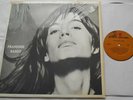
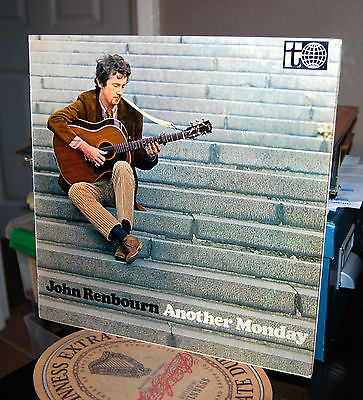
JOHN RENBOURN. "ANOTHER MONDAY" TRANSATLANTIC UK 1966 LP. ORIG EX COND.
£
35
$
46


Favourite Auctions
To save auctions to your favourites, please login
If you don't have an account, please register
Description
More Images
John Renbourn ?– Another Monday
Label: Transatlantic Records ?– TRA 149 Format: Vinyl, LP, AlbumCountry: UK Released: 1966 Genre: Folk, World, & Country Style: Folk
TracklistHide Credits
A1 Another Monday Written-By – Renbourn* 1:48 A2 Ladye Nothing's Toye Puffe Written-By – Renbourn* 1:27 A3 I Know My Babe Arranged By – Renbourn*Written-By – Trad.* 3:27 A4 Waltz Written-By – Renbourn* 1:57 A5 Lost Lover Blues Arranged By – Renbourn*Vocals – Jacqui McSheeWritten-By – Trad.* 1:54 A6 One For William Oboe – Jennifer de Montforte-JonesWritten-By – Renbourn* 2:48 B1 Buffalo Written-By – Renbourn* 2:31 B2 Sugar Babe Arranged By – Renbourn*Written-By – Trad.* 4:31 B3 Debbie Anne Written-By – Renbourn* 1:37 B4 Can't Keep From Crying Arranged By – Renbourn*Vocals – Jacqui*Written-By – Trad.* 2:01 B5 Day At The Seaside Written-By – Renbourn* 1:11 B6 Nobody's Fault But Mine Arranged By – Renbourn*Vocals – Jacqui*Written-By – Trad.* 1:56Companies, etc.
- Copyright (c) – Transatlantic Records Ltd.
- Published By – Heathside Music Ltd.
Credits
- Cover, Design – Brian Shuel
- Photography By [Cover] – John Adams (10)
- Recorded By – Bill Leader
Notes
© Transatlantic Records Ltd. 1966Recorded London 1966 by Bill Leader
AllMusic Review by Richie Unterberger [-]
Renbourn's second album was very much in character with many of the records he would release throughout the rest of his career, the only difference being that his approach here was perhaps somewhat more tentative. The guitar playing is not tentative; it's excellent folk-blues, virtuosic but full of heart and imagination, and open to other influences from jazz and world music, though not as much so as he would be in many subsequent efforts. The vocals (when he takes them; some tracks are instrumental) are more perfunctory, but they don't detract from the performances. His inclination toward early music is evident on "Ladye Nothinge's Toye Puffe" and "One for William," the latter of which also features oboe. More typically, though, he drifted into the blues idiom, two of the standouts being his interpretation of the oft-covered "I Know My Babe" (more frequently titled "I Know You Rider" when recorded by other artists) and his bottleneck playing on "Nobody's Fault but Mine." For Pentangle fans, the album is especially interesting for the recording debut of Jacqui McShee as accompanying vocalist on three numbers, although her singing is far more subordinate and less assertive than it would be in Pentangle.
Artist Biography by Mark Deming
In the '60s and '70s, John Renbourn was one of the leading lights of the British folk scene as the founder of the eclectic and innovative folk-rock band the Pentangle, who added the melodic twists and structural freedoms of jazz to the dark but compelling traditions of U.K. folk. After leaving the group,Renbourn went on to a distinguished solo career, where he broadened his repertoire to include classical guitar, and he earned an international reputation as an instrumentalist with remarkable technical skills as well as impressive taste and vision.
John McCombe was born on August 8, 1944 in Marylebone, London. His father, Robert McCombe, served in the Royal Highland Tank Regiment during World War II, and died in action when John was very young. John's mother, Dorothy, married a doctor, Edward Tobias Renbourn, in 1952, andJohn took his stepfather's surname. John grew up in a musical household -- his mother played the piano, and his great uncle Dan played cello, sometimes accompanying Dorothy at home -- and after the family moved to Surry, youngJohn began taking piano lessons. At the age of 12, John was studying theory and early music, and he soon discovered American folk and blues music after seeing a concert by Josh White. By the time he was 20, Renbournhad taken up guitar (originally studying in the classical style), and while hitchhiking across Europe he crossed paths with U.K. folk-blues artists Davy Graham, Wizz Jones, and Mac MacLeod; Renbournand MacLeod spent a few years busking together, and cut some demo tapes that failed to lead to a record deal. After a brief spell in a rhythm & blues combo, Renbourn met Dorris Henderson, an American folk, blues, and gospel singer, and he signed on as her accompanist, cutting two albums withHenderson, 1965's There You Go and 1967's Watch the Stars. The year 1965 also saw the release ofRenbourn's first solo album, simply titled John Renbourn; on a pair of songs, John was accompanied by Bert Jansch, a like-minded guitarist with whom he was sharing a flat, and in 1966, the two cut an album together, Bert & John. In 1968, Renbourn released another solo album, Sir John Alot of Merrie Englandes Musyk Thyng & ye Grene Knyghte, which combined his passion for British folk and early music with more contemporary sounds; later that same year, Renbourn's desire to explore new boundaries within the folk tradition led to the formation of the group the Pentangle, with Renbourn and Bert Jansch on guitars,Jacqui McShee (who appeared on Renbourn's second solo effort, 1967's Another Monday) on vocals, Terry Cox (who played on Sir John Alot) on percussion, and Danny Thompson on bass. The Pentangle (later simply Pentangle) became one of the most popular groups on the British folk-rock scene, rivaling Fairport Conventionand Steeleye Span, and they frequently toured in the U.K., Europe, and the United States. Pentanglereleased six albums between 1968 and 1972, when the original lineup split up, falling victim to the fatigue of their busy schedule. During this period, Renbourn still maintained his solo career, releasingThe Lady and the Unicorn in 1970 and Faro Annie in 1972, and after Pentangle folded, he began playing solo shows and published the first of many books of classical and folk guitar pieces. Renbourncontinued to record and perform with Bert Jansch on occasion, and Jacqui McShee sang with John's post-Pentangle project the John Renbourn Group, whose 1981 concert album Live in Americaearned a Grammy nomination. Renbourn also cut several albums with the American guitarist Stefan Grossman, the first a self-titled effort in 1978. In 1982, Renbourn enrolled at Darlington College in Darlington, England, where he spent three years studying composition, early music, the sitar, and the shakuhachi (a Japanese flute). Renbourn told an interviewer that his studies were "an awesome experience," though Renbourn continued to record and perform as time permitted, and at one point had to arrange to postpone an exam because it would interfere with a concert date -- sharing a bill with Doc Watson at Carnegie Hall in New York City. Renbourn would later return to academia as an instructor, teaching a degree-level course in steel-string guitar at Darlington and leading International Guitar Seminars in Quebec, Vancouver, and New York City. In 1987, for a concert in New York,Renbourn assembled a group he called Ship of Fools, with Maggie Boyle (vocals and flute), Steve Tilston (guitar and mandolin), and Tony Roberts (wind instruments), and he was happy enough with the results that the group stayed together for several years. Renbourn also participated in a Pentanglereunion tour in 1983, though he left before the group recorded the album Open the Door later that year.Renbourn stayed busy in the '90s and the new millennium, as he taught, composed, toured internationally, and periodically recorded, and in 2007, when Pentangle received a lifetime achievement award from the BBC Folk Awards, Renbourn joined his bandmates from the original lineup to accept their honors from Sir David Attenborough and perform for the occasion. In 2008,Renbourn joined Pentangle for a short tour, followed by teaching projects in Ireland and the South of France. In 2010, the Martin Guitar Company bestowed a unique honor by introducing a John Renbourn signature model, and in 2011, Pentangle played the U.K.'s biggest annual music event, the Glastonbury Festival, and staged a farewell concert at London's Festival Hall. (Bert Jansch died a few months after the London show, in October 2011.) In March 2015, Renbourn was in the midst of a tour with his friend and mentor Wizz Jones when, after he failed to arrive for a concert date, he was found dead in his home on March 26, 2015, claimed by a heart attack at the age of 70.
price rating