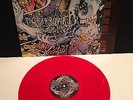
JOHNNY CLEGG AND SAVUKA - (South African Township Jive) 1986 - Zulu & English
$
40


Favourite Auctions
To save auctions to your favourites, please login
If you don't have an account, please register
Description
PLEASE READ POSTAGE OPTIONS BEFORE PAYING
"Get It Before Someone Else Does"
SIDE 1 :
01 - Giyani
02 - Shadile
SIDE 2 :
01 - Hello Byebye
02 - Asimbonanga
Savuka, occasionally referred to as Johnny Clegg & Savuka, was a multi-racial South African band formed in 1986 by Johnny Clegg after the disbanding of Juluka. Savuka's music blended traditional Zulu musical influences with Celtic music and Rock music that had a cross-racial appeal in South Africa. Their lyrics were often bilingual in English and Zulu and they wrote several politically charged songs, particularly related to apartheid. A better-known Savuka song is "Asimbonanga", an anti-apartheid song. It alluded to Nelson Mandela, imprisoned on Robben Island at the time of song's release, and other anti-apartheid activists. It was well received, becoming popular within the movement against apartheid, and was covered by several artists including Joan Baez and the Soweto Gospel Choir.
The Afrikaner National Party (NP) was elected to power in South Africa in 1948, and remained in control of the government for the next 46 years. The white minority held all political power during this time, and implemented the system of apartheid. Savuka was formed in 1985 by many of the members of the band Juluka, often credited with being the first racially integrated band in South Africa, though frontman Johnny Clegg has stated that that was not the case. Savuka was also a mixed-race band, containing three black South Africans and three whites. Savuka, which means "awakening" in Zulu, played music that drew on Zulu traditions as well as on Celtic music and rock music, and became popular with both black and white South Africans.
Black South African leader Nelson Mandela was imprisoned on Robben Island in 1962. "Asimbonanga" was written while he was still in prison, and its lyrics alluded to his absence from society, as well as mentioning other anti-apartheid activists by name, including Steve Biko (who was also the subject of the 1980 Peter Gabriel’s song "Biko"), Victoria Mxenge and Neil Aggett. The song, described as "elegiac", included choruses sung in Zulu and verses sung in English. The title of the song translates approximately to "We can't see him" or "We have not seen him", and refers to the "need South Africans had for their persecuted icon." "Asimbonanga" has been described as part of a trend that emerged within South African music after the 1976 Soweto uprising, of combining politically conscious lyrics with jive and dance rhythms. This style has been variously called "township jive", "township soul", and "bubblegum."
(RECOMMENDED) Global Mail - They are administered by DHL in partnership with Royal Mail but do not provide a tracking number. They endeavour to deliver within 3 weeks. They are the cheapest at $12-00 (12 US Dollars). My buyers have often used this option and I have so far had no problems.
SAPO (Surface Mail) - South African Post Office. They provide a tracking number but have been known to take up to 4 months to deliver to destination after being posted. They state this on their Website as well. The charge is $25-00 (25 US Dollars) (This is the default Shipping Option. Please stipulate should you prefer one of the others)
SAPO (Registered Airmail) - South African Post Office. They provide a tracking number and endeavour to deliver within 3 weeks (but do not always get it right). The charge is $30-00 (30 US Dollars)
DHL - This is the fastest option. They deliver within 5 days of posting and provide a tracking number but are also the most expensive. They charge between $ 44-00 $ 84-00 depending on where in the world the parcel is being sent.
PLEASE STIPULATE WHICH OPTION YOU WOULD PREFER AND I WILL SEND YOU AN ACCURATE INVOICE
price rating