KAREN DALTON -In My Own Time 1971 cult masterpiece, w/ Bill Keith ++ STRONG VG++
$
31


Favourite Auctions
To save auctions to your favourites, please login
If you don't have an account, please register
Description
PLEASE TAKE A LOOK AT MY OTHER eBAY AUCTIONS - ALWAYS EXPECT THE UNEXPECTED
CHECK OUT MY OTHER NEWLY LISTED LP's, INCLUDING SOME VERY RARE FEMALE FOLK, BLUES & PSYCH SINGERS
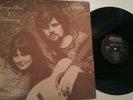
KAREN DALTON - "In My Own Time" in stereo on Just Sunshine 6008.
(Please excuse the shadows in the photos; the pictures were taken on a bright and sunny day in our dining room and the sunshine was pouring through the windows. Hope you can see them all right).
RECORD GRADE: Strong VG++, a 7.5, full gloss, some light surface marks on both sides that should not affect play
COVER GRADE: Strong VG++, no wear to speak of, seams fully intact, no writing, no water damage, small saw mark top right corner
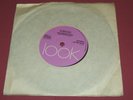
LABELS: Yellow and orange with "sun" logo
ABOUT THE ALBUM:
by Thom Jurek
In My Own Time is the second and last album the mercurial singer Karen Dalton ever cut. Following It's So Hard to Tell Who's Going to Love You the Best, producers Michael Lang and Harvey Brooks (Dalton's longtime friend and the bassist on both her records) did something decidedly different on In My Own Time (titled after the slow process of getting the album done -- in Dalton's relaxed and idiosyncratic manner of recording), and the result is a more polished effort than her cozy, somewhat more raw debut. This time out, Dalton had no trouble doing multiple takes, though the one chosen wasn't always the most flawless, but the most honest in terms of the song and its feel. The album was recorded at Bearsville up in Woodstock, and the session players were a decidedly more professional bunch than her Tinker Street Cafe friends who had appeared on her first effort. Amos Garrett is here, as is Bill Keith on steel, pianist John Simon, guitarist John Hall, pianist Richard Bell, and others, including a star horn section that Brooks added later. If Lang was listed as producer, it was Brooks who acted as the session boss, which included a lot of caretaking when it came to Dalton -- who began recording in a more frail condition than usual since she was recovering from an illness.
In My Own Time is the better of her two offerings in so many ways, not the least of which is the depth she is willing to go inside a song to draw its meaning out, even if it means her own voice cracks in the process. The material is choice, beginning with Dino Valente's gorgeous "Something on Your Mind." Brooks' rumbling single-note bassline opens it with a throb, joined by a simple timekeeping snare, pedal steel, and electric guitars. When Dalton opens her mouth and sings "Yesterday/Anyway you made it was just fine/Saw you turn your days into nighttime/Didn't you know/You can't make it without ever even trying/And something's on your mind...," a fiddle enters and the world just stops. The Billie Holiday comparisons fall by the wayside and Dalton emerges as a singer as true and impure as Nina Simone (yet sounds nothing like her), an artist who changed the way we hear music. The band begins to close in around her, and Dalton just goes right into the middle and comes out above it all. She turns the song inside herself, which is to say she turns it inside all of us and its meaning is in the sound of her voice, as if revelation were something of an everyday occurrence if we could only grasp its small truth for what it weighs.
When the album moves immediately into Lewis and Wright's "When a Man Loves a Woman," Dalton reveals the other side of Percy Sledge's version. This woman who was so uncaged and outside the world that she died homeless on the streets of New York in the 1990s was already declaring the value of loving someone even if that someone couldn't return the love as profoundly -- which doesn't mean it isn't appreciated in the depths of the Beloved's being. Dalton sings the song as if wishing that she herself could accept such a love. Her voice slips off the key register a couple of times, but she slides into her own, which is one of the hidden places in the tune that one didn't even know existed. The layered horns don't begin to affect her vocal; they just move it inside further. And the woman could sing the blues in a way that only Bob Dylan could, from the skeletal framework of the tune toward the truth that a blues song could convey -- just check her reading of Paul Butterfield's "In My Own Dream," with some gorgeous steel playing by Keith. Her version of Holland-Dozier-Holland's "How Sweet It Is (To Be Loved by You)" has her singing completely outside the time and beat of the tune; floating through the tune's middle, she glides, slips, and slides like a jazz singer in and around its changes.
Another standout is Richard Manuel's "In a Station." As a piano, rolling tom-toms, and an organ introduce it, Dalton is at her most tender; she feels and communicates the understatement in the original, and lets her voice flow through even as the band plays on top of her. And when her voice cracks, it's as if the entire tune does, just enough to let in the light in its gorgeous lyric. Of course, it wouldn't be a Dalton album if there weren't traditional tunes here, and so there are three, including "Katie Cruel," with Dalton playing her banjo and finding the same voice that Dock Boggs did, the same warped cruelty and search for the brutality of love. "Same Old Man" is another banjo-based tune set in an Eastern modal drone. Only the stark loneliness and outsider presence of Dalton's voice shift and move through the large terrain provided by that drone and create the very substance of song from within it. It's spooky, otherworldly. George Jones' "Take Me" is transformed from a plea to a statement; it's a command to the Beloved to deliver her from her current place outside love to become its very substance. It's still a country song, but there's some strange transgender delivery that crosses the loneliness of Hank Williams with the certainty of Tammy Wynette, and is rawer than both.
If one can only possess one of Karen Dalton's albums, In My Own Time is the one. It creates a sound world that is simply unlike any other; it pushes the singer outside her comfort zone and therefore brings listeners to the place Dalton actually occupied as a singer. Without apology or concern for technique, she could make any song her own, creating a personal narrative that could reach outside the song itself, moving through her person and becoming the truth for the listener......
ABOUT THE ARTIST:
biography
[-] by Richie Unterberger A cult singer, 12-string guitarist, and banjo player of the New York 1960s folk revival, Karen Dalton still remains known to very few, despite counting the likes of Bob Dylan and Fred Neil among her acquaintances. This was partly because she seldom recorded, only making one album in the 1960s -- and that didn't come out until 1969, although she had been known on the Greenwich Village circuit since the beginning of the decade. It was also partly because, unlike other folksingers of the era, she was an interpreter who did not record original material. And it was also because her voice -- often compared to Billie Holiday, but with a rural twang -- was too strange and inaccessible to pop audiences. Nik Venet, producer of her debut album, went as far as to remark in Goldmine, "She was very much like Billie Holiday. Let me say this, she wasn't Billie Holiday but she had that phrasing Holiday had and she was a remarkable one-of-a-kind type of thing.... Unfortunately, it's an acquired taste, you really have to look for the music." Dalton grew up in Oklahoma, moving to New York around 1960. Peter Stampfel of the Holy Modal Rounders, who was in her backup band in the early '70s, points out in his liner notes to the CD reissue of her first album that "she was the only folk singer I ever met with an authentic 'folk' background. She came to the folk music scene under her own steam, as opposed to being 'discovered' and introduced to it by people already involved in it." There is a photograph from February 1961 (now printed on the back cover of the It's So Hard to Tell Who's Going to Love You the Best reissue) of Dalton singing and playing with Fred Neil and Bob Dylan, the latter of whom was barely known at the time. Unlike her friends she was unable to even capture a recording contract, spending much of the next few years roaming around North America. Dalton was not comfortable in the studio, and her Capitol album It's So Hard to Tell Who's Going to Love You the Best came about when Nik Venet, who had tried unsuccessfully to record her several times, invited her to a Fred Neil session. He asked her to cut a Neil composition, "Little Bit of Rain," as a personal favor so he could have it in his private collection; that led to an entire album, recorded in one session, most of the tracks done in one take. Dalton recorded one more album in the early '70s, produced by Harvey Brooks (who had played on some '60s Dylan sessions). Done in Bearsville Studios in Woodstock, it, like her debut, had an eclectic assortment of traditional folk tunes, blues, covers of soul hits ("When a Man Loves a Woman," "How Sweet It Is"), and contemporary numbers by singer/songwriters (Dino Valente, the Band's Richard Manuel). the Band's "Katie's Been Gone," included on The Basement Tapes, is rumored to be about Dalton. All records are carefully graded. In an attempt to give customers an accurate impression of condition rather than adhere to somewhat arbitrary criteria, I give an "overall presentation" grade, supplemented when necessary with additional remarks. Please refer to my grading system below for a more detailed explanation.MY GRADING SYSTEMS: I’ve been told that I grade conservatively. My NM (near mint) is my highest grade for opened records (which would also include unplayed records). It’s a 9 or 10 on a 1-10 scale. M- would be equivalent to an 8; VG++ to a 7; VG+ to a 6; VG to a 5; VG- to a 4; G to a 3; F to a 2 and P to a 1. The same scale applies when I grade covers (jackets). Significant defects are specifically noted and taken into consideration in the grade.
GRADING DESCRIPTIONS
RECORDS:
- GRADING is based on the following criteria
- Sealed = store stock new
- Near Mint = like new or near new with only one or two small insignificant defects, a 9 or better on a 1-10 scale
- Near Mint Minus (or NM-) = very nice. Would be Near Mint, except for a couple of light hairlines or scuffs, which do not affect play
- VG++ = still a very nice record with all or nearly all of its original gloss but may have a few more light, surface marks, hairlines, needle tracks or the like which should not materially effect play
- VG+ = a nice, but used record that may have a series of light scuffs or scratches. It probably plays with a few pops, but has no serious problems.
- VG = a well-used record that still should sound OK when played, but may have moderate surface noise, pops, etc.
- VG- = a well-worn record that plays through without skipping, but will do until a better copy comes along.
- Good = not actually good at all but probably will play through but with much in the way of surface noise, pops, crackles, etc. Still, will have no cracks, chips or the like
- Fair = you’re getting this record just to own but not to play
- Poor = the sky’s the limit, generally I will discard a record this bad (and sell the cover, jacket or sleeve alone) unless the label holds some particular interest
VISUAL GRADING: All records are visually graded only unless I state that they are play-graded. Some major labels were pressed on better quality vinyl and will sound better than a record which visually appears the same on "budget" labels which were pressed on lower quality vinyl. Recording techniques also varied. The sound on live albums may be far inferior to studio recordings. There may also be defects in the pressing which are invisible. The point is that an album on a high quality label that was visually graded VG+ may sound better than an album on a budget label that was visually graded Mint- or even Near Mint. Please refer to my return policy, below. But please don’t be shocked if a record visually graded Near Mint doesn’t sound state of the art. If I base my grade on a PLAY GRADE, I will state this specifically in my grading section.
COVERS: There are really too many possible defects regarding covers to be as specific in my definitions as I had been with my record grades. But please keep in mind these general grading guidelines:
- I will give greater weight to the condition of the front cover than back cover when assigning an overall grade
- No cover with a cut out hole or saw mark will be graded Near Mint even if it is still in factory shrink and there is no other wear
- I will not reduce the grade of a cover for stickers which are glued to the jacket by the record company (eg. Contains the hit song Expressway to Your Heart); but will reduce the grade for stickers glued on the cover by stores, previous owners, etc.
- If I write that a cover has a bb hole, I’m talking about a small cut out hole
- A saw mark is a narrow cut in the perimeter of the cover, could be anywhere and vary in length from 1/2” to 2” at the most.
- The overall grade takes into consideration any stated defects. For example, if I grade a cover VG+ and then state it has 6” top and bottom seam splits - I’ve already reduced the grade because of the seam splits. If the seams weren’t split, the cover would be graded higher such as VG++ or Mint-.
Shipping Costs: CURRENT SHIPPING RATES AND POLICIES.
The winning bidder pays for shipping.
DOMESTIC SHIPPING WITHIN THE UNITED STATES: Due to increase in postage rates, I have sometimes been losing money on shipping as I send all records in sturdy professional Bags Unlimited mailers with one or more fillers. Therefore, I am now using the eBay postage calculator to determine postage. This will also result in a more equitable charge for priority mail shipments. Instead of a flat fee, those who live in the southeast and mid-east will reap the benefit of reduced priority mail rates.
DOMESTIC AND INTERNATIONAL SHIPMENTS: COMBINED SHIPPING - Save money when I mail 2 or more records in the same package. Please wait until I send you an invoice or request an invoice when combining two or more records or cd's in one shipment -prior to making payment.
INTERNATIONAL SHIPMENTS: Overseas customers are invited to bid. As with U.S. shipments, I will use eBay's postage calculator for all overseas shipments. Postage to Canada is substantially less than to other countries - if you live in Canada and don't see a separate rate for Canada , please e-mail me and I'll modify the invoice to reflect the lower shipping charges. Surface mail is no longer available for overseas. Express Mail International and Priority Mail International are available - rates are substantially higher than first class international and will be quoted for each purchase if buyer requests this service. Express Mail International or Registered mail is now required for purchases over $100. Generally, Express International costs $35 for 1 album and additional albums are about $5-6 more. Registered costs about $26 for 1 album, about $5 more for each additional album. Registered mail may not be available to certain countries. I am sorry but the increased risks and costs must be passed on to the international buyer. On the bright side of things, Express Mail International will get you the package faster and it is safer. Registered mail is the safest form of shipment (but not as fast as express mail international). So there are benefits to the buyer as well as the seller. Please wait until I send you an invoice or request an invoice when combining two or more records or cd's in one shipment -prior to making payment.
Please check out my other eBay auctions and stores listings.
I’ve been listing all types of records - mostly LP’s - including 50’s and 60’s rock ‘n’ roll, country, folk jazz, blues, personalities, new wave and punk, surf, psych, spoken word, comedy, etc., etc....... I try to list unusual, unique or obscure records, not the ones that you see all the time. While a majority of my listings are albums, you’ll often find a nice selection of 45’s, EP’s or picture sleeves...and an occasional 78 or two.
My return policy: . You may return an item if it's not in the condition described. You may not return items if you decide you don't like the music. I will return the base price of the item unless I make an error in shipment such as sending you the wrong record or cd. In that case, you will be reimbursed for the cost of the item and shipping both ways. In addition, the item must be returned in its original condition , i.e. the way it was shipped when it left my hands. While a very high percentage of my records arrive safe and sound (I use professional mailers and a filler or two, more for 78’s), they occasionally are damaged in transit. If that happens, I won’t accept the return of the record or other item.
Sealed Records: After a sealed record is paid for, I will gladly open it before mailing to make sure that the record is new & unplayed. If the record is not, I will give a full refund. Even though it is easy to spot most resealed records from the 50's and 60's [I will mention that in the desription if it looks like a possibility], not all records from the 70's & 80's are quite as obvious. Please ask for any details about the seal of a particular record & I will be happy to answer.
price rating