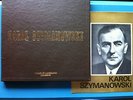
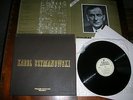
KAROL SZYMANOWSKI 1882-1937 4 LP (No 7 inch) NM/VG+ MUZA w 39 page booklet
$
50


Favourite Auctions
To save auctions to your favourites, please login
If you don't have an account, please register
Description
Karol Szymanowski ?– Karol Szymanowski 1882-1937
Label:
Polskie Nagrania Muza ?– XL 0120, Polskie Nagrania Muza ?– XL 0116, Polskie Nagrania Muza ?– XL 0126, Polskie Nagrania Muza ?– XL 0121, Polskie Nagrania Muza ?– N 0181
Format:
Box Set, Compilation
4 × Vinyl, LP, Mono
Vinyl, 7", 45 RPM, Mono
Country:
Poland
Released:
Genre:
Classical
Style:
Modern, Interview, Speech
TracklistHide Credits
XL 0120
II Symfonia B-dur Op. 19 (Symphony No. 2 In B Flat Minor)
Conductor – G. Fitelberg*
Orchestra – Wielka Orkiestra Symfoniczna Polskiego Radia*
A1 Allegro Moderato, Graziosa
A2 Temat Z Wariacjami (Theme With Variations)
B1 Fuga
Pie?ni (Songs)
Chorus – Chór Filharmonii Narod.*
Conductor – Witold Rowicki
Orchestra – Orkiestra Symf. Filharmonii Narod.*
Soprano Vocals – Stefania Woytowicz
B2 Pie?? Roksany Z Op. "Król Roger" (Roxana's Song From "King Roger")
B3 Jestem I P?acz? (I Am And I Weep)
B4 Dwa Fragmenty Z Litanii Do Marii Panny, Op. 59 (Litany For Solo Voice, Chorus And Orchestra) (Two Fragments)
XL 0116
C1 I Koncert Skrzypcowy Op. 35 (Violin Concerto No.1 Op. 35)
Conductor – Witold Rowicki
Orchestra – Orkiestra Symfoniczna Filharmonii Narodowej*
Violin – Wanda Wi?komirska*
IV Symfonia Koncertuj?ca Na Fortepian Z Orkiestr? Op. 60 (Symphonie Concertante For Piano With Orchestra No. 4)
Conductor – Witold Rowicki
Fortepiano – Jan Ekier
Orchestra – Orkiestra Symfoniczna Filharmonii Narodowej*
D1 Moderato
D2 Andante Molto Sostenuto
D3 Allegro Non Troppo
XL 0126
II Kwartet Smyczkowy Op. 56 (String Quartet No. 2)
Cello – Walentin Berlinskij*
Ensemble – Pa?stwowy Kwartet Im. Borodina*
Viola – Dimitrij Szebalin*
Violin [1] – Rostis?aw Dubinskij*
Violin [2] – Jaros?aw Aleksandrow*
E1 Moderato
E2 Vivace-Scherzando
E3 Lento
Mazurki Op. 50 (Mazurkas)
Piano – Barbara Hesse-Bukowska
F1 Mazurek Nr 1
F2 Mazurek Nr 3
F3 Mazurek Nr 5
F4 Mazurek Nr 6
F5 Mazurek Nr 9
F6 Mazurek Nr 10
F7 Mazurek Nr 11
F8 Mazurek Nr 13
F9 Mazurek Nr 14
F10 Mazurek Nr 18
XL 0121
Oratorium "Stabat Mater" Op. 53
Alto Vocals – Krystyna Szczepa?ska
Baritone Vocals – Andrzej Hiolski
Choir – Chór Pa?stwowej Filharmonii W Krakowie*
Conductor – Witold Rowicki
Lyrics By [Translated By] – Czes?aw Jankowski
Orchestra – Wielka Orkiestra Symfoniczna Filharmonii Warszawskiej*
Soprano Vocals – Maria Kuni?ska
G1 Sta?a Matka Bolej?ca... (Stabat Mater Dolorosa)
G2 I Któ? Widz?c Tak Cierpi?c?... (Quis Est Homo Qui Non Floret)
G3 O Matko ?ród?o Wszechmi?o?ci... (O Eia, Mater, Fons Amoris)
G4 Spraw, Niech P?acz? Z Tob? Razem... (Fac Me Tecum Pie Flere)
G5 Panno S?odka, Racz Mozo?em... (Virgo Virginum Praeclara)
G6 Chrystus Niech Mi B?dzie Grodem... (Christe, Cum Sit Hinc Exire)
Balet »Harnasie« Op. 55
Choir – Chór Pa?stwowej Filharmonii Pozna?skiej*, Chór Pa?stwowej Wy?szej Szko?y Muzycznej W Poznaniu*
Conductor – Stanislaw Wis?ocki*
Orchestra – Orkiestra Symfoniczna Pa?stwowej Filharmonii W Poznaniu*
Tenor Vocals – Józef Prz?da
H1 Obraz (Scene) I:
H1.1 Redyk (Driving The Sheep)
H1.2 Scena Mimiczna (Mime Scene)
H1.3 Marsz Zbójnicki (The Highwaymen's March)
H1.4 Taniec Zbójnick (Highwaymen's Dance)
H2 Obraz (Scene) II:
H2.1 Wn?trze Cha?upy (Inside The Hut)
H2.2 Cepiny (The Cepiny Rites)
H2.3 Pie?? Siuhajów (The Siuhaje Song)
H2.4 Taniec Góralski (Highlander's Dance)
H2.5 Wej?cie Harnasiów (The Arrival Of The Harnasie)
H3 Obraz (Scene) III:
H3.1 Hala (The Coomb)
N 0181
I1 Przemówienie Karola Szymanowskiego (Karol Szymanowski's Speech) (1932)
I2 Fragment Wywiadu Z Karolem Szymanowskim (Fragment Of An Interview With Karol Szymanowski) (1935)
J1 XIII Mazurek (Mazurka) Op. 50 Nr 13
Piano – Karol Szymanowski
J2 XXI Mazurek (Mazurka) Op. 62 Nr 1
Piano – Karol Szymanowski
Companies, etc.
Exported By – Ars Polona
Printed By – ?ódzka Drukarnia Akcydensowa
Credits
Artwork By, Cover – Stanis?aw ?akowski
Composed By – Karol Szymanowski
Engineer [Recording Engineer] – Antoni Karu?as, Janusz Urba?ski
Liner Notes – Bogus?aw Brelik, Janusz Ekiert, Tadeusz Marek*
Notes
Including large 39 page booklet with biography and commentary in Polish and English.
On A1 (N 0181) - Przemówienie Karola Szymanowskiego wyg?oszone w Pradze w okazji premiery opery "Król Roger", dnia 21 pa?dziernika 1932 r. (Karol Szymanowski's speech made in Prague on the occasion of the first performance of "King Roger" on October 21st, 1932)
On A2 (N 0181) - Fragment wywiadu udzielonego przez Karola Szymanowskiego re?yserowi "Narodneho Divadla" Munclingerowi z okazji premiery baletu "Harnasie", dnia 10 maja 1935 roku w Pradze. (Fragment of an interview granted by Karol Szymanowski to the Stage-manager "Narodne Divadlo", Munclinger on the occasion of the first performance od the "Harnasie" ballet in Prague, on May 10th, 1935.)
GOLDMINE GRADING
MINT ---- It should appear to be perfect. No scuffs or scratches, blotches or stains, labels or writing, tears or splits. Mint means perfect.
NEAR MINT ---- Otherwise mint but has one or two tiny inconsequential flaws that do not affect play. Covers should be close to perfect with minor signs of wear or age just becoming evident: slight ring-wear, minor denting to a corner, or writing on the cover should all be noted properly.
VERY GOOD PLUS ---- The record has been handled and played infrequently or very carefully. Not too far from perfect. On a disc, there may be light paper scuffs from sliding in and out of a sleeve or the vinyl or some of the original luster may be lost. A slight scratch that did not affect play would be acceptably VG+ for most collectors.
VERY GOOD ---- Record displays visible signs of handling and playing, such as loss of vinyl luster, light surface scratches, groove wear and spindle trails. Some audible surface noise, but should not overwhelm the musical experience. Usually a cover is VG when one or two of these problems are evident: ring wear, seam splits, bent corners, loss of gloss, stains, etc.
GOOD ---- Well played with little luster and significant surface noise. Despite defects, record should still play all the way through without skipping. Several cover flaws will be apparent, but should not obliterate the artwork.
POOR ---- Any record or cover that does not qualify for the above "Good" grading should be seen as Poor. Several cover flaws.
price rating