LA MONTE YOUNG LP JOHN CAGE+DANIELE LOMBARDI
$
97


Favourite Auctions
To save auctions to your favourites, please login
If you don't have an account, please register
Description
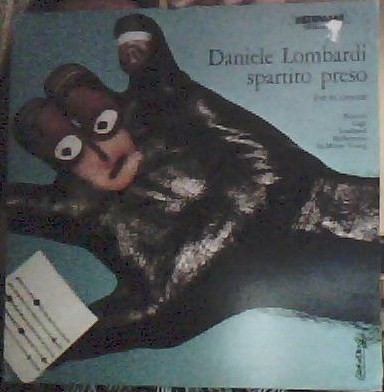
LA MONTE YOUNG / JOHN CAGE / DANIELE LOMBARDI / ETC.
Spatito Preso LP
- Original 1st & only pressing
- Label :Edi-Pan / Italy
- Condition :vg/mint(cover/vinyl)
- Gatefold cover
Original & impossible to find italian pressing on Edi-Pan label. This one is the most HARD TO FIND record in the LA MONTE YOUNG discography, featuring La Monte Young's "Composition 1960 No7". FIRST TIME ON EBAY!! Get this now, i highly doubt you'll come accross this one again!! Comes in a beautiful gatefold cover with extensive notes, patterns and pictures. Also on this record one finds John Cage's "A Valentine out of season" and "Music for Marcel Duchamp", Sylvano Bussoti's "Autotono", William Hellermann's "At Sea" and Daniele Lombardi's "Quattro Dtudi alla memoria di Chopin". All executed by Lombardi on the occasion of a concert at the Palazzo Vecchio in Firenze.
Born in a log cabin in Utah, La Monte went to high school in Los Angeles. During this time he played saxophone in a group with Billy Higgins, Dennis Budimir and Don Cherry. He also played with Eric Dolphy, Ornette Coleman, Terry Jennings, Don Friedman and Tiger Echols. To continue his education, he relocated to Berkeley, where he met life long friend and collaborator Terry Riley. It was also in the Bay Area where he first encountered the work of Angus MacLise, whose poetry he discovered at the City Light book shop. From here Young moved to New York City, where he has lived ever since. Upon his arrival in New York, he curated a series of concerts at Yoko Ono's loft and quickly became a legend in town. He also studied electronic music with Richard Maxfield and became associated with many of the Fluxus artists, who took to performing his pieces in their concerts. With Jackson Mac Low, he published An Anthology, which collected printed works by many of the radical artists of that time. Most importantly, La Monte started assembling an ensemble to play his music. Early members of his group include Billy Name and Simone Forti. The real breakthrough was when Young met Marian Zazeela who was to become his lifelong collaborator and partner. These two were joined by the young English student John Cale, mathematician Tony Conrad, and percussionist and poet Angus MacLise. This core group became known at the Theater of Eternal Music and performed many groundbreaking concerts. This line up was not to last however, and over the decades many other musicians have come and gone in La Monte's ensemble including Dennis Johnson, Terry Riley, Jon Gibson, David Rosenboom, Jon Hassell, and Lee Konitz. Going back to the late 1950's and extending to the present day, La Monte has focused his attention on pieces of extended duration, with minimal, often microtonal, change. For this reason, he is known as one of the father's of the minimal music "movement", though remains unique from his followers. In addition to this, Young and Zazeela were disciples of Pandit Pran Nath, and devoted a considerable amount of effort to the perservation and continuance of the Kirana style of Indian classic music.
John Milton Cage Jr. was a pioneer of chance music, electronic music and non-standard use of musical instruments, Cage was one of the leading figures of the post-war avant-garde and, in the opinion of many, the most influential American composer of the 20th century. He was also instrumental in the development of modern dance, mostly through his association with choreographer Merce Cunningham, who was also Cage's romantic partner for the most part of the latter's life. Cage is perhaps best known for his 1952 composition 4?33?, the three movements of which are performed without a single note being played. A performance of 4?33? can be perceived as including the sounds of the environment that the listeners hear while it is performed, rather than merely as four minutes and thirty three seconds of silence and has become one of the most controversial compositions of the century. Another famous creation of Cage's is the prepared piano (a piano with its sound altered by placing various objects in the strings), for which he wrote numerous dance-related works and a few concert pieces, the most well-known of which is Sonatas and Interludes (1946–48).
His teachers included Henry Cowell (1933) and Arnold Schoenberg (1933–35), both known for their radical innovations in music, but Cage's major influences lay in various Eastern cultures. Through his studies of Indian philosophy and Zen Buddhism in the late 1940s, Cage came to the idea of chance-controlled music, which he started composing in 1951. The I Ching, an ancient Chinese classic text on chance events, became Cage's standard composition tool for the rest of his life. In a 1957 lecture, Experimental Music, he described music as "a purposeless play" which is "an affirmation of life – not an attempt to bring order out of chaos nor to suggest improvements in creation, but simply a way of waking up to the very life we're living". Cage collaborated with David Tudor, Robert Rauschenberg, and Charles Olson at Black Mountain College where a performance took place amongst the audience. "Happenings", as set forth by Cage, are theatrical events that abandoned the traditional concept of stage-audience and occur without a sense of definite duration; instead, they are left to chance. They have a minimal script, with no plot. In fact, a "Happening" is so-named because it occurs in the present, attempting to arrest the concept of passing time. Cage believed that theater was the closest route to integrating art and (real) life. The term "Happenings" was coined by Allan Kaprow, one of his students, who was to define it as a genre in the late fifties. In following these developments Cage was strongly influenced by Antonin Artaud’s seminal treatise The Theatre and Its Double, and the “Happenings” of this period can be viewed a forerunner to the ensuing Fluxus movement. In October of 1960, Mary Baumeister's Cologne studio hosted a joint concert by Cage and the video artist Nam June Paik, who in the course of his 'Etude for Piano' cut off Cage's tie and then washed his co-performer’s hair with shampoo.
A necessary sound document for experimental music fans.
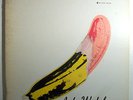
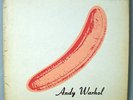
Important : Vinyl lies in absolutely mint condition(new!), while cover is very good because of a tear(see picture).
Watch also for some more similar vinyls at my other items ! Pay me securely with your Visa or MasterCard through PayPal!
price rating


![MISFITS Walk Among Us GREEN/PURPLE Propeller Vinyl LP [2020' Reissue] Ltd. 300](https://www.popsike.mobi/php/thumbnail.php?url=https://www.popsike.pics/pix/20210319/324529760100.jpg)