LA MONTE YOUNG black record LP 1969 fluxus avant electronic tony conrad zazeela
$
271


Favourite Auctions
To save auctions to your favourites, please login
If you don't have an account, please register
Description
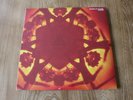
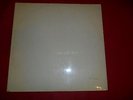
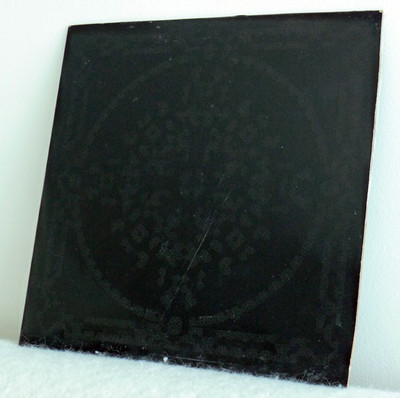
La Monte Young / Marian Zazeela "The Black Record" LP issued by Edition X (1079) in Germany, 1969. ****** Rec:m- / Cov:vg+++ ****** Historical fundamental LP edition! Young and Zazeela recorded their first full length album 20 years earlier in Munich for Heiner Friedrich's Edition X label. It was Friedrich who later found the couple's Dream House in Harrison Street, New York. A limited edition of 2000, it came to be known as "The Black Record", thanks to Zazeela's black on black cover and label artwork. Side one is a section of "Map Of 49's Dream", performed by Young on sinewave drone and voice, with vocal accompaniment by Zazeela. Side two's extract from "Study For The Bowed Disc" features the duo bowing a gong given to them by sculptor Robert Morris. He had made it for his dance piece, War, and asked Young to play it for the performance. Afterwards Morris presented the gong to Young, and he started to experiment on it with double bass bows. If you follow Young's recommendation to turn it up and play it slow, the resulting low, thrilling drone is at once spiritual and slightly threatening, as though dark forces are being summoned to the surface. Long before Keiji Haino adopted black to shroud himself and his work, Marian Zazeela was embedding her calligraphic lettering and designs in purple and black. The point is to focus on her artwork while concentrating on the vocal sinewave drones of Young's dream music. La Monte Young works have been included among the most important and radical post World War II avant-garde, experimental, or drone music. Both his proto-Fluxus and "minimal" compotions question the nature and definition of music, and often stress elements of performance. Born to a Mormon family in Bern, Idaho, his family moved several times in his childhood while his father searched for work before settling in Los Angeles, California. He studied at Los Angeles City College, and came out ahead of Eric Dolphy in a saxophone audition for the school's jazz band. In LA's jazz milieu, he also played alongside notable musicians like Ornette Coleman, Don Cherry and Billy Higgins. He undertook further studies at the University of California, Los Angeles (UCLA), then at the University of California, Berkeley. then the summer courses at Darmstadt under Karlheinz Stockhausen and finally electronic music with Richard Maxfield. Over this period he concentrated on composition, influenced by Anton Webern, Gregorian chant, and various music of other cultures — including Indian classical music and Indonesian gamelan music. When Young visited Darmstadt he encountered the music and writings of John Cage. There he also met Cage's collaborator, pianist David Tudor, subsequently gave premiers of some of Young's works. At Tudor's suggestion, Young engaged in a correspondence with Cage. Within a few months Young was presenting some of Cage's music on the West Coast; in turn Cage and Tudor included some of Young's works in performances throughout the U.S. and Europe. By this time Young had taken a turn toward the conceptual, using principles of indeterminacy in his compositions and incorporating non-traditional sounds, noises, and actions. When Young moved to New York in 1960, he had already established a reputation as an enfant terrible of the avant garde. He initially developed an artistic relationship with Fluxus founder George Maciunas and other members of the nascent movement. Yoko Ono, for example, hosted a series of concerts curated by Young at her loft, and absorbed, it seems, his often parodistic and politically charged aesthetic. Young's works of the time, scored as short haiku-like texts, though conceptual and extreme, were not meant to be merely provocative but, rather, dream-like. In 1962 Young wrote "The Second Dream of the High-Tension Line Stepdown Transformer". One of The "Four Dreams of China", the piece is based on four pitches, which he later gave as the frequency ratios: 36-35-32-24 (G, C, +C#, D), and limits as to which may be combined with any other. Most of his pieces after this point are based on select pitches, played continuously, and a group of long held pitches to be improvised upon. For "The Four Dreams of China" Young began to plan the "Dream House", a light and sound installation where musicians would live and create music twenty-four hours a day. He formed The Theater of Eternal Music to realize "Dream House" and other pieces. The group initially included Marian Zazeela (who has provided the light work The Ornamental Lightyears Tracery for all performances since 1965), Angus MacLise, and Billy Name. In 1964 the ensemble contained Young and Zazeela (voices), Tony Conrad, John Cale (strings) and sometimes Terry Riley (voice). Beginning in 1970 interests in Asian classical music and a wish to be able to find the intervals he used by ear led to studies with Pandit Pran Nath. Young considers The Well Tuned Piano, a permutating composition of themes and improvisations for just-intuned solo piano, to be his masterpiece. Together Young and Zazeela have realized a long series of semi-permanent "Dream Houses" in long-term installations. The effect is highly modernistic and deeply sensual, utilizing aspects of the viewer/auditor's perception to create an extraordinarily refined sensory overload, within a physical space which is barely defined. Like his work of the 60s and 70s, when he was at his most playful, his installations with Zazeela remain alarmingly psychedelic. ****** Liner notes in English. ****** Some sleeve wear (see photo, even if it was very difficult to take photos of the black on black sleeve) ****** The record is in perfect conditions! ****** Please wait to receive my invoice before sending the payment after the auction ends. Attention! Real postage costs are not USD 4 as all the items are located in Doha, Qatar (which has a very safe and professional post system). Postage costs registered up to 1 Kilo (generally 3 LPs): to Europe and Japan is USD 16,50 / to America and Oceania is USD 22,50. Postage costs registered up to 2 Kilos: to Europe and Japan is USD 28,00 / to America and Oceania is USD 34,00. ****** More ebay auctions of ultra rare sonic arts, fluxus, sound poetry LP and K7 editions in the coming weeks. ****** Thank you for your kind attention and good luck with your bids.