LED ZEPPELIN III 1970 FIRST PRESSING SD-7201 GATEFOLD CLASSIC 'WHEEL' JACKET
$
29

Favourite Auctions
To save auctions to your favourites, please login
If you don't have an account, please register
Description
LED ZEPPELIN III ~ 1970 FIRST PRESSING SD-7201 GATEFOLD w/ CLASSIC 'WHEEL' JACKET
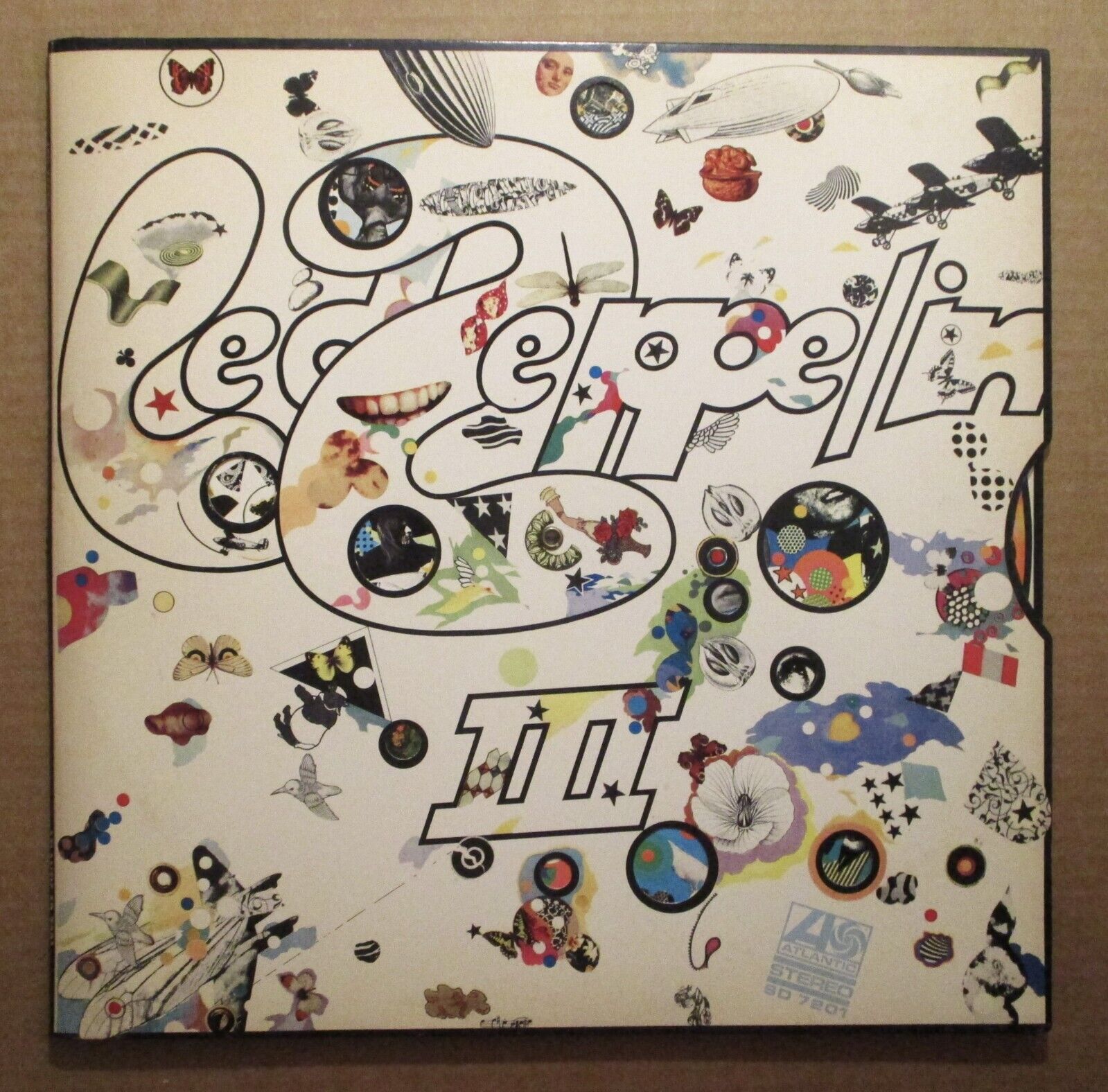
LED ZEPPELIN "LED ZEPPELIN III" LABEL: ATLANTIC SD-7201 RELEASED: OCTOBER 5, 1970 EDITION: ORIGINAL 1970 FIRST PRESSING GATEFOLD JACKET w/ ROTATING DIE-CUT WHEEL ALBUM COVER ART & 'WHEEL' CONCEPT BY 'ZACRON' RECORD COMPANY: ATLANTIC RECORDS RECORDING ENGINEER: ANDY JOHNS MASTERED AT ARDENT STUDIOS MEMPHIS MASTERING ENGINEER: TERRY MANNING PRODUCER: JIMMY PAGE PRESSING: RCA RECORD PLANT INDIANAPOLIS ('I' in Matrix) CATALOG NUMBER ON LABEL: ST - A - 702005/702006 (NO SUFFIX) RARE WITH NO PRESSING PLANT SUFFIX ON LABELS MATRIX (SIDE A): (Stamped) S T A 702005 1S -I C1 MATRIX (SIDE B): )Stamped) S T A 702006 2S I D1 NO "Do What Thou Wilt" or "So Mote Be it" STAMPED IN MATRIX
CONDITION: VINYL: VG++ JACKET: VG++
I've been going thru my massive vinyl record collection these past few weeks and pulling out some LPs that I thought that someone else would want for their collection. I've been collecting records for over 45 years and it's time to pass some of them on to the next generation of collectors.
This week on EBay I am offering up this fantastic, clean, early 1970 First Pressing of Led Zeppelin's classic 3rd album.
This is my original copy, purchased back in the early 70's, shortly after it's release, that I've taken great care of for many years. See details on Condition below.
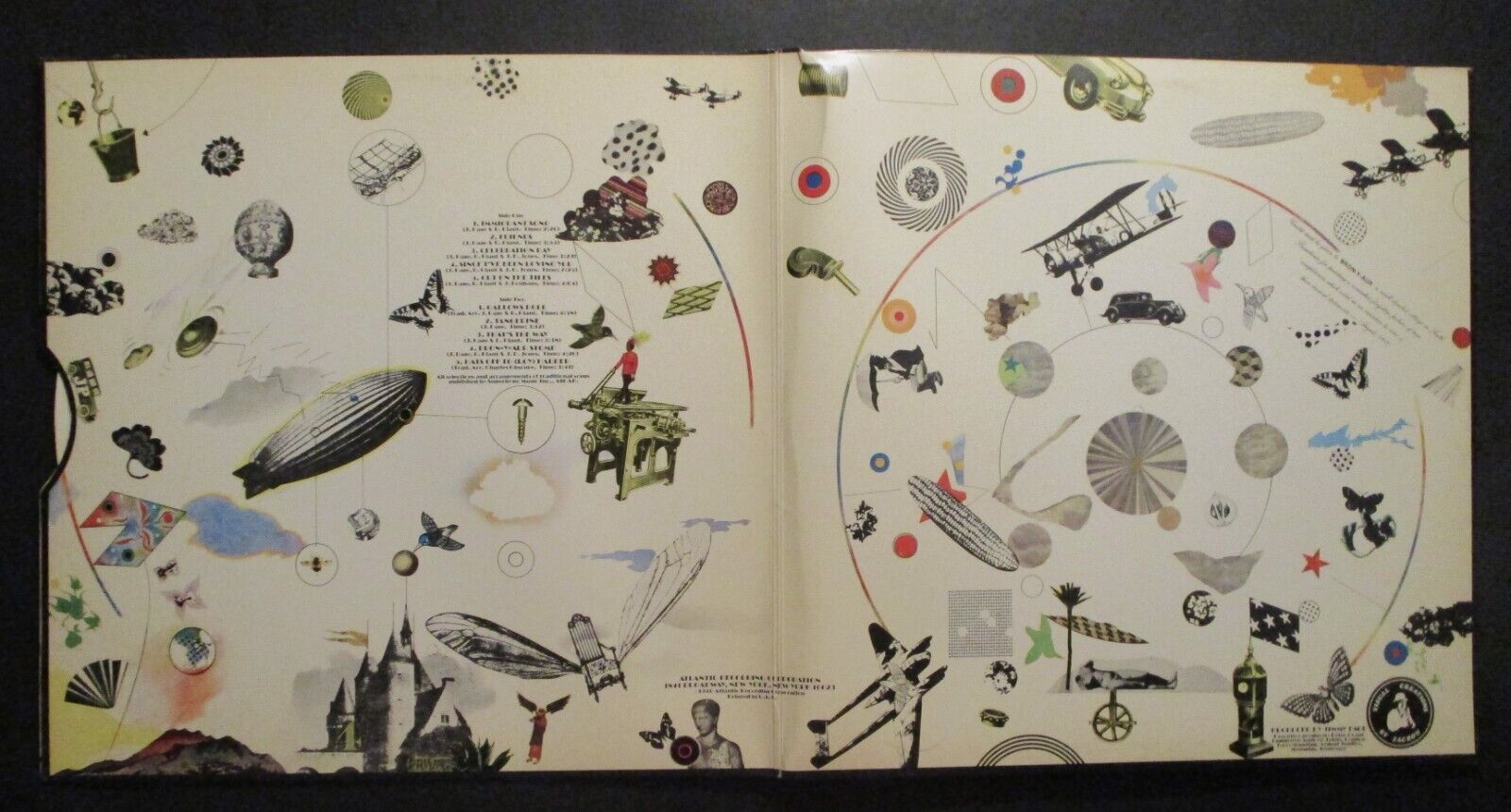
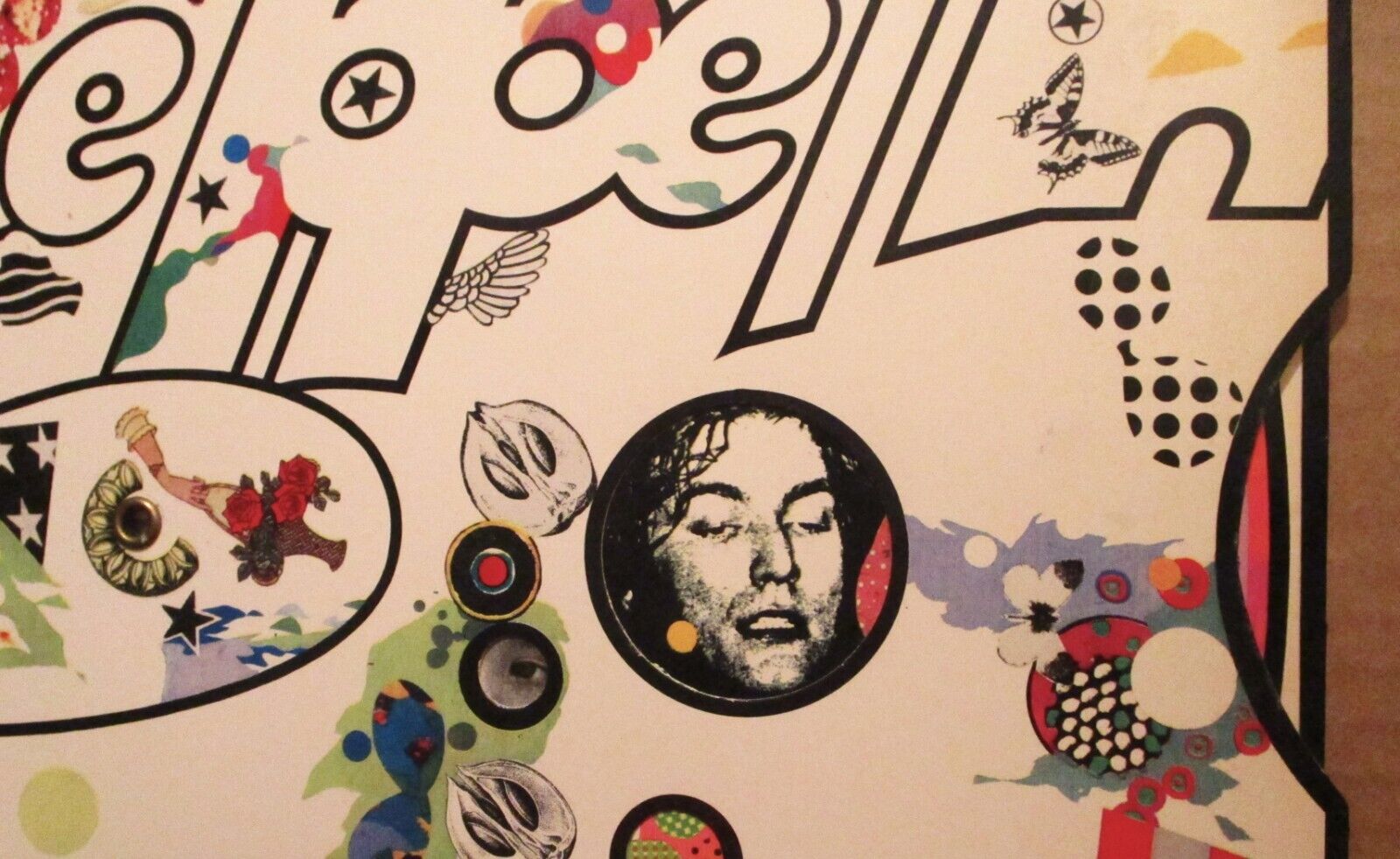
This is the original Atlantic SD-7201 1970 pressing, with the gatefold cover and a clean, fully functioning 'Wheel' inside the front cover. A classic album cover and one of the most iconic album sleeves ever made.
This album has been repressed, re-released, and remastered over the years, but as a Led Zeppelin fan and Zeppelin vinyl collector, this is the copy you want; First Pressing, original SD-7201 catalog number, gatefold, with a clean, working 'wheel' cover, and the original, period correct, Atlantic records inner sleeve.
If you like Led Zeppelin and collect their records, this is a fantastic original record to add to your collection.
~~~~~~~~~~~~~~~~~~~~~~~~~~~~~~~~~~~~~~~~~~~~~~~~~~~~~~~~~~~~ THE STORY OF THE CREATION OF 'LED ZEPPELIN III'
The first recording sessions for Led Zeppelin III took place at Olympic Studios in November 1969. It was the same studio where they recorded their debut record.
Due to the popularity of their last single, 'Whole Lotta Love', and Atlantic demanding a follow-up, Peter Grant sent the band into the studio with the intent to create a new non-album track to be released as the next stand-alone single, which would buy them more time to work on and create the new album.
They finished the excellent song “Hey, Hey What Can I Do,” a semi-acoustic country-tinged groove, with Jones playing Mandolin, but strangely didn't release it at the time, despite Atlantic and Peter Grant's push for a new single.
“Hey, Hey What Can I Do,” eventually emerged as the B-side to the American single of 'Immigrant Song' later in 1970.
During that early session, Jimmy continued to experiment with odd tunings and chord progressions, resulting in a jam he called 'Jennings Farm Blues', a reference to Plant’s farmhouse in Blakeshall. This jam would eventually get reworked, softened, and emerge into an acoustic arrangement on the album titled 'Bron-Y-Aur Stomp'.
They also worked on 'Since I’ve Been Loving You' at these early sessions. This song is a hard-edged blues that features Page’s guitar virtuosity and Robert's soaring vocal range. Classic Led Zeppelin.
That early session was abandoned due to costs and touring restrictions. A few more brief sessions took place towards the end of the year, in between touring, but not much new material was created.
Led Zeppelin went back on the road.
~~~~~ Although the foursome of Jimmy Page, Robert Plant, John Paul Jones and John Bonham had only been in existence for just a short time, the band’s meteoric rise to the top had been quick and amazing.
Since their debut tour of Scandinavia in September 1968 they had barely stopped performing. In the past 15 months, they had released two massive-selling albums and performed more than 150 live shows across the U.K., Scandinavia, Europe and North America, establishing themselves as Rock superstars and one rock’s top box-office draws.
Nobody did it with the same mix of bombast, skill, songcraft and barely restrained ferocity that Led Zeppelin demonstrated.
In March 1970, they were back in America for what would be their fifth tour in a little over a year. It was a grueling schedule. It was also during this tour that Page had his Gibson Black Beauty Les Paul Custom guitar stolen during a flight change.
At the dawn of the 1970s, Led Zeppelin were one of the biggest rock bands in the world, but they all needed a rest. After returning from their exhausting 5th American tour in April 1970, Jones and Bonham returned home, but Page and Plant had other ideas.
It was singer Robert Plant’s idea to head for the hills – the Cambrian Mountains in Wales, to be exact.
Robert Plant suggested that he and Jimmy should retreat to Bron-Yr-Aur, a small 18th-century Welsh cottage in Snowdonia, on a hilltop overlooking the Dyfi Valley, near the town of Machynlleth.
Plant had spent time there with his family on holiday when he was a boy and recalled how tranquil and peaceful it was. He felt it would be great place to temporarily escape from the hectic touring lifestyle, to rest, and commune with nature.
Their goal was to chill out, recharge their batteries, and “get back to the garden”.
The initial plan was to get away and enjoy the serenity of the Welsh countryside accompanied by roadies Clive Coulson & Sandy McGregor, their guitars, their dogs, their women, and some supplies.
Due to its remote setting, Bron-Y-Aur had no running water or electric power. They used candles for light, got their water from a stream, and they had an outside lavatory. It was also freezing cold, forcing them to sit around the open hearth fire.
The tranquility of Bron-Yr-Aur stood in idyllic contrast to the continual touring, press appearances, and endless hotel rooms of the last few months.
The laid back life in the country had quite an effect on the material that was written there and the overall tone of the album.
“When Robert and I went to Bron-Yr-Aur we weren’t thinking: ‘Let’s go to Wales and write,’” says Page. “The original plan was to just go there, hang out and appreciate the countryside.
Although it wasn’t intended to be a songwriting trip, Page couldn't leave his instruments behind, so with acoustic guitars in hand, fragments of ideas began to take shape. Jimmy had his Harmony guitar and an old Martin acoustic with him.
There were several song ideas and fragments tossed around while at Bron-Y-Aur, including 'Poor Tom', 'The Rover' and 'Friends.' Several songs were sketched out and the stay at Bron-Y-Aur was very significant in laying down the style and feel of the upcoming album.
"When we conceived those numbers at Bron- Yr-Aur we started to see what we wanted to do with this album. It was obvious it was going to work, and it just grew from there."
By the time they left the cottage, they had laid down some new tracks. Folky, acoustic material that mirrored their beautiful surroundings. Page also had three new tunes in his head: “Immigrant Song,” “Friends” and “Since I’ve Been Loving You.”
The singer and guitarist’s temporary retreat to the Welsh mountains was so influential and important to the overall sound, feel and development of this album, that they insisted on having the tiny cottage acknowledged in a small write-up inside the album's gatefold:
"Credit must be given to Bron-Y-Aur a small derelict cottage in South Snowdonia for painting a somewhat forgotten picture of true completeness which acted as an incentive to some of these music statements. – August 1970.”
It's interesting to note that on the first pressings of this album, the cottage was incorrectly spelled "Bron-Y-Aur." Later pressings corrected it to “Bron-Yr-Aur”.
Being out in the country created the inspiration and set the folky, acoustic tone for Led Zeppelin III, and several of the songs on this album were clearly Inspired by the Welsh countryside.
Page stated that, “It was the tranquility of the place that set the tone of the album.”
The Story of Plant and Page’s 'vacation' in Wales is well known in Led Zep folklore. Many fans think that Robert and Jimmy went off into the hills of Wales, and came home with a bunch of acoustic songs written for the new album, but that wasn't the case.
“That’s the Way” was the only full song to emerge from their time spent at Bron-Yr-Aur. It's the most conventional, folky, and acoustic song on Led Zeppelin III and it really captures and brings to life the whole essence and feel of Bron-Yr-Aur.
“That’s the Way” was developed during a walk around the Welsh countryside, something Page and Plant did regularly during their time at Bron-Yr-Aur.
The pair had gone for a walk in the wilderness and, on their return, sat down in a ravine where Page started to play the tune, to which Plant spontaneously improvised a verse.
Luckily they had a portable tape player and got the tune down while it was fresh and raw. Robert Plant wrote his first truly great lyrics, for 'That’s The Way'.
Amid Page’s soft, acoustic strumming in open-G tuning, Jones' mandolin, and weeping pedal steel, Plant’s poignant lyrics weave a mournful tale.
It was written at Bron-Y-Aur about the problems two people faced in a relationship, but the song's haunting ambiguity made it relatable to many things; class, racism, ecological disaster, even Zeppelin’s ambivalent feelings toward the political turmoil in America at the time.
Plant's reflective, sophisticated and secretive lyrics are what make it such an iconic song. A truly beautiful composition. It's one of most beautiful yet saddest songs they ever wrote.
Page thought very highly of Plant's lyrics and considered this song a breakthrough in their development as a fantastic songwriting team. Plant went on to write all the lyrics for this album, except for 'Tangerine', an old Yardbirds number.
The song remained without a title until Plant gave it the name "The Boy Next Door" when they first performed it at the Bath Festival in 1970. It was warmly received and became a staple part of the group's acoustic set throughout the 70's.
“That’s the Way” is one of the band’s most beloved songs and the one acoustic track that critics and fans often single out as among their very best.
~~~~~~~~~~~~~~~~~~~~~~~~~~~ After returning from Bron-Y-Aur cottage, Plant and Page had about 10 new songs worked out, at least in rough form.
Trying to stay with the rustic, rural theme of 'getting it together in the country', they were joined by Jones and Bonham at Headley Grange, a huge 18th century country house in Hampshire, far removed from the trappings of modern rock star life.
Headley Grange was a popular place for bands to record at the time. It had great 'atmosphere' and was equipped with a fantastic studio, complete with the Rolling Stones’ Mobile Studio hooked up for recording.
Headley Grange's rural atmosphere gave a relaxed feel to the sessions. It gave the band a more enjoyable environment in which to write, develop, rehearse and record, compared to the rushed, sterile, studio recordings of the first 2 albums.
They spent the summer of 1970 there, putting the new album together.
“The reason we went there was to have a live-in situation, where you’re writing and really living the music,” Page said. At Headley, the band’s collective strength, live in the studio, really came together.
To emphasize the rustic nature of the album, Zeppelin had also changed their appearance, growing beards and facial hair to Hobbit-like proportions and wearing clothes that made them look more like hippie farmers than rock gods.
'Immigrant Song' and 'Friends' were among the first songs they laid down there.
They completed 6 of the album’s 10 tracks during the Headley Grange sessions, the others being recorded at their regular studio haunt, Olympic Studios and, in mid-July, they also took advantage of the newly built Island Studios in London.
Unlike in the Acoustic setting of Bron-Y-Aur, Page was able to return to playing Electric guitar at Headley Grange. The guitars on LZ III include his 1959 Fender Telecaster and his sunburst ’59 Gibson Les Paul Standard , purchased from Joe Walsh, through a 100-watt Marshall. At Headley, the band could 'plug in' and play at full throttle.
Recording Engineer on the whole album was Andy Johns, younger brother of Glyn Johns, who had engineered the band’s first album. Jimmy Page served as overall master and producer.
The album was recorded between May and June 1970, and finished by July.
Final mixing had to wait, as the band was eager to get back on the road.
~~~~~~~~~~~~~~~~~~~~~~~~~~~~~~~~~~~~~~~~~~~~~~~~~~~~~~~~~~~~~ By the end of recording sessions at Headley Grange, Olympic and Island Studios, there were 17 songs worked up for possible inclusion on the album, of which 10 made the final cut.
Both Page and Plant have said that they tried to work up various traditional country blues and folk numbers at Headley, mostly as loose, spontaneous jams in between takes, or late at night after partying, but much of that material was never captured on tape.
There were several great songs that were finished and recorded at Headley Grange that weren't included on Led Zeppelin III. Six excellent songs made it to the short list for inclusion on LZ III, but didn't make the final cut. “Hey, Hey What Can I Do,” "Poor Tom," "Bron-Y-Aur," "Down by the Seaside," and "The Rover."
“Hey, Hey What Can I Do” was initially released as the B-Side of 'Immigrant Song' but it was later included on the remastered 'Coda' album, as well as the first Box Set.
The song "Bron-Y-Aur," not to be confused with "Bron-Y-Aur Stomp" on the album, is a beautiful Jimmy Page instrumental. "Down by the Seaside" a Neil Young-influenced track, fleshed out at the cottage, was also recorded but not used. Both of these were finally released in 1975 to fill out the 'Physical Graffiti' album.
"The Rover" was another song worked out at the Cottage as an acoustic piece, and later reworked as an electric rocker. It was eventually released on the remastered 'Physical Graffiti' album.
"Poor Tom" was another bluesy number from the LZ III sessions. It was later released on the 'Coda' album.
The 'Coda' remaster also included the Led Zeppelin III 'outtakes' "St. Tristan's Sword", "Jennings Farm Blues" and "Key to the Highway/Trouble in Mind."
Most of these great songs, left off of initial pressing of Led Zeppelin III, were pulled together and released on the 2nd disc of the remastered 'Led Zep III' version years later.
~~~~~~~~~~~~~~~~~~~~~~~~~~~~~~~~~~~~~~~~~~~~~~~~~~~~~~~~~~~~ Final song selection, mixing, and sequencing of Led Zeppelin III took place at Ardent Studios, Memphis, in August 1970, during the middle of the group's sixth American concert tour.
Jimmy Page, during a break in the tour, co-mixed Led Zep III at Ardent with Terry Manning, a studio engineer, friend, and musician that Page knew from his Yardbirds days.
The final album featured 10 songs from the pool of 17 that the band recorded.
Jimmy and Terry Manning then took the final master tapes to Mastercraft, a Memphis disc mastering facility, to create the Lacquers.
It was there that Jimmy added his final touch to the album. He asked Terry to scratch some Aleister Crowley quotes, by hand, into the matrix of the lacquers. This was a covert act by Page, adding some dark mythology to the Led Zeppelin legacy.
Jimmy wanted the inscriptions “Do What Thou Wilt” on Side A and “So Mote It Be” on Side B, added to the record.
The phrases were an homage to Aleister Crowley, a practitioner of black magic who was once called “the most evil man in England”, and whom Page was quite enamored with. The guitarist would eventually buy Crowley’s Loch Ness estate Boleskine House with the money he made from LZ III.
The phrases are from Crowley’s philosophy of Thelema: “Do what thou wilt shall be the whole of the law. Love is the law, love under will. There is no law beyond do what thou wilt.”
Pre-release demand for LZ III was huge and many different pressing plants were recruited to press the album when it was first released. Not all pressing plants received stampers with the quotes on them, so there are many 'First Pressing' variants. Some have full quotes, some have it only on one side, some have no quotes at all.
This First Pressing copy does NOT have the quotes in the deadwax.
~~~ Led Zeppelin III was one of the most anticipated albums of 1970, and advance orders in the US alone were over a million. The album was certified Gold before it was even released.
It was over a year since the classic 'Led Zeppelin II' was released, and the band was a major ticket draw, performing outstanding shows across America, so Atlantic was eager to get new product out, especially since the 'Whole Lotta Love' single was hot and selling like crazy.
It was perfect timing for a new album and Atlantic was pushing for it's release, but there were significant delays. The laid-back recording process, hectic touring schedules, the final mixing, and a two-month delay in getting the complex album jacket made, all pushed the album back further and further.
Led Zeppelin III was finally released in America in October 1970, and several weeks later in the UK and Europe.
~~~~~~~~~~~~~~~~~~~~~~~~~~~~~~~~~~~~~~~~~~~~~ When the the mighty Led Zeppelin finally released this album, in October of 1970, they committed an act that threatened to isolate fans and critics alike. There were strong mixed reactions to the album. Many critics and fans were confused and could not quite believe their ears.
At the time, some thought Led Zeppelin was committing commercial suicide by releasing an album that was a significant retreat from the crunching hard rock sound that had made them international superstars.
'Led Zeppelin III' was surprisingly different from their previous album, 'Led Zeppelin II' and presented a very different image of the band. It marked a change in focus for the band, showing their progression from straight forward, thundering, hard rock to a more exotic, rootsy, folk and acoustic sound.
Jimmy Page integrated folk and alternate tunings into the mix, changing people's perceptions of what rock music could be at the time.
Led Zeppelin were certainly exploring a folkier sound on this record, but they weren't crazy enough to completely abandon hard rock.
While the album has its share of quiet moments, it also has plenty of full-on heavy rock numbers, starting with the thundering opener, “Immigrant Song,” and continuing with “Celebration Day,” and “Out On the Tiles.”
~~~~~~~~~~~~~~~~~~~~~~~~~ 'Led Zeppelin III' surprised and confounded fans and critics. Although the band's expanding musical boundaries were welcomed and appreciated by some, others accused the band of jumping on the Crosby, Stills, & Nash, Joni Mitchell, and Neil Young acoustic soft-rock bandwagon that was sweeping America at the time.
Jimmy Page disputed that, calling those claims “pathetic”, noting that acoustic guitars were all over the first two albums and arguing that they were at the core of everything that Led Zeppelin had done up to that point.
Page pointed out that “There were three acoustic songs on the first album and two on the second,” songs like "Babe I'm Gonna Leave You" and rockers like “Ramble On” which had strummed acoustic guitar verses.
Page explained that the acoustic songs were designed to create contrast and dynamics, both on the album and in live performance. The harder songs “wouldn’t have as much impact without the softer ones”.
Fans and critics were still dazed and confused. Many felt that the band's emphasis on folk and acoustic sounds was a step too far.
Page’s subsequent response to the criticism was simple. The reviews so incensed the guitarist that he refused to grant any press interviews for the next 18 months after the album’s release. It also led to their next album being released with no information on it at all, not even a band name. He just let the music speak for itself.
~~~~~~~~~~~~~~~~~~~~~~~~~~~~~~~~~~~~~~~ 'Led Zeppelin III' is commonly viewed as the band’s “acoustic album,” but it is also so much more than that, taking the rock and blues elements present on the band’s first two albums and synthesizing them into something completely new, different, and exciting.
It was a truly daring leap, incorporating folk, rock and world music elements into an album, but still managing to maintain the ‘Led Zeppelin sound.'
~~~~~~~~~~~~~~~~~~~~~~~~~~~~~~~~~~~~~~~~~ The acoustic-based songs on the album, such as the folky, pastoral “That’s the Way”, the traditional reworking of “Gallows Pole” and the Eastern-tinged, alternate-tuned “Friends” all showed that Led Zeppelin was capable of writing great music and playing it in different styles.
Page claimed that “There was no way the third album was going to be like the first. If there was a Zeppelin philosophy, it was always: ‘Ever onwards'. Let’s see what we can do next. We were playing in the spirit of the blues, but trying to take it into new dimensions"
LZ III showed that Led Zeppelin were more than just a conventional rock band, and that they could branch out into wider musical territory. Robert Plant said "now that we’ve done [this album] the sky’s the limit. It shows we can change. It means there are endless possibilities for us to go in..."
Using the same folk-influenced style, Led Zeppelin went on to write some of the band’s most beloved anthems, including 'Stairway To Heaven', 'The Battle Of Evermore', 'Going To California' and 'Four Sticks.'
'Stairway To Heaven' or 'Over The Hills And Far Away' would never have existed without the stylistic changes Zeppelin achieved on LZ III.
The record was a crucial turning point in Led Zeppelin's career and is one of the landmark albums of the era. 'Led Zeppelin III' was where the band transcended from being Jimmy Page's backing band to becoming a unique rock band that worked as a tight unit, with each member adding their own unique parts, to create something more powerful than the individual members.
This album is like a never-ending treasure chest. The music takes you on a ride that reflects eastern music, folk music, rock music and the Welsh countryside which inspired it.
~~~~~~~~~~~~~~~~~~~~~~~~~~~~~~ This album not only changed Led Zeppelin's studio catalog, but also transformed their live shows. When they were first starting to record this album, the band boldly introduced an acoustic set into their live shows.
In June 1970, at the Bath Festival show, They opened with the brand new 'Immigrant Song', then, later in the set, Jimmy Page exchanged his Gibson Les Paul for a Martin D28 acoustic guitar and John Paul Jones switched from bass to mandolin.
Robert Plant joked with the audience stating “This is a medley of Lonnie Donegan tunes,” before they performed acoustically onstage for the first time.
The Bath gig represented a new era in Zeppelin’s evolution. From that show forward, Led Zeppelin incorporated an acoustic set into the middle of their shows. Jimmy said that the acoustic numbers brought “light and shade” into their shows.
“Bath was a turning point in recognition for us,” Page said. “There have been one or two magical gigs and Bath was one of them.”
'Led Zeppelin III' also has that element of “light and shade.” It shows them taking sounds and ideas present in rock, blues, folk and traditional music and twisting them into something entirely new. The album has an amazing blend of songs that shows the band's mix of contrasting styles: electric vs. acoustic, aggressive vs. exotic, light and shade.
"It’s putting all these elements together that makes the music have depth,” said Jimmy Page.
~~~~~~~~~~~~~ In retrospect, LZ III prevented the band from being stereotyped as just another heavy, hard-rocking band and being lost to history. It opened up their sound and gave them an opportunity to take their music to new heights.
Although many critics and fans were initially confused, 'Led Zeppelin III 'has since been acknowledged as representing an important milestone in the band's history and a turning point in their music.
This album is where all four group members contributed their own compositions, ideas, and musical expertise. Plant wrote all the lyrics and his songwriting dynamic with Page changed significantly. Page was still the leader of the band, but his strict 'control' over the music was more evenly distributed, more democratic.
~~~~~~~~~~~~~~~ Indie 'Americana' style albums are all the rage in music right now and 'Led Zeppelin III' would fit right into today's modern 'Indie' sound and style. Think about it: Dudes with beards, wearing thrift-shop clothing, playing edgy, acoustic tinged, folky music, with strong World and Eastern influences, all backed with a heavy rock foundation. It sounds like many of today's bands.
This album was a British version of that 'Indie' style, way back in 1970.
In retrospect, this album has become a classic, containing some of the greatest Zeppelin songs ever recorded: 'Since I’ve Been Loving you', 'Gallows Pole', 'Immigrant song' and 'That’s The Way' - all fantastic tunes and pure genius.
Today, Led Zeppelin III is generally praised and acknowledged as representing an important milestone in the band's history, and a turning point in their career.
~~~~~~~~~~~~~~~~~~~~~~~~~~~~~~~~~~~~~~~~~~~~~~~~~~~~~~~~~~~~ JIMMY PAGE'S "INFLUENCES" BEHIND 'LED ZEPPELIN III'
Throughout Page's years as London’s top session guitarist, he soaked up everything that he heard and was involved with. Everything from Chicago blues to contemporary Pop artists.
Page "I was maturing as a composer and player, and there were many kinds of music that I found stimulating, and with (Led Zeppelin) I had the chance to be really adventurous.”
Page had always been a fan of Scottish folk guitarist Bert Jansch, UK folk guitarist, Davey Graham, who pioneered altered tuning styles, folk guitarist John Renbourne, John Fahey, and English folkie Roy Harper, who became a close friend, resulting in the closing track on this album being dedicated to him.
“They were coming from a much more traditional place, and I was coming from so many different areas...I liked that we could go in that direction and put our own spin on it, but at the same time, I don’t ever think we lost sight of the fact that we were a rock band.”
Rock music leaning towards a more Folk tradition was not unusual in 1970, and Folk-styled rock music certainly wasn't new to Jimmy Page or Robert Plant, it was only 'new' to their fans, especially the American ones.
American fans think of Led Zeppelin as a heavy rock band, but in reality, folk, acoustic and unplugged elements have been present in the band’s sound since the start of their existence. The folky-blues song “Babe, I’m Gonna Leave You” was among the first songs that Page played for Robert Plant when they first met, in mid-1968, when they were discussing starting a band. Led Zeppelin recorded their version of the song on their 1969 debut.
That first album also included Page's acoustic “Black Mountain Side” which he 'borrowed' from British fingerstylist Bert Jansch.
Led Zeppelin III is the so-called "Acoustic" album. It provided Jimmy Page, and the rest of the band, a platform to experiment with Folk rock.
Led Zep Bassist Jones recalled: "What happened with Zeppelin was very organic. You find yourself with a bit more time, and you sit down with some acoustic instruments, and you start exploring.”
For this album, Led Zeppelin was playing in the spirit of English folk and classic blues but trying to take it and shape it into a whole new direction. While it often sounds like music from the past, it’s a past unlike anything we’ve heard before.
1970's LZ III perfectly encapsulates all of the band's influences up to that point, and forms the essence of who the band really were as musical artists. To me, LZ III is the album where the band stopped copying the blues and incorporated it into their very being, reinventing it in their own image and style.
When it came to the Acoustic guitar parts for this album, Page turned to his trusty Harmony Sovereign H1260 that he had owned and played since his Yardbirds days.
~~~~~~~~~~~~~~~~~~~~~~~~~~~~~~~~~~~~~~~~~~~~~~~~~~~~~~~~~~~~~~ A COMMENT ON A FEW OF THE SONGS ON 'LED ZEPPELIN III'
Led Zeppelin III kicks off with “Immigrant Song”, driven by a thundering Jimmy Page riff and Bonham’s propulsive beat. With that hypnotic riff and Robert’s bloodcurdling scream, it's pure Led Zeppelin, and a perfect song to open the album.
"Immigrant Song" is one of the heaviest and most exciting tracks in the band’s entire catalogue. The song features a rolling, pile-driving guitar riff, John Paul Jones's thunderous bass, and Plant's wailing vocals. Pure, vintage Led Zeppelin.
The song has a fierce, powerful 'Viking conquest' feel to it, reflecting the song's Icelandic origins.
In June, 1970, the band took some time off from the studio and ventured to Iceland to play a show in Reykjavik. It was their first gig in nearly 3 months.
Iceland’s endless days, with 24-hour sunlight, made sleeping difficult and Plant's imagination soon ran wild as he thought about the Viking invasions of England, powerful sailing ships, and strong Viking warriors.
He put those images together and came up with the lyrics for "Immigrant Song." When the band returned to England, the song was premiered as the opening number of Led Zeppelin’s 1970 appearance at the Bath Festival of Blues.
The song was a powerful statement and continued to be the band's opening number in concert for the next several years.
~~ After the thunderous opening track, the album moves on to 'Friends', revealing the album's more acoustic pastoral sound.
It's a perfect example of how 'acoustic' material, in the hands of Zeppelin, doesn't have to mean soft, twee, mellow and pretty. It's classic 70's hard rock, but with acoustic flourishes.
~~~~~~~~~~~~~~~~~~~~~~~~~~~~~~~~~~~~~~~~~~~~~~~~~~~~~~~~~~~~~~ "Since I've Been Loving You," one of Led Zeppelin's best original blues compositions, was one of the first songs to be written for the album, in late 1969.
It's a fantastic nod to the amazing blues songs that made their debut album so powerful. It's a classic, signature, Zeppelin blues song and one of my personal favorites.
It has a nice, bluesy, laid-back intro, builds power and energy as it develops, and has a furious, primal climax. Throughout the song, Plant's emotional vocals interact perfectly with Page's powerful guitar riffs.
"Since I've Been Loving You" contains one of Jimmy's best guitar solos but it's Robert's voice; smooth, emotional, fragile and expressive, that makes this song so powerful. Possibly the greatest performance by Robert Plant up to that point.
The song is pure Led Zeppelin and a perfect example of each member contributing their best, making the end result much more powerful that each of it's individual parts.
Plant’s powerful, emotional vocals, Page’s amazing frenzied guitar solo and fret work, John Paul Jones' intense glowing organ and bass pedal work, and Bonham’s unique thunderous drums all create a song that is 100% Led Zeppelin.
The track is notable for Bonham’s 'squeaky' bass drum pedal that can be heard during the intro, if you listen closely. The track is perfect as it is, and they wouldn't dare go back and clean it up or re-do it. It's an amazing, intense track, squeaky pedal and all.
The song was written early on during recording sessions for the album and was previewed during the January 1970 UK shows, some ten months before the album’s release. It was so good that it became a live performance staple for the band throughout the rest of their career.
~~~~~~~~~~~~~~~~~~~~~~~~~~~~~~~~~~~~~~~~~~~~~~~~~~~~~~~~~~~~~~ "Out on the Tiles" is drummer John 'Bonzo' Bonham's contribution to this album. His powerful, tight-but-loose, drumming holds the whole thing together.
The title – British slang for a night out drinking – came from Bonham who was often singing and reciting little 'drinking songs' in the studio.
A great example of Bonham's 'Drinking Ditties' can be heard at the beginning of 'The Ocean' on LZ IV, where he slurs "We've done four already, but now we're steady...", reportedly about Mandrax, the British equivalent of Quaaludes.
The title also refers to drinking so much that you pass out in the bathroom, finding yourself 'Out on the tiles'. Bonham was no stranger to that situation.
The song started out as an instrumental backing track that was listed as "Bathroom Sound" on the original master tape boxes. Bonham came up with the rhythm and riffs that run through the track, but he felt like the early takes made it sound like his drums were recorded off in the bathroom.
The original 'bathroom' version of the song was released on the Led Zep III remaster.
'Out on the Tiles' is a fantastic Led Zeppelin song that doesn't get much love or appreciation. Very underrated.
~~~~~~~~~~~~~~~~~~~~~~~~~~~~~~~~~~~~~~~~~~~~~~~~~~~~~~~~~~~~~~~ "Gallows Pole", an updated arrangement of a traditional, centuries-old, folk song, opens side 2 of this great album.
Page has said that he fell in love with the song after discovering it “on an old Folkways album". The version Page heard was by white American folksinger Fred Gerlach, but its most famous version is the 1939 version by 12-string bluesman Leadbelly.
Led Zeppelin do a stunning interpretation of the timeless and terrifying traditional tune.
According to Jimmy Page, the song emerged organically and suddenly, after he grabbed Jones’ Long Neck banjo in the studio, an instrument he never played before, and just figured it out.
Zeppelin’s rendition displays Page and Jones’ expert interpretation, with thick layering of both acoustic and electric instrumentation.
Page played banjo, plus a variety of 6 & 12 string acoustic and electric guitars. Jones played mandolin as well as electric bass. Bonham's drums give the song amazing power, turning the simple acoustic folk tune into a pounding rocker by the end of the song.
~~~~~~~~~~~~~~~~~~~~~~~~~~~~~~~~~~~~~~~~~~~~~~~~~~~~~~~~~~~~~~~ There are many other great songs on this album, but I've 'rambled on' for too long already.
~~~~~~~~~~~~~~~~~~~~~~~~~~~~~~~~~~~~~~~~~~~~~~~~~~~~~~~~~~~ THE AMAZING JACKET & COVER ART FOR 'LED ZEPPELIN III'
The album jacket for this album is absolutely amazing. One of the most iconic album covers of all time. For this release, Page reached out to his old friend, Richard Drew, an artist who went by the name 'Zacron'.
Jimmy Page had known Drew from Kings College of Art, where they had met years earlier when he was in the Yardbirds. They hung out, discussed art and music, and decorated their guitars with experimental materials and cool designs.
Zacron subsequently graduated from the Royal Academy of Arts and became a lecturer at Leeds University. They got reacquainted when Led Zeppelin played a show at Leeds and Page asked him to design the sleeve for the new album.
In early 1970, Zacron designed the band's new jacket which featured an elaborate gatefold design with a built in rotating cardboard wheel, or volvelle, inside, enabling the purchaser to spin thru various odd images and artwork as they appear in die-cut holes punched in the sleeve.
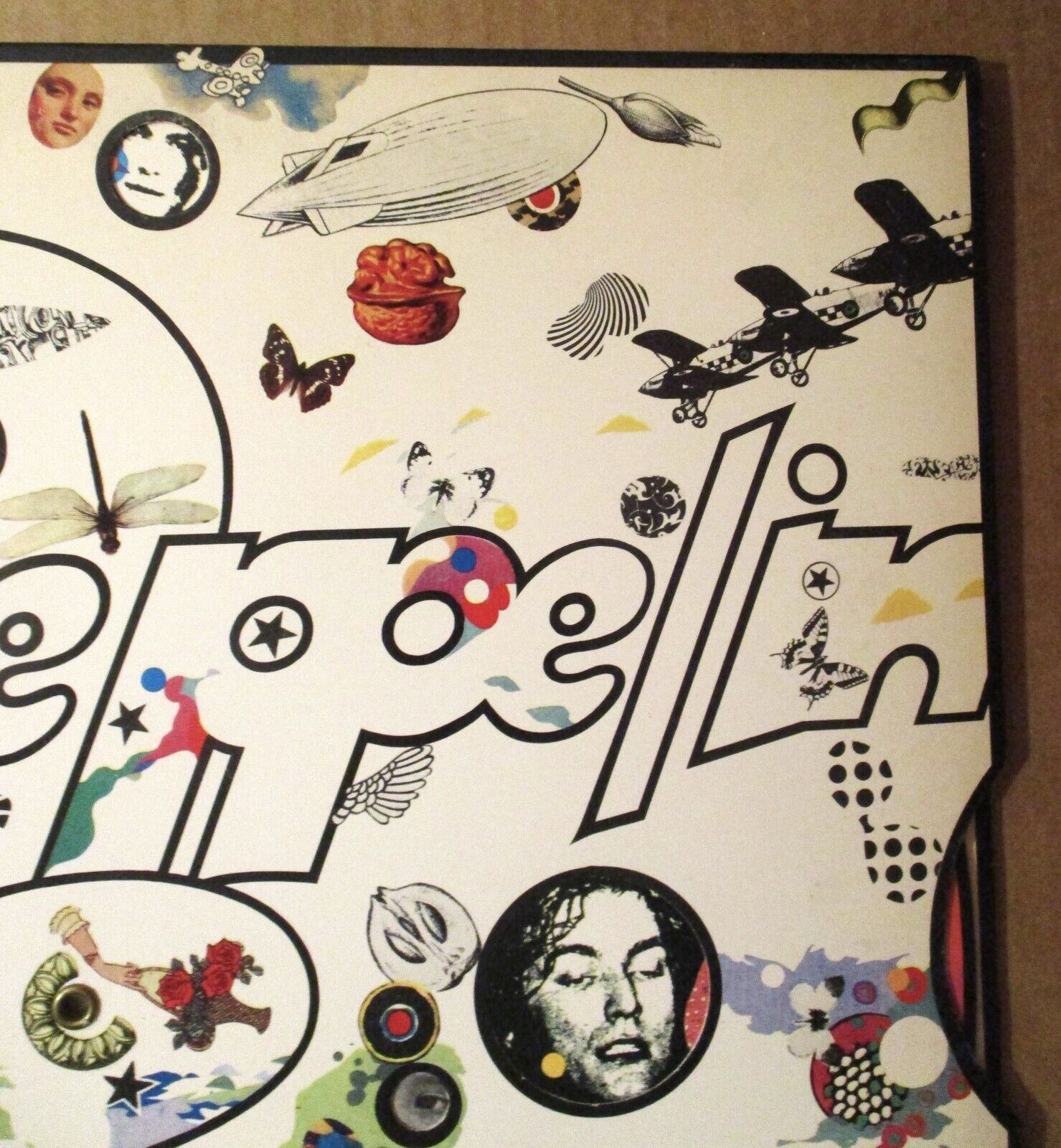
The white sleeve was covered with other odd images of Page, Plant, Jones and Bonham as well as airships, butterflies, and planes, all with a predominant connecting theme of 'flight.'
Xacron and his fellow lecturer Martin Salisbury also took the iconic photos of the band members that appear as a composite shot on the back cover.
At the time, Zacron said 'An album cover is not sound packaging, but an area of visual communication, an opportunity to put visual art and audio art together in a joint arena.'
The Led Zeppelin III jacket has gone on to become one of the most iconic album cover designs of all time.
~~~~~~~~~~~~~~~~~~~~~~~~~~~~~~~~~~~~~~~~~~~~~~~~~~~~~~ CONDITION: I tried to show good hi-resolution photos of the cover, labels and vinyl in my pictures.
I purchased this copy back in the early 70's, 50 years ago, and have taken great care of it since.
VINYL: The vinyl looks excellent. Clean and bright. Maybe a tiny hairline or two, but No serious scuffs, palpable scratches, or dings. It looks fantastic and I'm sure you'll be very happy with it.
The Deadwax has the stamped catalog number
This early SD-7201 pressing does not have the Aleister Crowley quotes in the deadwax. Not all early copies did. Some, but not all, early pressings have "Do What Thou Wilt" etched into the dead wax on Side One, and "So Mote Be It" etched in the dead wax on Side Two. It all depends on where it was pressed and what stampers were used. This pressing does NOT have the Alistair Crowley quotes in the deadwax
The Matrix numbers just have the catalog number and the early 1S and 2S marks. See the full Matrix above.
I tried to show some close-up pictures of the vinyl to show how good it looks. I'm sure you'll be happy with it.
I haven't messed with it or cleaned it, other than my trusty 'DiscWasher' brush, in 50 years, since Nixon was in office. It could use a good deep cleaning to make it even bettter looking and better sounding than it already is.
LABELS: This is pressed with the 'classic' 70's green and orange Atlantic labels, with the early, original, '1841 Broadway' address.
Unlike most Atlantic labels, this Indianapolis pressing does not have any Suffix with the catalog number on the label signifying where it was pressed. The only pressing plant ID is the 'I' for Indianapolis in the matrix.
The labels are clean and bright. No marks or damage. The spindle holes are still sharp and clean, suggesting minimal playing and my careful handling over the years.
JACKET: As you can see from my pictures, this still looks very nice for a 50 year old OG copy. This jacket is in fantastic condition. This is the original gatefold jacket, which is very clean on the inside.
The 'Wheel' works fine and is also very clean. These wheels are often torn & worn, and don't spin freely, but this one is terrific. Often, there is significant dirt, nicks and wear around the 'notch' where you turn the wheel, but this one is clean and sharp.
This thick, mostly white jacket is notorious for showing ringwear, dirt, scuffs and damage, but this copy is still quite nice. Some very mild early ringwear on the top rear cover, but the front is very nice.
The edges and corners are sharp, the spine is straight, and the cover art is still bright and sharp. A beautiful, clean, bright, working jacket. A nice survivor.
Overall, I'll call the whole record a very strong VG++
This record has been sleeved and stored properly for decades, and is still quite nice for an original pressing. This copy is all original, and a real gem. I'm sure you'll love it.
~~~~~~~~~~~~ ** NOTE: I'm selling this rare 'Collector' record "AS IS" and "NO RETURN". It's rare and as described and I'm sure you'll be very happy with it.
~~~~~~~~~~~~~~~ I’m recently retired and downsizing and letting go some gems and rarities from nearly 45 years of vinyl record collecting. Check out the many other fantastic 45s and 33s coming soon to my page!
All records have been carefully evaluated and graded by me. I visually inspect all records under bright light, personally gently clean them with a soft cloth and then, if unsure, play them on a modern high-end turntable to get a true picture of condition. Please look at all the high-resolution pictures I added. They are all my own and are of the actual record being sold. The pictures are part of the description and can show small details, label variations, and condition better than I can put into words.
My grading is fair and honest. I have had over 3,400 happy and satisfied EBay customers over the years, with 100% positive feedback, and I have been buying/selling on EBay for well over 25 years, so please bid with confidence!
I'm a 0ne-man operation, this is a hobby, not my job. I do this for fun. I do this because I love music, love collecting vinyl and want others to share in that same experience. I take my time listening, researching, grading, listing and packaging. I will NOT sell any record that I personally would not want in my collection.
As you well know, packing and shipping rare records requires special care and attention, therefore, shipping cost within the lower 48 states is $5.00 on this item. If you would like insurance, or anything faster than Media/Economy Mail, please let me know and I can arrange it for you. I’ll work with you to make sure you’re happy!
I will gladly combine multiple records, or other items on my page, and make the shipping much less for you. I don’t inflate the shipping costs; they are what they are. I strive to keep them as low as possible. See my feedback for comments on my quality packing and shipping.
All items are packaged with sturdy cardboard mailers and appropriate padding. I take pride in my packaging and shipping and package all my records as if I were sending them to myself. I refuse to use cheap flimsy packaging material when sending my vinyl. I treat them as if they were my own and mail them the same way.
All orders are processed and shipped within 2 business days of receipt. We package and ship our vinyl records with the greatest care, using proper packaging to ensure that your rare and collectible vinyl records arrive in pristine condition.
Payments can be made by any of the multiple options that Ebay offers.
I will be happy to exchange feedback with anyone I complete a transaction with.
THANK YOU for looking and reading if you got this far. -- JOHN
price rating
![After the Fire - Der Kommissar [New Vinyl LP]](https://www.popsike.mobi/php/thumbnail.php?url=https://www.popsike.pics/pix/20220411/134083154629.jpg)