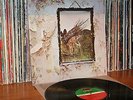
LED ZEPPELIN - LED ZEPELIN IV, ABSOLUTE MINT, UNBEATABLE AUDIO
£
21
$
28


£ 21
Sold For
May 17, 2012
Sold Date
May 7, 2012
Start Date
£ 15
Start price
2
Number Of Bids
Great Britain
Country Of Seller
eBay
Auctioned at
Favourite Auctions
To save auctions to your favourites, please login
If you don't have an account, please register
Description
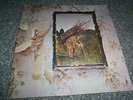
YOU ARE BIDDING FOR led ZEPPELIN’S FOURTH STUDIO ALBUM WITH. MAKE NO MISTAKE, THIS ALBUM IS IN ABSOLUTE PRISTINE CONDITION THROUGHOUT AND PLAYS LIKE A DREAM. I DOUBT YOU WILL FIND SUCH A PERFECT SPECIMEN FOR ITS AGE (41 YEARS OLD).
VINYL THE PLAYING SURFACE GRADES VISUALLY AS NEAR MINT EXCEPT FOR A CARELESS SUPERFICIAL, RADIAL SCRATCH THAT COVERS ABOUT 50% OF BOTH TRACKS 1 & 2 ON SIDE 1. TRY AS I MIGHT, I CANNOT HEAR THIS AT ALL WHICH IS TESTAMENT TO THE FACT IT IS CERTAINLY NOT AS BAD AS IT LOOKS. ALSO, BY SIGHT AND ROTATION ON AN AUDIO TURNTABLE, THE VINYL SHOWS NO VISIBLE SIGNS OF WARPING. AUDIBLY THE ALBUM IS POSSIBLY THE MOST PERFECT SPECIMEN I HAVE COME ACCROSS. TRY AS I MIGHT WITH FULL VOLUME, I CANNOT MAKE OUT ANY SURFACE NOISE AT ALL AND THE SOUND IS CRISP, CLEAR, VIBRANT AND DYNAMIC. NOT EVEN THE SCRATCH CAN BE HEARD. I WOULD SAY NEAR MINT. LABELS MINT. THE LABELS ARE CLEAN, UNFADED AND DISPLAY MINIMAL PLAYS WITH JUST A HANDFUL OF FAINT SPINDLE LINES. PERFECTION. SLEEVES THE OUTER COVER IS MINT INSIDE AND OUT. ABSOLUTELY AS NEW WITH NO FADING, DISCOLOURING, INDENTS OR SCUFFING AND THE SURFACE IS STILL AS LUSTROUS AS THE DAY IT WAS MADE. THE INNER SLEEVE IS MINT AND NEVER USED AS THE VINYL HAS SENSIBLY BEEN HOUSED IN A SEPERATE COVER. PACKAGING IT IS MY DUTY AS A CONSCIENTIOUS SELLER, TO PROVIDE THE BEST POSSIBLE PACKAGING AVAILABLE IN ORDER TO PROETCT YOUR VALUABLE INVESTMENT ITEM. AS SUCH, THE ITEM WILL BE ENCASED IN A CRUCIFORM, CARD MAILER WITH CARD STIFFENER INSERTS TO FURTHER PROTECT FROM DAMAGE. A FURTHER STIFFENER WILL BE INSERTED INTO THE OUTER SLEEVE (IN PLACE OF THE VINYL) TO PREVENT CRUSHING OF THE SPINE. THE VINYL WILL BE HOUSED IN A SEPERATE WHITE INNER TO PRESERVE THE ORIGINAL INNER AND PROTECT FROM KNIFING. THE PACKAGE WILL BE CLEARLY MARKED AND DISPLAY FRAGILE STICKERS AND A RETURN ADDRESS IN CASE OF LOSS. REPRESENTATION AS I AM OFFERING GUARANTEED QUALITY WITH A MONEY BACK GUARANTEE, SHOULD THE ITEM NOT BE AS DESCRIBED, I ENDEAVOUR TO REPRESENT THE ITEM AS ACCURATELY AS POSSIBLE SO AS TO PRESERVE MY REPUTATION AND MY 100% FEEDBACK RATING. aS SUCH, I ENDEAVOUR TO DESCRIBE THE ITEM 100% ACCURATELY BOTH VERBALLY AND VISUALLY. THIS BEEN THE REASON I HAVE INVESTED IN A STATE OF THE ART DIGITAL SLR CAMERA (18 MEGAPIXEL) AND STUDIO LIGHTING. THAT SAID, IF YOU REQUIRE ANY FURTHER INFORMATION OR IMAGES WHILST THE AUCTION IS STILL IN PROGRESS, EMAIL ME AND I WILL RESPOND AS SOON AS POSSIBLE AND AS HONESTLY AS POSSIBLE. POSTAGE COSTS 2ND CLASS RECORDED - £3.50 WITH INSURANCE UP TO £50. EUROPE - £6.00 rEST OF WORLD - £10.00 ALBUM NOTES The fourth album by the English rock band Led Zeppelin was released on 8 November 1971. No title is printed on the album, so it is usually referred to as Led Zeppelin IV, following the naming standard used by the band's first three studio albums. The album has alternatively been referred to as: , Four Symbols, The Fourth Album (those two titles each having been used in the Atlantic catalogue), Untitled, The Runes, The Hermit, and ZoSo, the latter of which is derived from the symbol used by Jimmy Page for the album sleeve. ZoSo has subsequently been used as moniker for Jimmy Page. Upon its release, Led Zeppelin IV was a commercial and critical success. The album is one of the best-selling albums worldwide at 32 million units. It has shipped over 23 million units in the United States alone, making it the third-best-selling album ever in the US. In 2003, the album was ranked 66th on Rolling Stone magazine's list of "The 500 Greatest Albums of All Time". Recording sessions The album was initially recorded at Island Records's newly opened Basing Street Studios, London, at the same time as Jethro Tull's Aqualung in December 1970. Upon the suggestion of Fleetwood Mac, the band then moved to Headley Grange, a remote Victorian house in East Hampshire, England, to conduct additional recordings. Here they used the Rolling Stones Mobile Studio. Jimmy Page later recalled: "We needed the sort of facilities where we could have a cup of tea and wander around the garden and go in and do what we had to do. "This relaxed, atmospheric environment at Headley Grange also provided other advantages for the band. As is explained by Dave Lewis, "By moving into Headley Grange for the whole period of recording, many of the tracks [on the album] were made up on the spot and committed to tape almost there and then." Once the basic tracks had been recorded, the band later added overdubs at Island Studios, and then took the completed master tapes to Sunset Sound in Los Angeles for mixing. However, the mix ultimately proved to be less than satisfactory, creating an unwanted delay in the album's release. Further mixing had to be undertaken in London, pushing the final release date back by some months. Three other songs from the sessions, "Down by the Seaside", "Night Flight" and "Boogie with Stu" (featuring Rolling Stones cofounder/collaborator Ian Stewart on piano), did not appear on the album, but were included four years later on the double album Physical Graffiti. Album title After the lukewarm, if not confused and sometimes dismissive, critical reaction Led Zeppelin III had received in late 1970, Page decided that the next Led Zeppelin album would not have a title, but would instead feature four hand-drawn symbols on the inner sleeve and record label, each one chosen by the band member it represents. "We decided that on the fourth album, we would deliberately play down the group name, and there wouldn't be any information whatsoever on the outer jacket", Page explained. "Names, titles and things like that do not mean a thing." Page has also stated that the decision to release the album without any written information on the album sleeve was contrary to strong advice given to him by a press agent, who said that after a year's absence from both records and touring, the move would be akin to "professional suicide". In his words: "We just happened to have a lot of faith in what we were doing. " In an interview he gave to The Times in 2010, he elaborated: It wasn’t easy. The record company were sort of insisting that the name go on it. There were eyes looking towards heaven if you like. It was hinted it was professional suicide to go out with an album with no title. The reality of it was that we’d had so many dour reviews to our albums along the way. At the time each came out it was difficult sometimes for the reviewers to come to terms with what was on there, without an immediate point of reference to the previous album. But the ethic of the band was very much summing up where we were collectively at that point in time. An untitled album struck me as the best answer to all the critics — because we knew the way that the music was being received both by sales and attendance at concerts. Owing to the lack of an official title, Atlantic initially distributed graphics of the symbols in many sizes to the press for inclusion in charts and articles. The album was one of the first to be produced without conventional identification, and this communicated an anti-commercial stance that was controversial at the time (especially among certain executives at Atlantic Records). Releasing the album without an official title has made it difficult to consistently identify. While most commonly called Led Zeppelin IV, Atlantic Records catalogues have used the names Four Symbols and The Fourth Album. It has also been referred to as ZoSo (which, as noted under, Page's symbol appears to spell), Untitled and Runes. Page frequently refers to the album in interviews as "the fourth album" and "Led Zeppelin IV", and Plant thinks of it as "the fourth album, that's it". Not only does the album have no title, but there is no writing anywhere on the front or back cover, or even a catalogue number on the spine (at least on the original LP release). The four symbols The idea for each member of the band to choose a personal emblem for the cover was Page's. In an interview he gave in 1977, he recalled: After all this crap that we'd had with the critics, I put it to everybody else that it'd be a good idea to put out something totally anonymous. At first I wanted just one symbol on it, but then it was decided that since it was our fourth album and there were four of us, we could each choose our own symbol. I designed mine and everyone else had their own reasons for using the symbols that they used. Page stated that he designed his own symbol and has never publicly disclosed any reasoning behind it. However, it has been argued that his symbol appeared as early as 1557 to represent Saturn. The symbol is sometimes referred to as "ZoSo", though Page has explained that it was not in fact intended to be a word at all. Bassist John Paul Jones' symbol, which he chose from Rudolf Koch's Book of Signs, is a single circle intersecting three vesica pisces (a triquetra). It is intended to symbolise a person who possesses both confidence and competence. Drummer John Bonham's symbol, the three interlocking rings, was picked by the drummer from the same book. It represents the triad of mother, father and child. but also happens -- inverted -- to be the logo for Ballantine beer. Singer Robert Plant's symbol of a feather within a circle was his own design, being based on the sign of the supposed Mu civilisation. There is also a fifth, smaller symbol chosen by guest vocalist Sandy Denny representing her contribution to the track "The Battle of Evermore"; it appears in the credits list on the inner sleeve of the LP, serving as an asterisk and is shaped like three triangles touching at their points. During Led Zeppelin's tour of the United Kingdom in winter 1971, which took place shortly following the release of the album, the band visually projected the four symbols on their stage equipment. Page's symbol was put onto one of his Marshall amplifiers, Bonham's three interlinked circles adorned the outer face of his bass drum, Jones had his symbol stencilled onto material which was draped across his Fender Rhodes keyboard, and Plant's feather symbol was painted onto a side speaker PA cabinet. Only Page's and Bonham's symbols were retained for subsequent Led Zeppelin concert tours. Album cover and inside sleeve The 19th century rustic oil painting on the front of the album was purchased from an antique shop in Reading, Berkshire by Plant. The painting was then juxtaposed and affixed to the internal, papered wall of the partly demolished suburban house for the photograph to be taken. Page has explained that the cover of the fourth album was intended to bring out a city/country dichotomy that had initially surfaced on Led Zeppelin III: It represented the change in the balance which was going on. There was the old countryman and the blocks of flats being knocked down. It was just a way of saying that we should look after the earth, not rape and pillage it. However, regarding the meaning of the album cover, he has also stated: The cover was supposed to be something that was for other people to savour rather than for me to actually spell everything out, which would make the whole thing rather disappointing on that level of your own personal adventure into the music. The album cover was among the ten chosen by the Royal Mail for a set of "Classic Album Cover" postage stamps issued in January 2010. Back sleeve of the 2003 CD with the lyrics of "Stairway To Heaven"The inside illustration, entitled "The Hermit" and credited to Barrington Colby MOM, was influenced by the design of the card of the same name in the Rider-Waite tarot deck.[5] This character was later portrayed by Page himself in Led Zeppelin's concert film, The Song Remains the Same (1976). The inner painting is also referred to as View in Half or Varying Light and was sold at auction under that name in 1981. Varied versions of the artwork within the album exist. Some versions depict a longhaired and bearded supplicant climbing at the base of the mountain, while some others do not show the six pointed star within the hermit's lantern. If the inside cover of the album is held vertically against a mirror, a man's face can be seen hidden in the rocks below the hermit. Speculation exists that the face is actually that of a black dog. The typeface for the lyrics to "Stairway to Heaven", printed on the inside sleeve of the album, was Page's contribution. He found it in an old arts and crafts magazine called The Studio which dated from the late 19th century. He thought the lettering was interesting and arranged for someone to work up a whole alphabet. Release and critical reaction The album was released on 8 November 1971. In the lead-up to its release, a series of teaser advertisements depicting each symbol was placed in the music press. The album was a massive instant seller. It entered the UK chart at No. 1 and stayed on the chart for 62 weeks. In the US it stayed on the charts longer than any other Led Zeppelin album and became the biggest selling album in the US not to top the charts (peaking at #2). "Ultimately," writes Lewis, "the fourth Zeppelin album would be the most durable seller in their catalogue and the most impressive critical and commercial success of their career". Track listing Side one 1. "Black Dog" Jimmy Page/Robert Plant/John Paul Jones 4:54 2. "Rock and Roll" Page/Plant/Jones/John Bonham 3:40 3. "The Battle of Evermore" Page/Plant 5:51 4. "Stairway to Heaven" Page/Plant 8:02 Side two 5. "Misty Mountain Hop" Page/Plant/Jones 4:38 6. "Four Sticks" Page/Plant 4:44 7. "Going to California" Page/Plant 3:31 8. "When the Levee Breaks" Memphis Minnie/Page/Plant/Jones/Bonham 7:07