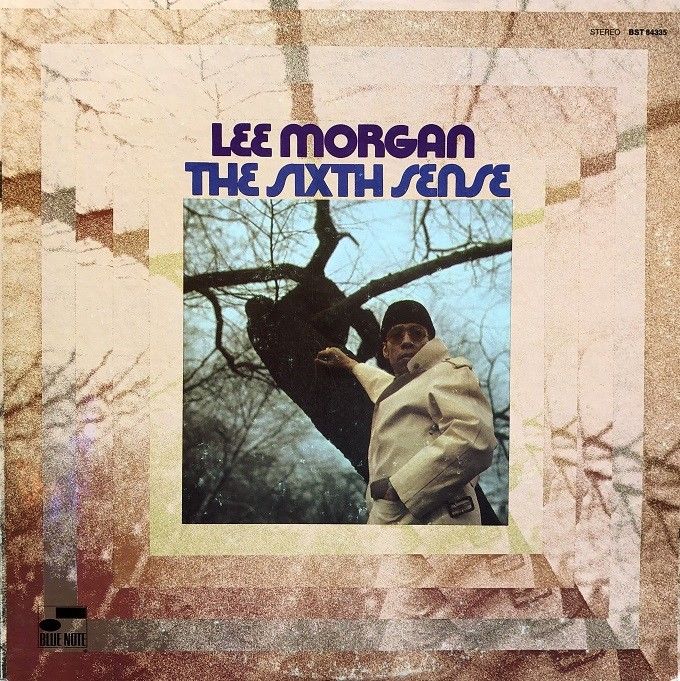
Lee Morgan: Sixth Sense-1968 Blue Note Black & Light Blue Label Stereo 12" LP
$
23


Favourite Auctions
To save auctions to your favourites, please login
If you don't have an account, please register
Description
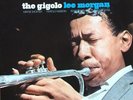
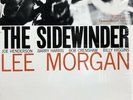
1968 Blue Note Black & Light Blue Label Stereo Release of Bandleader/Composer Trumpeter Lee Morgan Entitled the Sixth Sense, Produced by Francis Wolff, Recorded by Rudy Van Gelder, Liner Notes by Ed Williams, Album Originally Recorded on November 10 of 1967 - "A cornerstone of the Blue Note label roster prior to his tragic demise, Lee Morgan was one of hard bop's greatest trumpeters, and indeed one of the finest of the '60s. An all-around master of his instrument modeled after Clifford Brown, Morgan boasted an effortless, virtuosic technique and a full, supple, muscular tone that was just as powerful in the high register. His playing was always emotionally charged, regardless of the specific mood: cocky and exuberant on up-tempo groovers, blistering on bop-oriented technical showcases, sweet and sensitive on ballads. In his early days as a teen prodigy, Morgan was a busy soloist with a taste for long, graceful lines, and honed his personal style while serving an apprenticeship in Art Blakey's Jazz Messengers. As his original compositions began to take in elements of blues and R&B, he made greater use of space and developed an infectiously funky rhythmic sense. He also found ways to mimic human vocal inflections by stuttering, slurring his articulations, and employing half-valved sound effects. Toward the end of his career, Morgan was increasingly moving into modal music and free bop, hinting at the avant-garde but remaining grounded in tradition. He had already overcome a severe drug addiction, but sadly, he would not live to continue his musical growth; he was shot to death by his common-law wife in 1972. Edward Lee Morgan was born in Philadelphia on July 10, 1938. He grew up a jazz lover, and his sister apparently gave him his first trumpet at age 14. He took private lessons, developing rapidly, and continued his studies at Mastbaum High School. By the time he was 15, he was already performing professionally on the weekends, co-leading a group with bassist Spanky DeBrest. Morgan also participated in weekly workshops that gave him the chance to meet the likes of Miles Davis, Dizzy Gillespie, and his idol Clifford Brown. After graduating from high school in 1956, Morgan -- along with DeBrest -- got the chance to perform with Art Blakey's Jazz Messengers when they swung through Philadelphia. Not long after, Dizzy Gillespie hired Morgan to replace Joe Gordon in his big band, and afforded the talented youngster plenty of opportunities to solo, often spotlighting him on the Gillespie signature piece "A Night in Tunisia." Clifford Brown's death in a car crash in June 1956 sparked a search for his heir apparent, and the precocious Morgan seemed a likely candidate to many; accordingly, he soon found himself in great demand as a recording artist. His first session as a leader was cut for Blue Note in November 1956, and over the next few months he recorded for Savoy and Specialty as well, often working closely with Hank Mobley or Benny Golson. Later in 1957, he performed as a sideman on John Coltrane's classic Blue Train, as well as with Jimmy Smith. Morgan's early sessions showed him to be a gifted technician who had his influences down pat, but subsequent dates found him coming into his own as a distinctive, original stylist. That was most apparent on the Blue Note classic Candy, a warm standards album completed in 1958 and released to great acclaim. Still only 19, Morgan's playing was still imbued with youthful enthusiasm, but he was also synthesizing his influences into an original sound of his own. Also in 1958, Gillespie's big band broke up, and Morgan soon joined the third version of Art Blakey's Jazz Messengers, which debuted on the classic Moanin' album later that year. As a leader, Morgan recorded a pair of albums for Vee Jay in 1960, Here's Lee Morgan and Expoobident, and cut another for Blue Note that year, Leeway, with backing by many of the Jazz Messengers. None managed to measure up to Candy, and Morgan, grappling with heroin addiction, wound up leaving the Jazz Messengers in 1961. He returned to his hometown of Philadelphia to kick the habit, and spent most of the next two years away from music, working occasionally with saxophonist Jimmy Heath on a local basis. His replacement in the Jazz Messengers was Freddie Hubbard, who would also become one of the top hard bop trumpeters of the '60s. Morgan returned to New York in late 1963, and recorded with Blue Note avant-gardist Grachan Moncur on the trombonist's debut Evolution. He then recorded a comeback LP for Blue Note called The Sidewinder, prominently featuring the up-and-coming Joe Henderson. The Morgan-composed title track was a funky, danceable groover that drew from soul-jazz, Latin boogaloo, blues, and R&B in addition to Morgan's trademark hard bop. It was rather unlike anything else he'd cut, and it became a left-field hit in 1964; edited down to a 45 rpm single, it inched onto the lower reaches of the pop charts, and was licensed for use in a high-profile automobile ad campaign. Its success helped push The Sidewinder into the Top 25 of the pop LP charts, and the Top Ten on the R&B listing. Sales were brisk enough to revive the financially struggling Blue Note label, and likely kept it from bankruptcy; it also led to numerous "Sidewinder"-style grooves popping up on other Blue Note artists' albums. By the time "The Sidewinder" became a phenomenon, Morgan had rejoined the Jazz Messengers, where he would remain until 1965; there he solidified a long-standing partnership with saxophonist Wayne Shorter. Morgan followed the most crucial recording of his career with the excellent, more abstract Search for the New Land, which was cut in early 1964, before "The Sidewinder" hit. An advanced modal bop session called Tom Cat was also recorded shortly thereafter, but both were shelved in hopes of scoring another "Sidewinder." Accordingly, Morgan re-entered the studio in early 1965 to cut The Rumproller, whose Andrew Hill-penned title cut worked territory that was highly similar to Morgan's breakout hit. Commercial lightning didn't strike twice, but Morgan continued to record prolifically through 1965, cutting excellent sessions like The Gigolo, Cornbread, and the unissued Infinity. The Gigolo introduced one of Morgan's best-known originals, the bluesy "Speedball," while the classic Cornbread featured his ballad masterpiece "Ceora." Search for the New Land was finally issued in 1966, and it achieved highly respectable sales, reaching the Top 20 of the R&B album charts; both Cornbread and The Gigolo would sell well among jazz audiences when they were released in 1967 and 1968, respectively. By the time Morgan completed those albums, he had left the Jazz Messengers to begin leading his own groups outside the studio. He was also appearing frequently as a sideman on other Blue Note releases, working most often with tenorman Hank Mobley. Morgan was extraordinarily prolific over 1966-1968, cutting around eight albums' worth of material (though not all of it was released at the time). Highlights included Delightfulee, The Procrastinator, and the decent-selling Caramba!, which nearly made the Top 40 of the R&B album chart. His compositions were increasingly modal and free-form, stretching the boundaries of hard bop; however, his funkier instincts were still evident as well, shifting gradually from boogaloo to early electrified fusion. Morgan's recording pace tailed off at the end of the '60s, but he continued to tour with a regular working group that prominently featured saxophonist Bennie Maupin. This band's lengthy modal explorations were documented on the double LP Live at the Lighthouse, recorded in Los Angeles in July 1970; it was later reissued as a three-CD set with a generous amount of extra material. Morgan led what turned out to be the last session of his life in September 1971. On February 19, 1972, Morgan was performing at the New York club Slug's when he was shot and killed by his common-law wife, Helen More. Accounts of exactly what happened vary; whether they argued over drugs or Morgan's fidelity, whether she shot him outside the club or up on the bandstand in front of the audience, jazz lost a major talent. Despite his extensive recorded legacy, Morgan was only 33 years old. Many of his unreleased Blue Note sessions began to appear in the early '80s, and his critical standing has hardly diminished a whit." - "From late 1967 through 1968, Lee Morgan fronted a fine sextet with alto saxophonist Jackie McLean and the less-heralded tenor saxophonist Frank Mitchell. The group recorded The Sixth Sense, but by September of 1968, Morgan, Mitchell, and drummer Billy Higgins remained, the band revamped and reduced to a quintet. Those later sessions were not released until 1999 with the issue of this CD, which includes three bonus tracks. Where McLean's contribution was very telling in terms of the combo's overall sound, the quintet was able to further display the quiet confidence and competence Mitchell held. Either Cedar Walton or Harold Mabern appear showcasing their distinctive qualities, so this transitional recording marks the end of Walton's association, and the beginning of Mabern's, who would last with Morgan right up to his tragic and senseless murder. The symmetry of McLean's sourdough alto, Morgan's on-top trumpet and the middle-ground tenor of Mitchell is more balanced on the straight-ahead calypso title track, sweet and light as Walton sets the pace and proportions the right seasonings. "Short Count" on the other hand displays a stubby melody spiked by Walton's piano accents and the drum fills of Higgins in a more off minor taste. Approaching boogaloo go-go, "Psychedelic" is not so much acidic as conga line, Morgan leading the group, then following. The most memorable piece is Walton's "Afreaka," a wonderful modal piece with an Afro-centric groove and great harmonic content. High drama identifies "Anti Climax" with a dark, closet film noir sound acceding to hard bop, while the great Cal Massey composition "The Cry of My People" is covered, a ballad dominated by Morgan's somber and deep muted trumpet, swinging lightly on the bridge. The three tracks sans McLean and Walton with Morgan, Mitchell, Mabern, Higgins, and bassist Mickey Bass replacing Victor Sproles from the fall of 1968 sound noticeably different from the others. There's a more soulful flavor in Mabern's Memphis-cum-N.Y.C. uptown approach, and Mitchell challenges himself to assert his individual, less-pronounced voicings. The tenorman's post-bop composition "Extemporaneous" displays tricky phrasings and a musical syncopation, Bass' "Mickey's Tune" uses a loping 5/4 to 6/8 rhythm change so modern it keeps your ears on their toes, so to speak, and while "Leebop" is fairly typical, the chord substitutions and brilliant playing of Mabern are hard to ignore as he digs in, far above average or timid. The more one listens to Mabern the more you understand why he was a favorite of Morgan's, and everyone else's. The appropriately title Sixth Sense presents a transition between one of the most intriguing sextets during the last years of post-bop and Morgan's final ensembles that saw him reaching higher and higher before, like Icarus, falling from grace." - Sensational Personnel for the Sextet Features Legendary Composer Lee Morgan on Trumpet, the Great Jackie McLean on Alto Saxophone, Frank Mitchell on Tenor Saxophone, the Brilliant Cedar Walton on Piano, Victor Sproles on Bass and the Amazing Billy Higgins on Drums! - Selections on Side One Original Lee Morgan Compositions the Sixth Sense at 6 Minutes 40 Seconds, Short Count & Psychedelic - Tracks for Side Two Consist of the Cedar Walton Penned Afreaka at 7 Minutes 55 Seconds, Original Lee Morgan Composition Anti Climax and the Calvin Massey Song the Cry of My People - Used Copy, Cover Is Slightly Faded, Side One Has some Light Surface Wear, Side Two Very Good++ - Stereo Recording, Product Code BST 84335 - California Residents Add 9.75% Sales Tax - International S & H Extra -
price rating