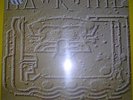
MARC BOLAN / T.REX - 'THERE WAS A TIME' LP - (HOME DEMOS VOLUME 1) NEW & SEALED
£
16
$
21


Favourite Auctions
To save auctions to your favourites, please login
If you don't have an account, please register
Description
MARC BOLAN / T.REX - 'THERE WAS A TIME' LP - HOME DEMOS VOLUME 1 (Easy Action Recordings EARS141LP)
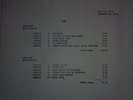
MARC BOLAN - THERE WAS A TIME
SIDE 1
1 : Here Comes The Electric Warrior / There Was A Time
2 : Planet Queen
3 : Marc & Mickey Guitar / Congos Jam #1
4 : Girl + False Starts
5 : Guitar / Congos Jam #2
6 : Girl #2
7 : Guitar / Congos Jam #3
8 : Guitar Overdubs
9 : Dark Lipped Woman
10 : Jeepster
11 : Get It On
SIDE 2
1 : Children Of The World (2.22)
2 : Work With Me Baby (2.13)
3 : Wild About My Baby (Spaceball Boot) (2.06)
4 : Meadows Of The Sea (4.20)
5 : Sailors Of The Highway (2.15)
6 : Alligator Man (2.13)
7 : Gypsy Queen (My Shaky Jane) (8.37)
The material represented on this unique series of albums, come in the main from four reels of home demo tape recorded by Marc at his London homes between the spring of 1971 and the autumn of 1973. What has been uncovered within these reels are the genuine embryonic beginnings of many Bolan classics. Along with well over a dozen songs discarded as the recording process moved from Marc’s four track TEAC A3340 home tape machine all the way to finished studio masters.
It is evident throughout these recordings that even in their early incarnations, a great many of the tracks are already fully realised, complete with lyrics (often completely different from the released versions) and rudimentary guitar overdubs.
It’s no coincidence that the album sleeve designs in this series depict the look and feel of the original Blues artists. Bolan’s Creole style vocal warbling and blues influenced chord structures, sit so well within that guitar, vocal framework that the songs themselves could easily have come from any one of a dozen 'Howling Wolf', ‘Big Bill Broonzy’, 'Skip James' or ‘Robert Johnson’ classics.
There Was a Time captures Marc Bolan on the brink of stardom. The first side of this album was recorded at various points during March 1971 at 57 Blenheim Crescent, Marc's home in Ladbroke Grove between 1969 and late 1971. Hot Love had just hit the number one spot in the UK singles charts at the time of these recordings (where it remained for a grand total of six weeks). The bands first American tour was imminent and the realisation he was on the verge of a major career breakthrough began to seriously influence the kind of music he was making. The style of songs on these tapes became far more in your face and immediate than on demo tapes for previous albums. He could sense success and his songwriting and interview style began to reflect it.
“I don’t see pop singles dying out just yet” quipped an excited Bolan in March 1971. “White Swan has sold 250,000. Obviously kids want singles, if they are packaged well and give at least ten minutes music. The way things are now I wouldn’t put out a single without more than two tracks or at least longer tracks. You can get eight minutes of music on a B-side if you want”.
Within a month he had moved into full rock star mode “Suddenly we appear to have sexual overtones. I mean, nothing really dark, just very sweet. What I’m enjoying at the moment is getting back into a kind of old rock magic. Hot Love is really just old rock, like the lyrics are very simple 50’s things. I moved my lyrics away from that surrealistic poetry to - well I’d call it people words - and what I’ve been trying to do is recapture the feeling, the energy, behind old rock music, without actually doing it the same technically. What you like about those original songs is the feeling it gave you and that’s what you remember. I want T.Rex to expand their sound, we’ve just signed a new drummer and I want it to move on from there. I foresee, on stage appearances, that T.Rex could expand very well with a vocal group and an orchestra.
All I’ve proved to date is that I can do something musically that I had in my head, really I’m very musically naive, the next stage is to get a really solid album down. I’m aiming for something completely new in concept. I believe in the visual media very strongly. I’m a media man. After all, basically I’m just a product myself.”
Of the eleven tracks recorded in March many of the rudiments for what would become Electric Warrior were very much in evidence, including the two singles Jeepster and Get It On, along with the opening section of it's flip side There Was A Time. Though Here Comes The Electric Warrior and Dark Lipped Woman missed the cut completely.
The songs that make up the second side of this album, were recorded towards the later part of the year. By this time Electric Warrior had become a fully realised vision. Bolan's talk of being a media man and a product were evidenced by the overall packaging and promotion of the album, which was sumptuous to say the least and even included a full sized poster, a beautifully illustrated inner bag and full lyrics. “The idea excites me” proclaimed Marc just after the album topped the charts in October 1971. “I like to be able to give away something that the kids would have otherwise had to go out and buy. I want to be able to use my position to contribute back to people, I’m one of the people too you know. I was the first person to put a giveaway lyric sheet with my first album My People Were Fair back in 1968.”
The thing you can't fail to notice with the second collection of tracks (recorded in the music room of his new home at Clarendon Gardens in Maida Vale), is they have an even greater swagger to them than those on the first side. Even more surprising then (especially given the quality of some of the tracks), that non of them ever saw the light of day.
Bolan was in full creative and commercial flow by the time he recorded these tracks. He had two number one singles, two number two's and a number one album under his belt. Not too mention two major sell out UK tours (all of which was being repeated throughout Europe and beyond) to show for his efforts in 1971.
He explained his song ideas and some of the instruments used in these home recordings when interviewed in late '71.
“The songs I write now are a way of easing the time of people. Music is a great soother. It’s the only physical high I have. The new songs have an easy to grasp feeling about them. Success encourages me to be a better craftsman. I dig lyrically what I’m doing now. Emotionally I’m more into it. In my music room at home here in Maida Vale, I usually play about for a couple of hours before I move into new dimensions where I’m being very creative, I record everything then. I’ve currently got nine guitars lying around in this room. Two Fender Stratocasters, one Fender Telecaster with a Gibson pick up, one 1952 Les Paul, one Gibson S.G. special, one Gibson Flying Arrow, one Gibson acoustic and one Epiphone acoustic.”
Sleeve Notes copyright Andrew J. Gardner /Easy Action Recordings 2018
price rating

![Osbourne,Ozzy - Ozzy Live [Vinyl] EXCELLENT](https://www.popsike.mobi/php/thumbnail.php?url=https://www.popsike.pics/pix/20160728/252478320385.jpg)