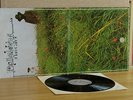
MILCHO LEVIEV Quartet "Blues For The Fisherman" LP NM/NM UK w Art Pepper
$
28


Favourite Auctions
To save auctions to your favourites, please login
If you don't have an account, please register
Description
Milcho Leviev Biography by Craig Harris
The exotic rhythms of Bulgarian music are combined with the improvisations of jazz through the piano and keyboard playing of Milcho Leviev. A member of Don Ellis' band in the 1970s and a well-traveled sideman for Billy Cobham, Art Pepper and Al Jarreau and leader of jazz-rock band, Free Flight, in the 1980s, Leviev has continued with his cross-cultural musical experiments.. In addition to leading his own trio, featuring bassist Jamie Faust and drummer Dick Weller, Leviev has performed with the Leviev-Slon Quartet, featuring drummer Claudio Slon, bassist Mark Simon and percussionist Cassio Duarte, and, the Jamie Faust Trio.
A graduate of the Bulgarian State Music Academy, Leviev worked as pianist and director of the Bulgarian Radio and Television Big Band in the mid-1960s. Temporarily relocating to Germany, he worked with Albert Mangelsdorff.
At the urging of trumpet player and bandleader Don Ellis, Leviev emigrated to the United States in 1971. For the next years, he was a seminal member of Ellis' large orchestra. Leaving Ellis in 1977, Leviev played with a wide range of jazz and fusion musicians. Forming Free Flight in 1980, he spent three years exploring the possibilities of fusing jazz and rock influences.
Blues for the Fisherman Review by Thom Jurek
This date between Bulgarian piano genius and three fourths of Art Pepper's quartet (obviously, Pepper, bassist Tony Dumas, and drummer Carl Burnett had to leave pianist George Cables out of this one) is one of the hottest dates in either leader's career. Solidly based in post-bop blues, Latin rhythms, and modal figures, Blues for the Fisherman is perhaps one of the most underappreciated quartet dates of the 1980s. Recorded at Ronnie Scott's club in London in 1980, a year and a half before Pepper's death, the set is comprised of four long tunes, one by Leviev and three -- including the title track -- by Pepper, and is more a Pepper than Leviev date. No matter, however, since the musical dialogue this band cooks up is positively telepathic. Leviev, who is influenced equally by early Ramsey Lewis, Oscar Peterson, and Horace Silver, pulls out all the funky stops in his solos. He accents Pepper's melodies with punchy, choppy chords that allow the altoist's lines to drop right inside and add the necessary accent to make them soar. From the opener, with "Make a List, Make a Wish," which is equal parts bossa nova and "Wade in the Water" spiritual, Leviev is in the pocket, drawing Burnett and Dumas into the fire not as timekeepers but as funked-out fire breathers. Leviev's solo is pure 16th and 32nd notes cascading down around the rhythm section like bullets and wrapping around Pepper's own lines tightly and inseparably, harmonically altering space and time. Leviev's own lilting "Sad, A Little Bit" is graced with a slower, bluesy ballad feel, but its melody is taken from the ancient sounds of Bulgarian folk music. The way Pepper spins it out, weighing the traditional melody against the modern melodics of his brand of jazz, is remarkable, and Leviev's own harmonic invention is structurally astonishing. By the time the band members reach the final cut, the title track, they are literally dissembling the bandstand and in full flight, soaring with improvisational heights they probably hadn't thought possible. Pepper and Leviev are allowed the luxury of soloing together by a solid, rollicking rhythm section that pushes the time edges of each chorus just a bit more, until the entire structure opens up tonally and Pepper moves into his melody and through it as Leviev investigates its hidden notes in almost impossible triple times. There isn't a weak album on Mole Jazz, and this first one tells the story as to why that's true. This slab has great sound and an unmatchable performance, and is a magical listening experience.
The Milcho Leviev Quartet – Blues For The Fisherman
Label:
Mole Jazz – MOLE 1
Format:
Vinyl, LP, Stereo
Country:
UK
Released:
1980
Genre:
Jazz
Style:
A1 Make A List, Make A Wish
Written-By – Art Pepper
16:58
A2 Sad, A Little Bit
Written-By – Milcho Leviev
7:20
B1 Ophelia
Written-By – Art Pepper
10:30
B2 Blues For The Fisherman
Written-By – Art Pepper
11:10
Recorded By – Tri-Arts Associates Limited
Phonographic Copyright ℗ – TAA / Mole Record Productions Ltd
Copyright © – TAA / Mole Record Productions Ltd
Published By – Arthur Pepper Music
Published By – Contemporary Music (2)
Published By – Philippopolis Music
Recorded At – Ronnie Scott's
Mastered At – Trident Studios
Alto Saxophone [Alto Sax], Liner Notes – Art Pepper
Bass – Tony Dumas
Drums – Carl Burnett
Engineer [Assistant] – Christopher Bould, Rainer Schneider
Engineer [Recording Engineer] – Graham Ward (6), Peter Ball (3)
Executive-Producer – Ed Dipple*, Graham Griffiths (2), Pete Fincham*
Lacquer Cut By – Rays*
Mastered By – Ray Staff
Photography By – Richard Davies (10)
Piano – Milcho Leviev
Producer, Engineer [Recording Engineer] – Peter Bould
Sleeve [Layout], Layout [Sleeve], Design – Judy Bould
Recorded by Tri-Arts Associates Limited for TAA/Mole Record Productions at Ronnie Scott's on Friday/Saturday/Sunday 27/28/29 June 1980.
Technical Note: This recording was made using mutli-microphones in a straight stereo mix without any noise reduction system, limiting, compression or equalization on either the location or on the transfer of the original master tapes to the lacquers from which the final pressings are made.
The producers wish to thank Ronnie Scott's Club - Pete King, Ronnie Scott, Laurie Pepper, and Chris Fisherman for all the help they gave.
A TAA/MOLE Production © & ℗ 1980
Matrix / Runout (Matrix label side A): MOLE 1A
Matrix / Runout (Matrix label side B): MOLE 1B
Matrix / Runout (Matrix label side A): (TAA 2401A)
Matrix / Runout (Matrix label side B): (TAA 2402B)
Matrix / Runout (Runout side A etched, variant 1): TAA 2401-A-2 RAYS
Matrix / Runout (Runout side B etched, variant 1): TAA 2402-B-2 1-1 RAYS
Matrix / Runout (Runout side A etched, variant 2): TAA 2401-A-2 RAYS 1 - 8
Matrix / Runout (Runout side B etched, variant 2): TAA 2402-B-2 RAYS 1 - 7
GOLDMINE GRADING
MINT ---- It should appear to be perfect. No scuffs or scratches, blotches or stains, labels or writing, tears or splits. Mint means perfect.
NEAR MINT ---- Otherwise mint but has one or two tiny inconsequential flaws that do not affect play. Covers should be close to perfect with minor signs of wear or age just becoming evident: slight ring-wear, minor denting to a corner, or writing on the cover should all be noted properly.
VERY GOOD PLUS ---- The record has been handled and played infrequently or very carefully. Not too far from perfect. On a disc, there may be light paper scuffs from sliding in and out of a sleeve or the vinyl or some of the original luster may be lost. A slight scratch that did not affect play would be acceptably VG+ for most collectors.
VERY GOOD ---- Record displays visible signs of handling and playing, such as loss of vinyl luster, light surface scratches, groove wear and spindle trails. Some audible surface noise, but should not overwhelm the musical experience. Usually a cover is VG when one or two of these problems are evident: ring wear, seam splits, bent corners, loss of gloss, stains, etc.
GOOD ---- Well played with little luster and significant surface noise. Despite defects, record should still play all the way through without skipping. Several cover flaws will be apparent, but should not obliterate the artwork.
POOR ---- Any record or cover that does not qualify for the above "Good" grading should be seen as Poor. Several cover flaws.
price rating











![Dave Brubeck Greatest Hits - Limited Color Edition - Vinyl [LP]](https://www.popsike.mobi/php/thumbnail.php?url=https://www.popsike.pics/pix/20260313/127740482936.jpg)